Trump asks Supreme Court to allow ballroom work to continue
Source Entity
BBC News
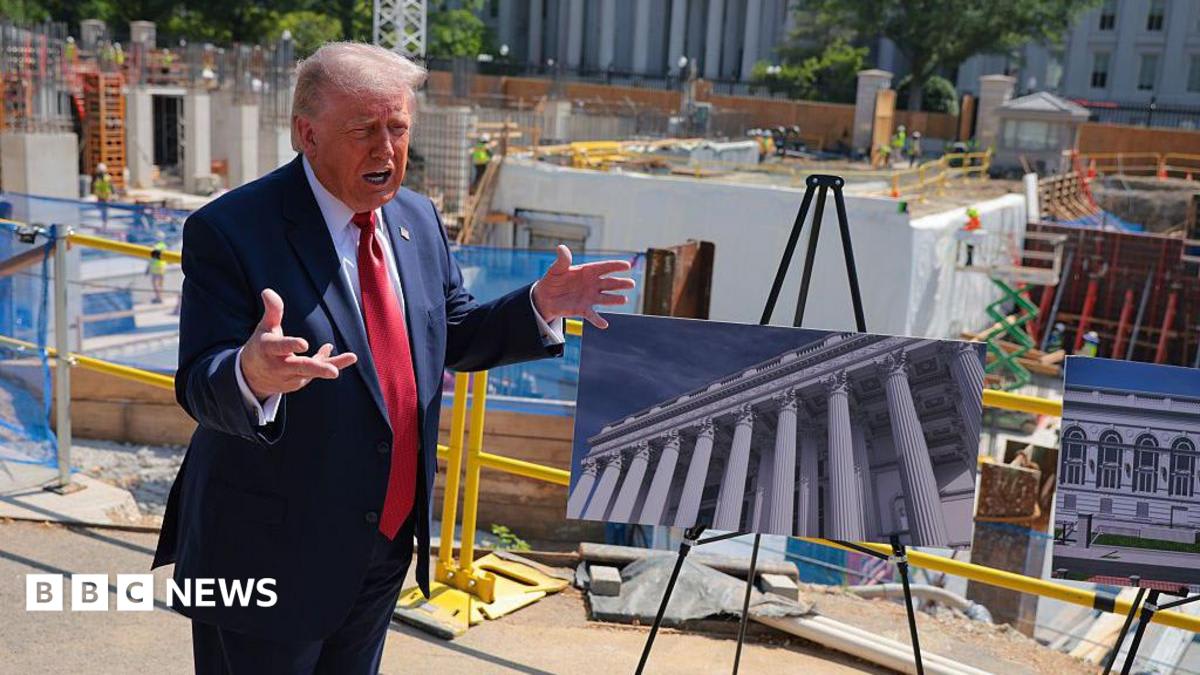
President Donald Trump has petitioned the Supreme Court to permit the continued construction of a $400 million White House ballroom. This follows a federal appeals court order halting the project due to a lack of congressional authorization.
The Legal Battle Over the White House Ballroom
President Donald Trump has filed an emergency application with the Supreme Court, seeking to overturn a federal appeals court ruling that mandated a halt to the construction of a $400 million ballroom at the White House. The project, which involves a massive structural overhaul of the executive residence, has become the center of a significant constitutional dispute regarding the separation of powers and the extent of executive authority over federal property.
Origins of the Conflict
The controversy began when the administration initiated the demolition of the White House East Wing last year without prior notification to or approval from Congress. Following this, the National Trust for Historic Preservation filed a lawsuit challenging the legality of the project. The U.S. Court of Appeals for the District of Columbia Circuit recently upheld an injunction issued by a lower court, effectively ordering a stop to all construction activities until legislative approval is secured.
Executive vs. Legislative Authority
The administration’s legal team, led by Solicitor General D. John Sauer, argues that requiring the President to go "hat-in-hand to Congress" for permission to modify the White House is inherently "dangerous." This framing suggests an executive view that the President possesses broad, inherent powers to manage the executive residence as a matter of national security and operational necessity, independent of the legislative branch's "power of the purse."
The Security and Logistical Rationale
President Trump has consistently maintained that the existing White House infrastructure lacks a large-scale event space suitable for modern presidential requirements. By framing the ballroom as vital for national security, the administration is attempting to elevate the project from a mere facility expansion to a strategic asset. Construction has already been ongoing for 10 months, alongside other projects such as a new helipad on the South Lawn, complicating the legal landscape as the August 21 deadline for the stop-work order approaches.
Implications for Future Oversight
Should the Supreme Court grant the administration's request, it would likely set a significant precedent regarding the limits of executive authority over federal historical sites. Conversely, if the Court upholds the injunction, it would reaffirm the role of Congress in overseeing executive expenditures and preserving historic structures. This case highlights the tension between the President's vision for the executive complex and the checks and balances designed to prevent unilateral changes to national landmarks.
Concluding Outlook
As the August 21 implementation date for the injunction looms, the Supreme Court's decision will be a defining moment for this administration's internal construction agenda. The outcome will not only determine the fate of the $400 million ballroom but also signal the judiciary's stance on the administration's autonomy in bypassing congressional approval for major federal infrastructure projects.
Multiple Citing Sources