Omar Abdullah’s I-Day speech: ‘Decision our leaders took 80 years ago was right’
Source Entity
Bashaarat Masood
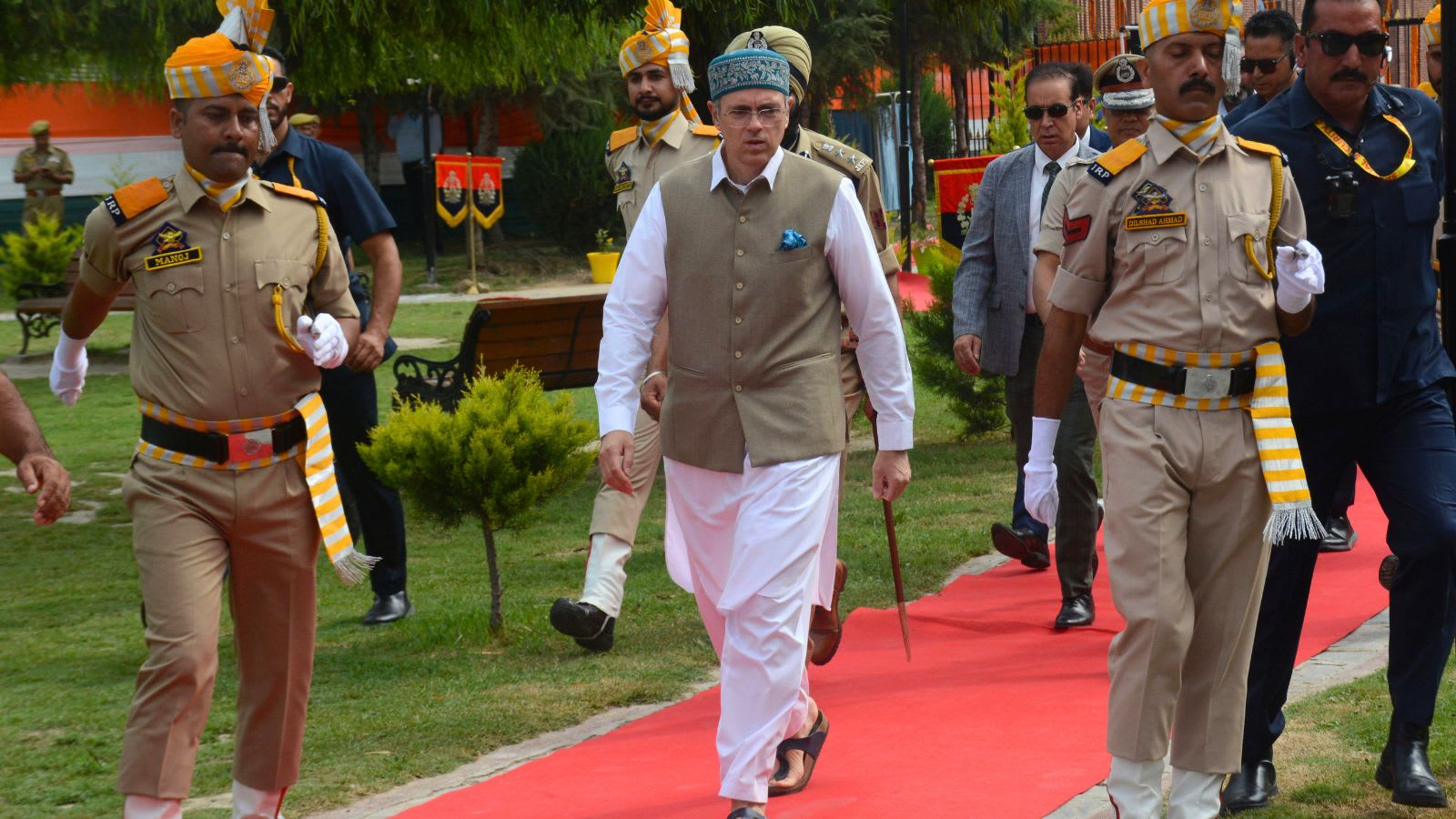
J&K Chief Minister Omar Abdullah has challenged the Centre over administrative control and reservation policies, warning of potential civil unrest. Concurrently, PDP leader Mehbooba Mufti has questioned the government's adherence to constitutional values during Independence Day observations.
Tensions Escalate: The Growing Divide Between J&K’s Elected Leadership and the Centre
Recent statements from Jammu and Kashmir’s political leadership, particularly Chief Minister Omar Abdullah and former Chief Minister Mehbooba Mufti, underscore a deepening friction between the Union Territory’s elected representatives and the central government. During Independence Day commemorations, the discourse shifted from celebration to sharp political critique, centering on federalism, administrative autonomy, and the legacy of the 2019 constitutional changes.
The Battle for Administrative Autonomy
At the heart of the current conflict is the 'Transaction of Business Rules,' which are essential to define the operational boundaries between the Office of the Chief Minister, the Council of Ministers, and the Lieutenant-Governor. Omar Abdullah has expressed frustration over the perceived 'dilly-dallying' by the Centre regarding these rules. By failing to finalize these frameworks, the administration in Srinagar faces a paralysis of authority, leading Abdullah to warn of 'Gen Z-style' agitations if the deadlock over critical issues—such as the Cabinet’s reservation report—is not resolved promptly. This reflects a broader concern that the current administrative structure is designed to undermine the efficacy of the elected government.
Constitutional Reflection and Federalism
Mehbooba Mufti, speaking from Bakshi Stadium, urged the BJP-led central government to perform a self-assessment regarding India’s commitment to its constitutional vision. Her critique suggests that the erosion of federalist principles, manifested in the centralization of power in J&K, contradicts the democratic ideals envisioned 80 years ago. This sentiment aligns with Omar Abdullah’s broader warnings about the misuse of central agencies to usurp state powers, which he argues has created a volatile political environment reminiscent of past protests at Jantar Mantar.
Historical Context and the 2019 Shift
Reflecting on the 2019 constitutional restructuring of J&K, Omar Abdullah offered a provocative historical perspective. He argued that the original decision of J&K’s leadership 80 years ago to align with India remains fundamentally sound, asserting that the people of Pakistan Occupied Kashmir (PoK) would currently be seeking reunification with the Indian side if the 2019 changes had not occurred. This narrative attempts to reclaim the legitimacy of the Kashmiri identity within the Indian Union while simultaneously criticizing the specific policies enacted by the Centre post-2019.
Resource Management and Future Implications
Beyond administrative and constitutional disputes, the government is also grappling with economic sovereignty. Abdullah has criticized the Indus Waters Treaty (IWT) as 'discriminatory' toward the Union Territory, arguing that it unfairly constrains J&K’s ability to utilize its own water resources. This issue is likely to become a major point of contention in future negotiations with the Centre, as it directly impacts the region's developmental potential and economic independence.
Conclusion: A Precarious Path Forward
The current atmosphere in J&K is characterized by a high degree of political instability and mutual distrust. As the elected government pushes for greater control over reservation policies and administrative rule-making, the Centre’s reluctance to cede authority risks alienating the local populace. The warnings of grassroots agitation, coupled with the persistent questioning of constitutional adherence, indicate that the relationship between Srinagar and New Delhi will remain a critical, and potentially volatile, focal point of Indian politics in the coming months.