Opinion: Opinion | Three Adversaries Become 4: Why The Saudi-Turkey-Pak Deal Is A Headache For India
Source Entity
NDTV News Search Records Found 1000
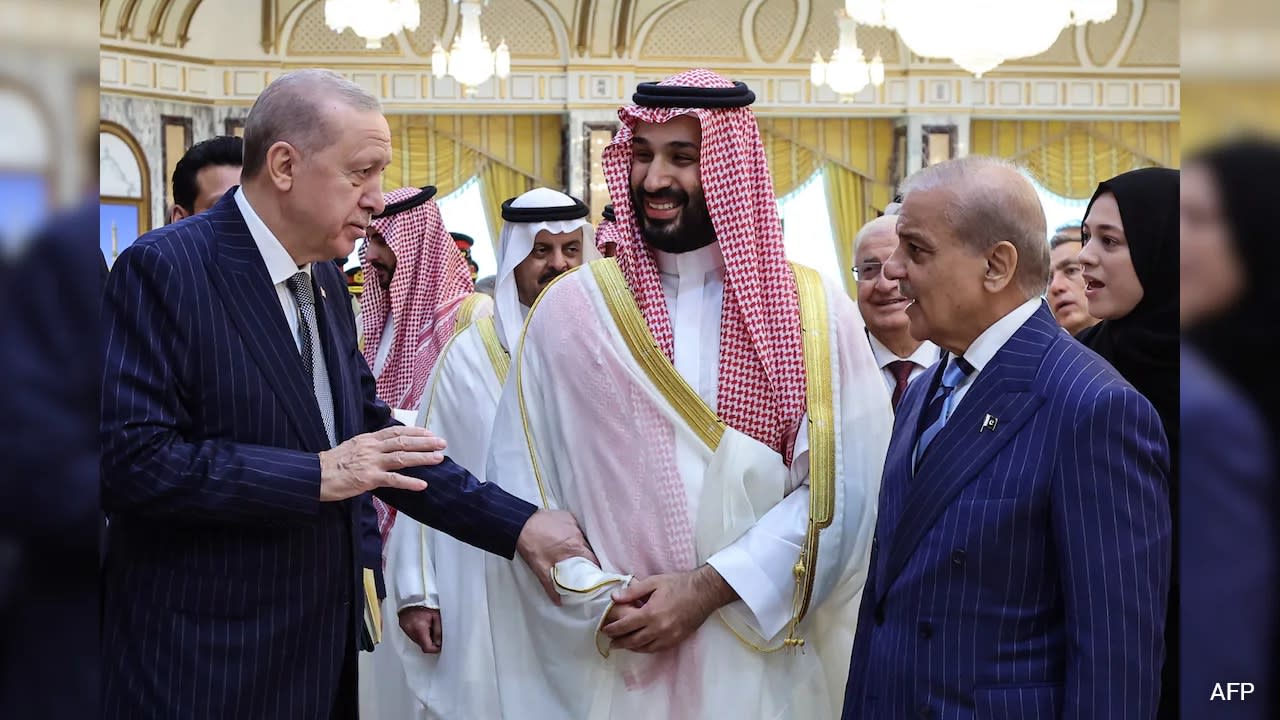
The newly signed Mecca Joint Defence Agreement between Saudi Arabia, Pakistan, and Turkey establishes a collective security pact akin to NATO. However, the alliance faces significant internal contradictions due to disparate regional threat perceptions, while simultaneously complicating India's strategic landscape in South Asia and the Middle East.
The Mecca Joint Defence Agreement: A New Security Paradigm
The recently signed Mecca Joint Defence Agreement marks a pivotal shift in the geopolitical landscape of West Asia and South Asia. By formalizing a pact between Saudi Arabia, Pakistan, and Turkey—three nations wielding immense economic, nuclear, and conventional military power respectively—the signatories have signaled a desire to move toward a collective security model. The core of this agreement is the adoption of a NATO-like principle, where an attack on one member is viewed as an attack on all three. This formalization of defense cooperation represents the culmination of deepening bilateral ties that have matured over several years, particularly through intensified arms procurement and regional military coordination.
The Absence of a Unified Threat
Despite the ambitious nature of the pact, analysts point to a fundamental weakness: the lack of a singular, shared existential threat. Unlike the original NATO alliance, which was forged under the shadow of the Soviet Union, this new trilateral grouping faces conflicting strategic priorities. For example, while Saudi Arabia views Iran as a primary security concern—having faced ballistic missile threats from Tehran—Pakistan and Turkey maintain complex, nuanced relationships with the Iranian state. Furthermore, Saudi Arabia’s clandestine security cooperation with Israel stands in stark contrast to Turkey’s increasingly hostile rhetoric, illustrating that the internal dynamics of this alliance are as tenuous as they are powerful.
A Response to Shifting Western Deterrence
The impetus for this agreement appears to be a shared skepticism regarding the reliability of the United States' security umbrella in the region. The signatories seem to operate under the assumption that Washington’s deterrence capabilities in West Asia are waning. As the U.S. appears increasingly unable to deter Iran or unwilling to exert pressure on Israel, these regional powers have opted to build their own security architecture. This move reflects a broader global trend toward regional self-reliance, where middle powers seek to safeguard their interests without waiting for guidance or protection from traditional Western allies.
Implications for India’s Strategic Security
For India, the implications of this pact are profound and largely negative. The agreement effectively embeds Pakistan into a broader, more sophisticated West Asian security architecture, elevating the India-Pakistan rivalry from a bilateral issue to a wider strategic equation. The recent utilization of Turkish-made drones by Pakistan in conflicts with India underscores how these technological partnerships translate into tangible military threats. By locking in support from Riyadh and Ankara, Pakistan has successfully expanded its strategic depth, potentially neutralizing some of the diplomatic and military pressure India has traditionally exerted on Islamabad.
The Rapprochement of Ankara and Riyadh
The success of this agreement is bolstered by the rapid rapprochement between Turkey and Saudi Arabia, a relationship that was mired in tension for years before being revitalized by a major 2023 drone deal. This economic and military convergence has laid the foundation for the current trilateral structure. As these three nations align their defense policies, they are creating a formidable bloc that can project power across the Islamic world and beyond.
Future Trends and Regional Stability
Looking forward, the stability of this pact will likely be tested by the conflicting regional agendas of its members. If the three states cannot harmonize their stances on regional actors like Iran and Israel, the agreement may remain a symbolic gesture rather than a functional military alliance. However, if the coalition succeeds in operationalizing its collective defense promises, it will necessitate a complete recalibration of India’s foreign policy and defense strategy to account for a permanent, multi-front military challenge in its extended neighborhood.
Verification Required?