A triangular hedge in the West Asia tinderbox
Source Entity
Kuldip Singh
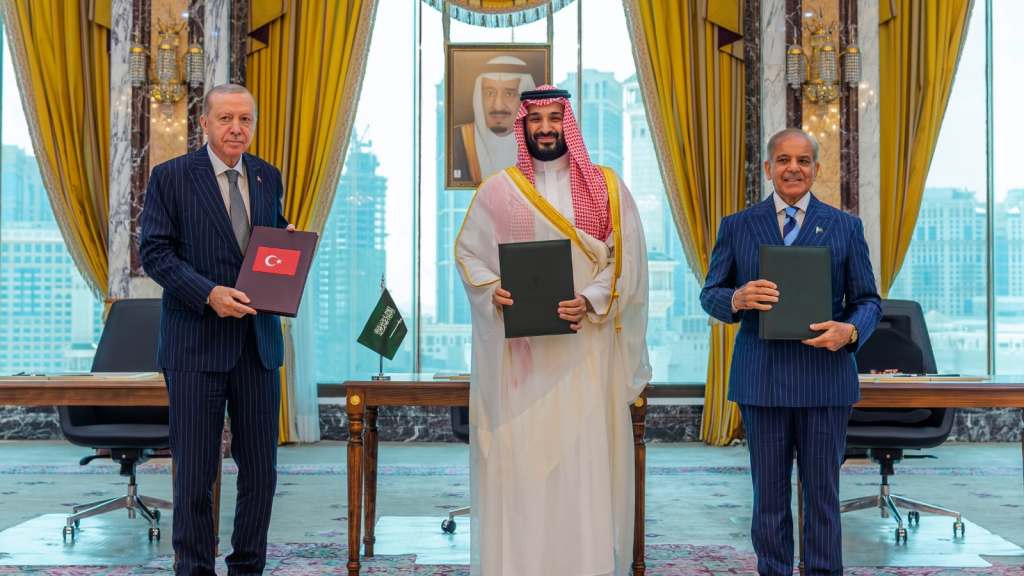
A new defense pact between Saudi Arabia, Pakistan, and Turkey creates a 'Sunni NATO' to address regional security vulnerabilities. While this alliance aims to bolster collective defense, it presents complex geopolitical shifts for India, China, and the United States.
The Emergence of the Mecca Pact: A New Security Paradigm
The formation of a triangular defense pact between Saudi Arabia, Pakistan, and Turkey—often referred to as the 'Mecca Pact'—marks a significant pivot in West Asian security architecture. By incorporating an operative clause stating that an armed attack on one signatory is an attack on all, the alliance mirrors the collective defense tenets of NATO. This 'Sunni NATO' seeks to synthesize Turkish military technology, Pakistani strategic and nuclear capabilities, and Saudi Arabia’s vast financial and energy resources into a cohesive deterrent force.
Origins of Vulnerability and Strategic Distrust
This alliance is not born out of a position of strength, but rather a profound sense of vulnerability within the Saudi leadership. The Kingdom’s decision to formalize this pact follows a history of perceived abandonment by traditional security partners. Specifically, the failure of the United States to adequately protect Saudi energy infrastructure during past regional escalations—such as attacks by Iranian-linked assets—has driven Riyadh to diversify its security dependencies. The pact is an attempt to institutionalize the support that Riyadh felt was lacking during critical moments of regional instability.
The Failure of Conventional Security Guarantees
Historical context suggests that such agreements are often tested by the reality of regional proxies. While previous bilateral agreements between Saudi Arabia and Pakistan included similar 'Article 5-type' language, these commitments remained largely dormant when tested by actual security threats. The current pact attempts to overcome these historical limitations by formalizing a tripartite structure, yet the efficacy of this arrangement remains speculative, given the disparate geopolitical agendas of Ankara, Islamabad, and Riyadh.
Geopolitical Implications for India
For India, the emergence of this bloc represents a strategic setback. India has spent years cultivating deep economic and security ties with Saudi Arabia and the UAE to balance its regional interests. The formalization of a defense-heavy alliance that includes Pakistan—India's primary regional adversary—complicates New Delhi’s diplomatic balancing act. It risks creating a unified front that could exert pressure on India’s strategic autonomy in West Asia and potentially impact its long-standing efforts to isolate Pakistan on the global stage.
The US-China Balancing Act
For the United States, the pact represents a double-edged sword. While it may reduce the necessity for an intensive US military footprint in West Asia, allowing Washington to pivot its resources toward the Indo-Pacific to counter China, it also risks losing influence in a critical global energy hub. Conversely, China may find commercial opportunities in this new alignment, particularly through weapon system exports. However, Beijing may view the pact as a warning; as the US potentially offloads regional security burdens to this new bloc, it may gain the necessary political and military bandwidth to confront Chinese expansionism with renewed vigor.
Future Trends and Regional Stability
Moving forward, the stability of this pact will depend on whether it functions as a credible deterrent or merely a symbolic gesture. If the signatories can align their military doctrines effectively, they may succeed in stabilizing West Asia without heavy dependence on external powers. However, if the pact triggers a counter-alignment from regional rivals or falters under the weight of conflicting national interests, it could inadvertently heighten the volatility of the West Asian tinderbox.