Median net worth of U.S. households under 35 fell 23% from 2022 to 2025 (real)
Source Entity
Hacker News
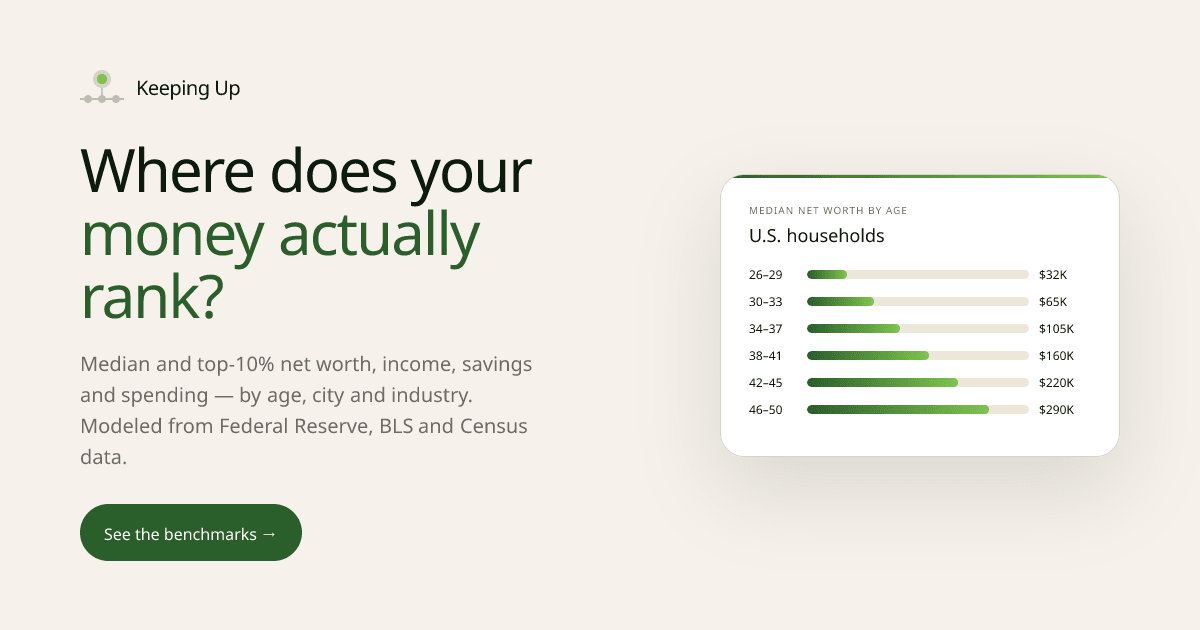
A recent analysis of Federal Reserve survey data reveals a 23% decline in the median net worth of U.S. households under 35 between 2022 and 2025. The data highlights significant wealth disparities, with the median net worth for those aged 30–33 currently standing at $68,000.
The Declining Financial Standing of Young U.S. Households
Recent data derived from Federal Reserve Survey of Consumer Finances (SCF) modeling presents a concerning trend for the younger demographic in the United States. Between 2022 and 2025, the median net worth for households headed by individuals under 35 has plummeted by 23% in real terms. This contraction suggests that the economic headwinds faced by younger generations—such as persistent inflation, student loan burdens, and cooling housing market accessibility—are significantly eroding the ability of these households to accumulate and retain wealth.
Understanding Net Worth Calculations
To contextualize this decline, it is essential to define what constitutes net worth in this analysis. It is calculated as the sum of all household assets—including bank accounts, investment portfolios, retirement accounts, and home equity—minus all liabilities, such as mortgages, student loans, and credit card debt. The 23% decline indicates that for many, the growth in debt obligations has outpaced the appreciation of assets, or that asset values have stagnated while cost-of-living expenses have forced households to draw down on their savings and investments.
The Wealth Distribution Gap for Ages 30–33
When examining the 30–33 age bracket specifically, the data paints a stark picture of inequality. The median net worth sits at $68,000, meaning half of the population in this cohort remains below this threshold. The disparity is further highlighted by the upper quarter, which requires a net worth of $235,000, and the top 10%, which begins at $440,000. This indicates that the top 10% possess roughly 6.5 times the wealth of the median individual, reflecting a significant concentration of capital among the most affluent young households.
The Vulnerability of the Bottom Quartile
Perhaps most alarming is the state of the bottom quartile of this age group. With a net worth falling below $7,100, these individuals are extremely vulnerable to economic shocks. Even more precarious is the bottom 10%, whose net worth is negative, signifying that they owe more than they own. This 'negative net worth' status is often driven by high-interest consumer debt or educational loans that have yet to be offset by significant asset accumulation, creating a cycle of financial instability that is difficult to break in the current economic climate.
Broader Economic Implications
This trend has profound implications for the U.S. economy. As the under-35 cohort represents the future of consumer spending and housing market participation, a sharp decline in their collective net worth may lead to decreased household formation and delayed life milestones. If younger generations cannot build equity, the traditional mechanisms of middle-class wealth creation—primarily homeownership and retirement savings—may become increasingly inaccessible, potentially widening the generational wealth gap for decades to come.
Future Trends and Outlook
Looking ahead, the trajectory of this decline will likely depend on labor market resilience and interest rate policy. If real wages fail to outpace inflation, the pressure on household balance sheets will persist, potentially leading to further erosion of assets. Policy interventions aimed at debt relief or increasing access to retirement savings vehicles could offer some stabilization; however, without structural changes to the cost of major assets like housing, the younger demographic may continue to struggle to recapture the wealth levels seen in previous economic cycles.