'Not my Chancellor': The AfD wave is growing, and Friedrich Merz may be Germany's next big casualty
Source Entity
Latest News: Todays Latest News Headlines from India & World | Hindustan Times | Hindustan Times
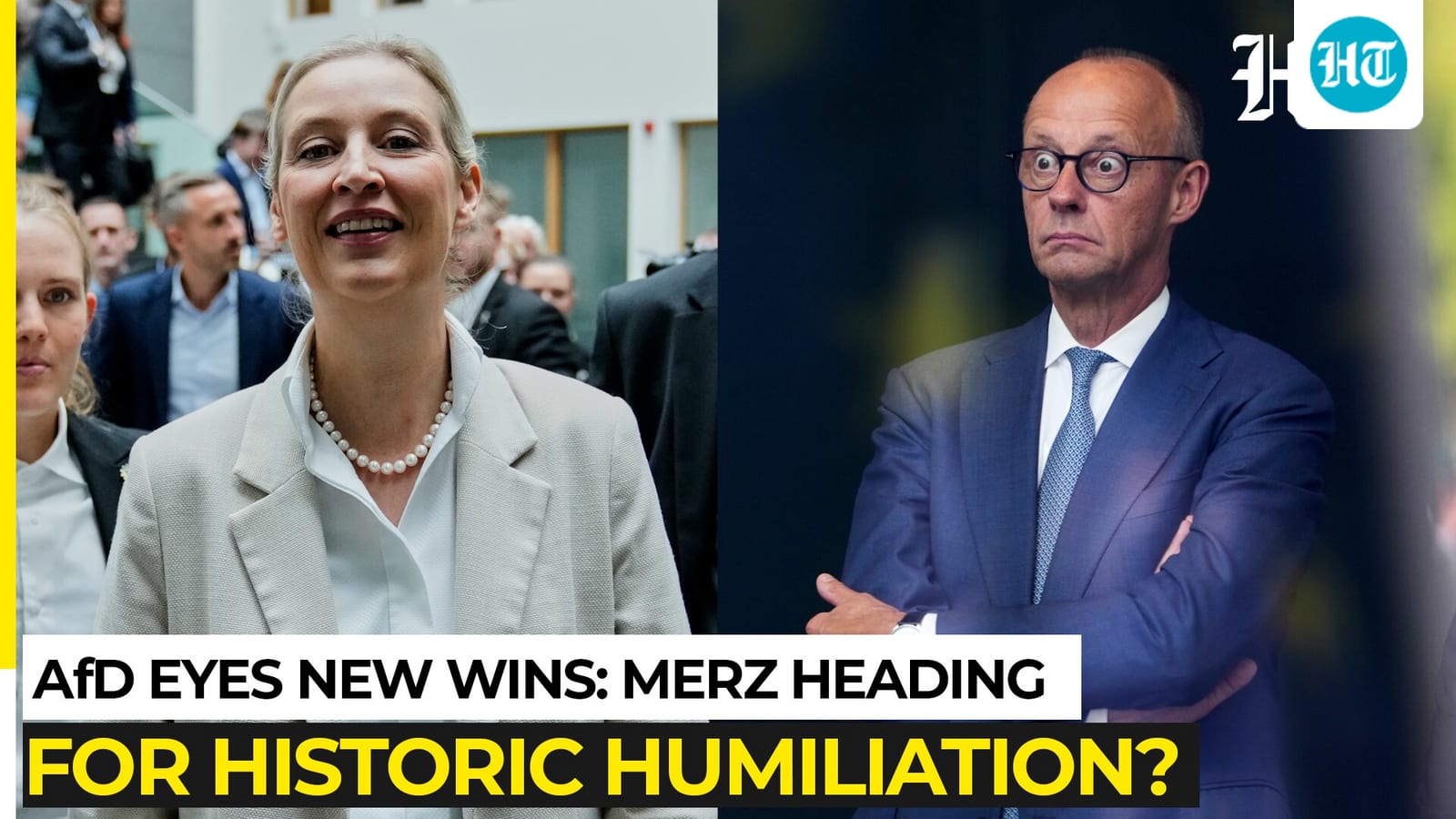
Chancellor Friedrich Merz faces a critical political test as voters in Berlin and Mecklenburg-Western Pomerania head to the polls. Following a major electoral breakthrough by the far-right AfD in Saxony-Anhalt, the CDU risks further decline, fueling speculation regarding Merz's future as chancellor.
The Political Precipice: Chancellor Merz Faces Electoral Reckoning
Germany is currently navigating a period of profound political instability as voters in Berlin and Mecklenburg-Western Pomerania head to the polls. These state elections serve as a critical litmus test for Chancellor Friedrich Merz, whose leadership of the Christian Democratic Union (CDU) is under intense scrutiny. The outcomes of these contests are expected to either stabilize his position or catalyze a significant leadership crisis within his party.
The Shadow of the AfD Breakthrough
The current electoral climate is heavily influenced by the recent, seismic performance of the far-right Alternative for Germany (AfD) party in Saxony-Anhalt. By securing a 43.8% share of the vote, the AfD has fundamentally altered the German political landscape, signaling a shift in voter sentiment that has left established parties reeling. This momentum has directly translated into increased pressure on the CDU, which saw its own vote share halved in that same region, creating a narrative of decline that the party is desperate to reverse.
Fragile Thresholds and Political Survival
In Mecklenburg-Western Pomerania, the stakes are existential for the CDU. Recent polling indicates the party is hovering perilously close to the 5% electoral threshold required for parliamentary representation. Should the CDU fall below this mark, the political ramifications would be catastrophic for Chancellor Merz. AfD candidate Leif-Erik Holm has already suggested that such a defeat would make Merz’s position untenable, effectively calling for his exit from the chancellery.
Voter Frustration and Economic Discontent
The dissatisfaction among the electorate is not merely ideological; it is deeply rooted in tangible economic concerns. Voters in Berlin have expressed growing frustration over the rising cost of living and a general disillusionment with established political parties. This economic anxiety acts as a potent fuel for anti-establishment rhetoric, making it increasingly difficult for the CDU to maintain its traditional base of support against the rising tide of the AfD.
Implications for the Future of the Chancellery
Speculation regarding a potential mid-term 'chancellor swap' has become a persistent feature of German political discourse. While Chancellor Merz has publicly maintained his commitment to remaining in office, his poor approval ratings and the internal pressure from conservative ranks suggest that his tenure is increasingly precarious. The results of these state elections will likely serve as the definitive catalyst for whether the CDU decides to retain its current leadership or seek a new direction to stem its electoral hemorrhaging.
Conclusion: A Turning Point for German Governance
As the votes are counted, the future of the German government hangs in the balance. The combination of structural electoral challenges and the surge of the far-right presents a formidable obstacle for Chancellor Merz. Whether the CDU can avoid a total collapse in these states will determine if the current coalition can survive the pressure or if Germany is headed for a period of significant political realignment.
Verification Required?