Meta AI gets smarter: It can now plan your day, do research, and create presentations
Source Entity
The Indian Express
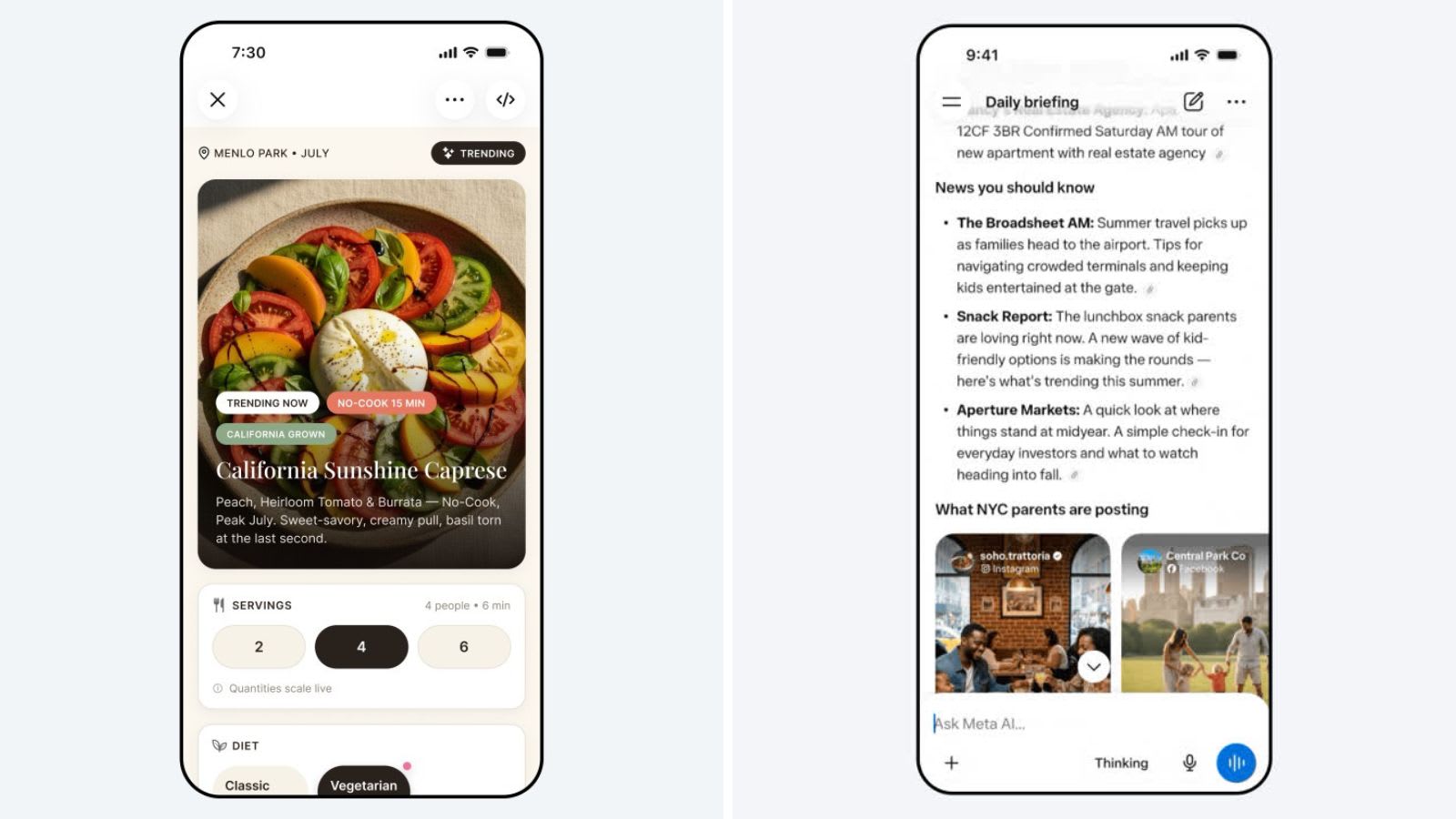
Meta has upgraded its AI assistant with the Muse Spark 1.1 model, enabling proactive task management like calendar integration and research. This update marks a significant shift toward 'personal superintelligence' to compete with industry rivals like ChatGPT and Gemini.
The Evolution of Meta AI: Toward Personal Superintelligence
Meta has officially launched a major upgrade to its AI assistant, marking a significant transition from a simple conversational chatbot to a proactive digital agent. By integrating the new Muse Spark 1.1 model, the company is empowering its AI to transcend basic Q&A functions and actively perform complex tasks on behalf of users. This represents a fundamental shift in how consumers interact with generative AI, moving from reactive prompting to a model of automated execution.
Expanding Capabilities and Integration
At the core of this upgrade is the AI's ability to interface directly with personal productivity tools. By connecting to email and calendar applications, the assistant can now manage schedules, generate daily briefings, and plan events without constant user intervention. Furthermore, the assistant is now equipped to conduct in-depth research and create professional presentations. These features allow the AI to follow through on multi-step requests, effectively acting as an extension of the user’s workflow.
The Strategic Pivot to 'Personal Superintelligence'
Meta has explicitly framed this development as a milestone on the roadmap to "personal superintelligence." CEO Mark Zuckerberg has long championed this vision, which prioritizes an AI that possesses deep contextual understanding of the user. Unlike previous iterations that required granular guidance, this new architecture is designed to understand intent and execute tasks from start to finish, minimizing the cognitive load on the user and providing a more seamless experience.
Competitive Landscape and Market Dynamics
This rollout is a strategic move to regain ground in an increasingly crowded generative AI market. Meta’s latest enhancements are clearly designed to challenge established industry leaders such as OpenAI’s ChatGPT, Google’s Gemini, and Anthropic’s Claude. By embedding these productivity features directly into its ecosystem, Meta aims to leverage its massive social media and communication platforms to make its AI the default choice for daily organization and professional research.
Future Trends and Implications
The release of the Muse Spark 1.1 model highlights a broader industry trend where the utility of AI is measured by its "agentic" capabilities—the ability to perform work rather than just synthesize information. As these models become more adept at handling sensitive personal data like calendars and emails, the balance between convenience and privacy will become a central focus for both developers and regulators. Looking ahead, the ability to steer research progress in real-time will likely set the standard for future AI-human collaboration, turning the chatbot into a true digital assistant.
Multiple Citing Sources