Milt Windler, NASA flight director who helped save Apollo 13, dies at 94
Source Entity
Robert Pearlman
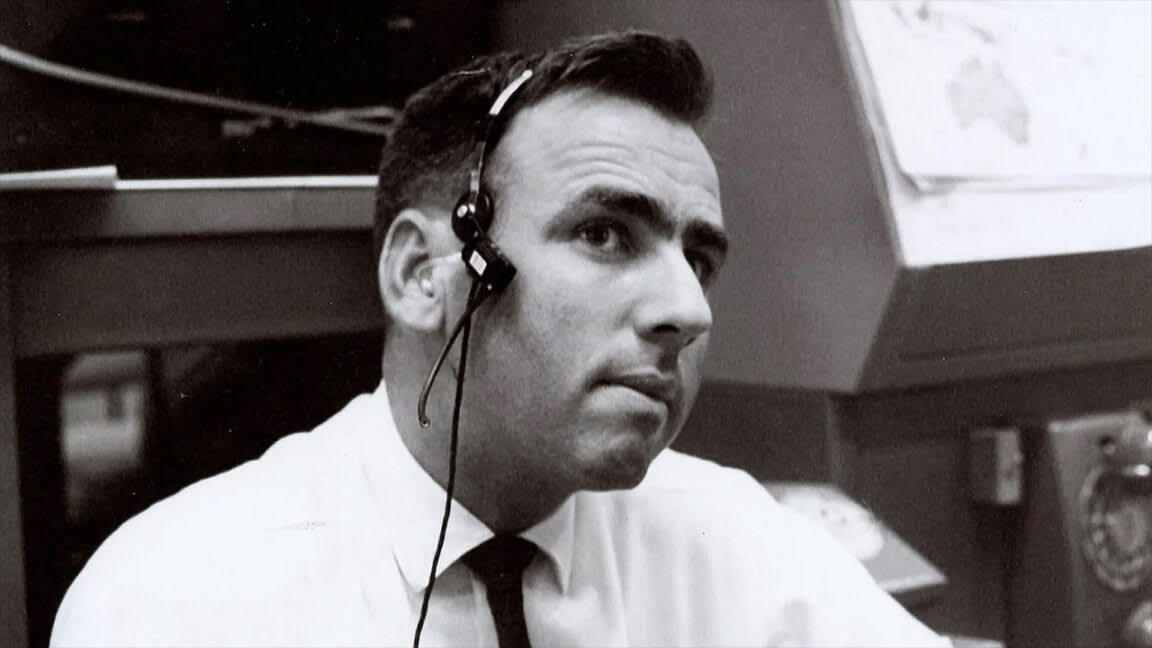
NASA flight director Milt Windler, a pivotal figure in the successful rescue of the Apollo 13 crew, has passed away at 94. His distinguished career spanned the Mercury, Gemini, and Apollo programs, leaving an indelible mark on human spaceflight history.
The Legacy of Milt Windler: A Titan of Mission Control
The aerospace community is mourning the loss of Milt Windler, a legendary NASA flight director who passed away at the age of 94. Windler was a central figure in the golden age of American space exploration, best known for his instrumental role in guiding the harrowing rescue mission of Apollo 13 in 1970. His death marks the end of an era for the pioneers who transformed the impossible task of lunar travel into a tangible reality.
Architect of the Apollo Era
Windler’s journey with NASA began long before his most famous mission. After cutting his teeth on recovery operations during the pioneering Mercury and Gemini programs, he was appointed as a NASA flight director in 1968. This transition period was critical; it required a shift from sub-orbital and Earth-orbit testing to the complex, high-stakes navigation of deep space. His steady hand helped lead the shift of flight controllers for Apollo 8—the first crewed spacecraft to orbit the Moon—and the Apollo 10 dress rehearsal, setting the stage for the historic lunar landings that would follow.
The Apollo 13 Lifeline
Perhaps the most defining moment of Windler’s career was the Apollo 13 mission. When an oxygen tank explosion crippled the spacecraft, it was Windler and his fellow flight directors who orchestrated the round-the-clock maneuvers necessary to bring the crew home. This was not merely a technical challenge; it was a race against time, oxygen depletion, and failing power systems. Windler’s leadership during these critical days proved that the ground team was as essential to space exploration as the astronauts themselves.
Beyond the Moon: Skylab and Continued Impact
Windler’s expertise was not confined to the Apollo missions. Following his work on the second, third, and fourth lunar landings—Apollo 12, 14, and 15—he pivoted toward the next frontier: the United States’ first space station, Skylab. Serving as a flight director for all three crewed Skylab missions, he helped transition NASA from lunar exploration to long-duration human spaceflight, a precursor to the modern International Space Station era.
A Standard for Modern Spaceflight
Reflecting on the rapid, high-pressure environment of the 1960s and 70s, Windler once noted, “Apollo was such a rapid pace that I don’t think we were making history.” This humility belies the magnitude of his contributions. By establishing the protocols and decision-making frameworks for mission control, Windler created a blueprint for crisis management that is still studied by flight controllers today. His legacy is etched into the very foundation of NASA's operational culture.
Conclusion: Honoring a Pioneer
As we look toward the future of Artemis and beyond, the foundational work of individuals like Milt Windler remains a guiding light. He was part of a select cohort of leaders who learned to navigate the unknown in real-time, under conditions where failure was not an option. While the aerospace industry continues to evolve, the resilience and brilliance Windler demonstrated during the darkest hours of Apollo 13 will be remembered as a hallmark of human ingenuity.