Explained: Punjab’s three regions, and the politics behind PM’s project announcements
Source Entity
Anju Agnihotri Chaba
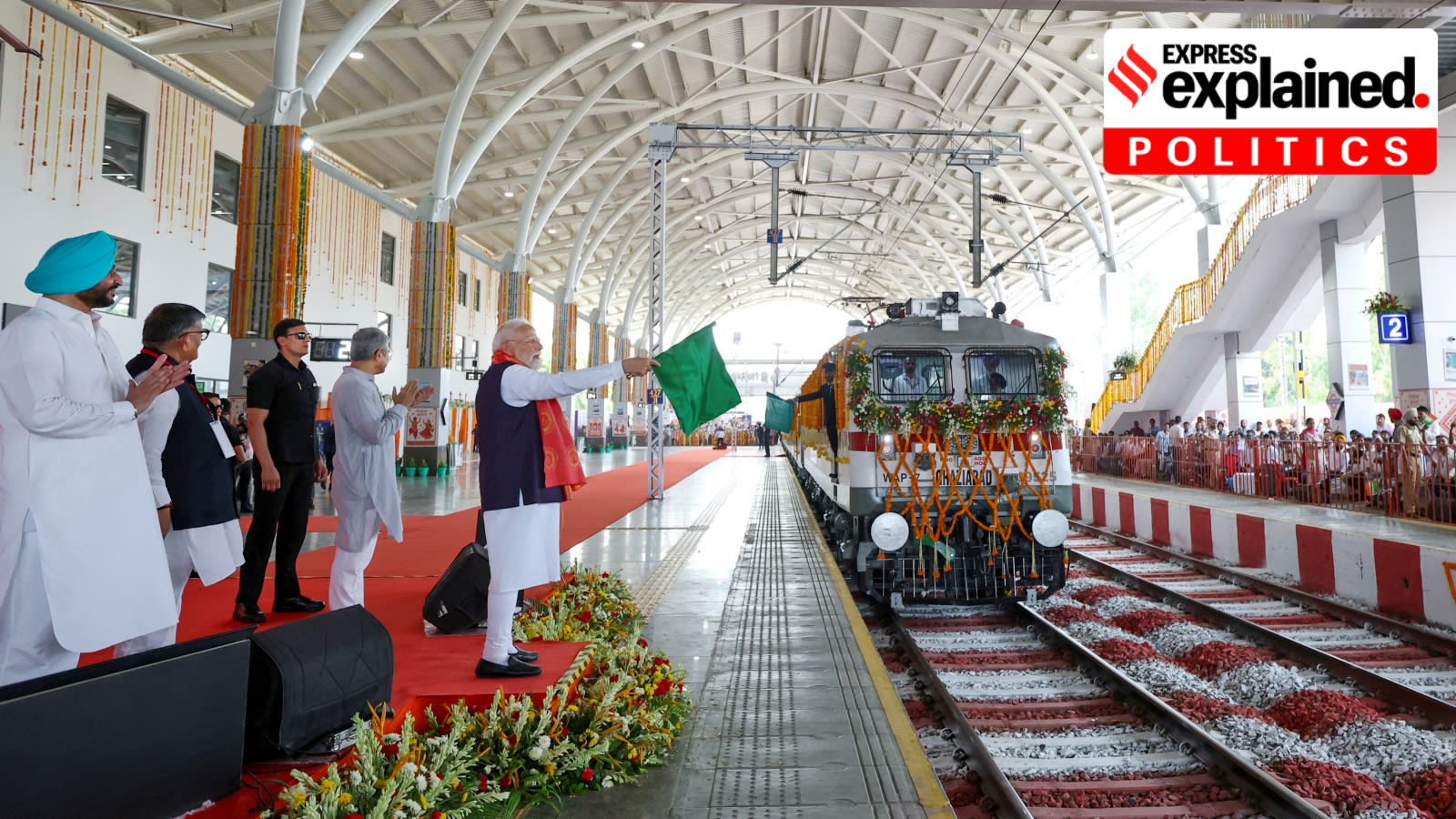
Prime Minister Narendra Modi recently inaugurated significant infrastructure and cultural projects in Haryana and Punjab. These developments include a major elevated railway track in Kurukshetra and a new Sikh Museum, signaling a strategic focus on regional development and cultural heritage.
Infrastructure and Cultural Development in Northern India
Prime Minister Narendra Modi’s recent series of project inaugurations and foundation-stone laying ceremonies in Haryana and Punjab marks a significant push toward integrating regional development with cultural preservation. In Kurukshetra, the inauguration of a ₹447-crore elevated railway track represents a crucial step in alleviating long-standing urban congestion. By replacing traditional ground-level crossings with a 5.9-km elevated structure—comprising a 4.8-km viaduct supported by 213 pillars—the government aims to streamline traffic flow and enhance safety for commuters who have historically faced persistent bottlenecks in the region.
Strategic Investment and Cultural Recognition
Beyond immediate infrastructure needs, the government has prioritized cultural outreach with the announcement of a ₹170-crore Sikh Museum. To be situated on a five-acre plot in Umri village, this facility serves as a testament to the state's historical and religious legacy. By combining modern civil engineering projects like the Kurukshetra elevated track with cultural landmarks, the administration is attempting to balance the utilitarian requirements of a growing population with the preservation of regional identity.
Regional Political Geographies
Parallel to these developments in Haryana, the Prime Minister’s broader visit to Punjab saw the launch of over a dozen projects totaling ₹5,470 crore. The strategic distribution of these investments across Punjab’s three distinct regions—Malwa, Doaba, and Majha—reveals a sophisticated approach to political geography. Because these regions are separated by rivers and characterized by unique dialects, cultural nuances, and caste dynamics, the geographic spread of these projects suggests a deliberate effort to achieve balanced regional representation.
Understanding the Political Context
In states like Punjab and Haryana, where regional identity often dictates political engagement, the allocation of infrastructure funds is never purely administrative. By addressing the specific needs of Malwa, Doaba, and Majha simultaneously, the central government is navigating the complex regional identities that have historically defined Punjab’s electoral landscape. This strategy aims to mitigate the perception of favoritism and ensure that infrastructure development aligns with the diverse socio-political fabric of the state.
Future Implications and Trends
Looking ahead, these projects are likely to serve as a blueprint for future central-state initiatives. The emphasis on elevated transit corridors in congested urban hubs, coupled with investments in high-visibility cultural institutions, reflects a dual-track strategy. As the state nears future electoral cycles, the efficacy of these projects in resolving daily commuter struggles and fostering cultural pride will likely become central to the political discourse, setting a precedent for how infrastructure can be leveraged to address both economic and social grievances.
Multiple Citing Sources