Fast-track courts, timely justice: What's in new draft law on paper leaks as promised by PM Modi
Source Entity
Latest News: Todays Latest News Headlines from India & World | Hindustan Times | Hindustan Times
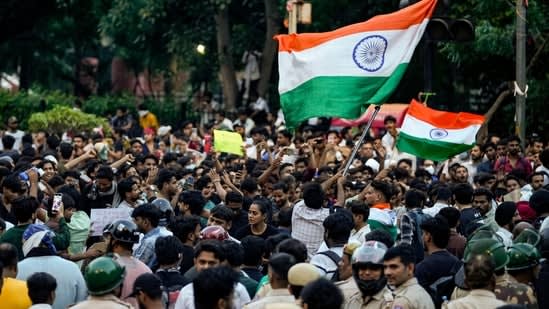
The first day of the Monsoon Session of Parliament was completely disrupted by intense Opposition protests over the NEET paper leak and Ayodhya temple donation theft. Simultaneously, massive street protests in Delhi led to police intervention, leaving legislative business largely stalled.
A Tumultuous Start to the Monsoon Session
The Monsoon Session of Parliament commenced on July 20, 2026, under a cloud of intense political confrontation. Within hours of the session's opening, both the Lok Sabha and the Rajya Sabha faced repeated adjournments as Opposition members from the Congress, Samajwadi Party, and Trinamool Congress stormed the Well of the House. The primary catalysts for this upheaval were the alleged NEET paper leak and reports of donation theft at the Ram Temple in Ayodhya, signaling a confrontational start to the legislative calendar.
Street Protests and Security Escalation
Beyond the walls of Parliament, the heart of Lutyens’s Delhi became a theater of unrest. An estimated 50,000 protesters, predominantly led by the Cockroach Janta Party (CJP), attempted to march toward the Parliament complex. The demonstration, focused on demanding the resignation of Union Education Minister Dharmendra Pradhan, saw protesters breaking through police barricades across major thoroughfares like Ashoka Road and Raisina Road. Law enforcement responded with lathi charges, tear gas, and water cannons to contain the swelling crowds.
Legislative Stagnation and Key Business
The disruption effectively paralyzed the legislative agenda for the opening day. Despite the chaos, Union Law Minister Arjun Ram Meghwal managed to introduce a significant Bill in the Lok Sabha. This legislation aims to replace an existing Ordinance that increases the total number of Supreme Court judges from 34 to 38, including the Chief Justice of India. The introduction of this bill stands as the only meaningful business transacted before the proceedings were called off at 3 p.m.
Divergent Opposition Agendas
While the Opposition presented a largely united front regarding the NEET controversy, fissures in coordination were evident. The DMK, for instance, chose to prioritize the Mekedatu water-sharing issue, opting to skip a key meeting convened by the Congress. Additionally, internal parliamentary dynamics were highlighted by shifts in seating arrangements for rebel Trinamool Congress (TMC) MPs, underscoring the complex political maneuvering occurring behind the scenes of the protests.
Broader Implications and Future Outlook
The intensity of the protests—both inside the legislature and on the streets—suggests a difficult road ahead for the Monsoon Session. The government’s ability to pass its legislative agenda is now directly tied to its capacity to manage the narrative surrounding high-stakes issues like exam integrity and public trust in national institutions. As the session continues, the tension between the ruling party's desire for routine business and the Opposition's demand for accountability regarding the NEET scam and temple security will likely define the political landscape in Delhi for the coming weeks.
Multiple Citing Sources
Verification Required?