Parliament Monsoon Session Day 2 LIVE: Both Houses adjourned till 2 p.m. amid uproar; Oppn. MPs seek Lok Sabha discussion on 'brutality' on students
Source Entity
India Latest News: Top National Headlines Today & Breaking News | The Hindu
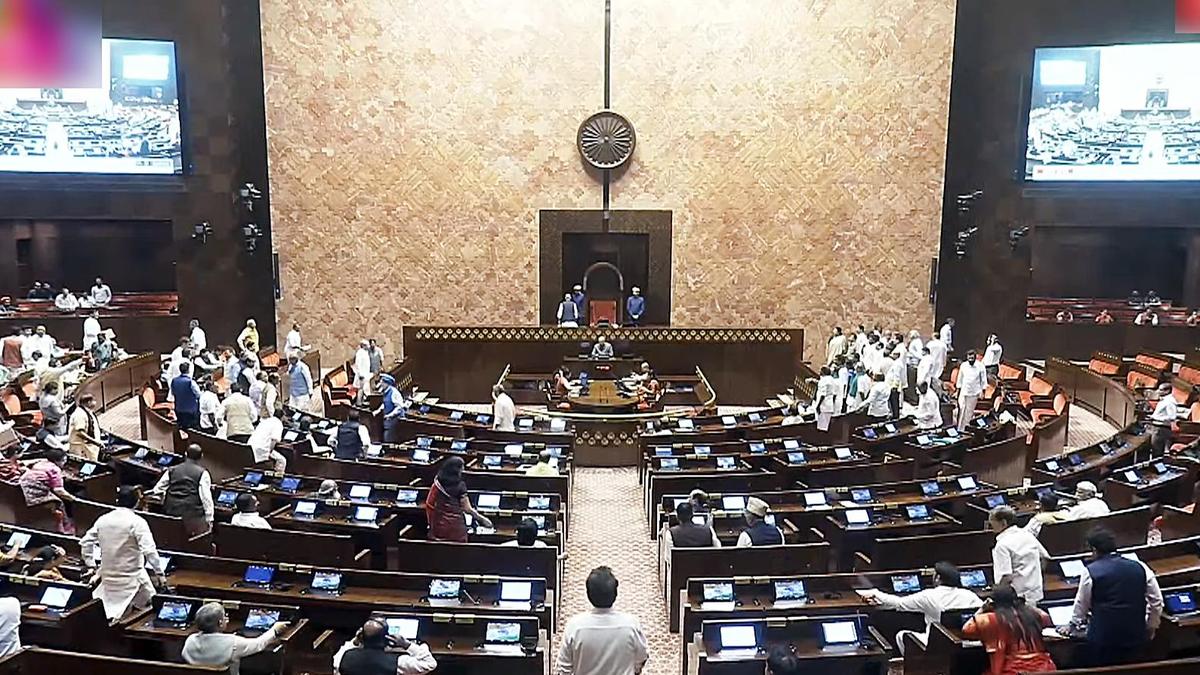
The first day of the Monsoon Session of Parliament faced major disruptions due to opposition protests over NEET exam irregularities and Ram temple donation theft. Simultaneously, massive street protests in Delhi led to police intervention, overshadowing the introduction of a key judicial bill.
Parliamentary Gridlock: A Turbulent Start to the Monsoon Session
The Monsoon Session of Parliament commenced on July 20, 2026, under a cloud of intense political friction. Within the hallowed halls of the Lok Sabha and Rajya Sabha, proceedings were effectively paralyzed as opposition members from the Congress, Samajwadi Party, and Trinamool Congress stormed the Well of the House. The primary catalysts for this upheaval were the alleged NEET paper leak and reports of donation theft at the Ayodhya Ram Temple, issues that opposition leaders—led by Mallikarjun Kharge in the Rajya Sabha—framed as critical failures of governance and integrity.
Street Protests and Security Escalation
Beyond the parliamentary chambers, the streets of Lutyens’s Delhi transformed into a theater of confrontation. Tens of thousands of protesters, spearheaded by the Cockroach Janta Party (CJP), descended upon the capital to demand the resignation of Union Education Minister Dharmendra Pradhan. The scale of the mobilization, estimated at over 50,000 participants, overwhelmed traditional protest zones like Jantar Mantar, leading to widespread attempts to breach security cordons near the Parliament complex.
Police Intervention and Urban Unrest
Security forces faced a significant challenge as protesters challenged cordons at multiple key arteries, including Ashoka Road, Janpath, and Raisina Road. The response from law enforcement involved the use of lathicharge, tear gas, and water cannons to disperse the crowds. This escalation highlights the deep-seated public frustration regarding the integrity of national examinations and the perceived lack of accountability in the education sector, manifesting in a direct physical challenge to state authority.
Legislative Business Amidst Chaos
The legislative agenda, while largely sidelined, saw one pivotal development. Union Law Minister Arjun Ram Meghwal managed to introduce a Bill aimed at replacing an Ordinance that increases the strength of the Supreme Court of India from 34 to 38 judges. This move represents a significant effort to address judicial pendency, yet its introduction was met with the broader backdrop of administrative tension and political maneuvering, including notable shifts in seating arrangements for rebel Trinamool Congress MPs.
Fragmented Opposition and Future Implications
Despite the unified front against the government, the opposition landscape remains nuanced. The DMK, for instance, chose to pivot toward the Mekedatu water dispute, intentionally distancing itself from the Congress-led strategy. This fragmentation suggests that while the opposition can rally around high-profile national scandals, regional interests continue to dictate the tactical priorities of individual parties, potentially diluting the impact of their protest strategy as the session progresses.
Concluding Summary
The first day of the 2026 Monsoon Session serves as a microcosm of the current political volatility in India. The intersection of massive street-level agitation over youth-centric issues like NEET and the legislative push for judicial expansion creates a complex environment for the government. As the session continues, the ability of the administration to balance necessary legislative reforms against the rising tide of public and parliamentary dissent will be the defining theme of the current political cycle.
Multiple Citing Sources
Verification Required?