'Doesn't matter who defence minister is': Moscow dismisses Zelensky's moves, reshuffle backfires?
Source Entity
Latest News: Today's Latest News Headlines from India & World | Hindustan Times | Hindustan Times
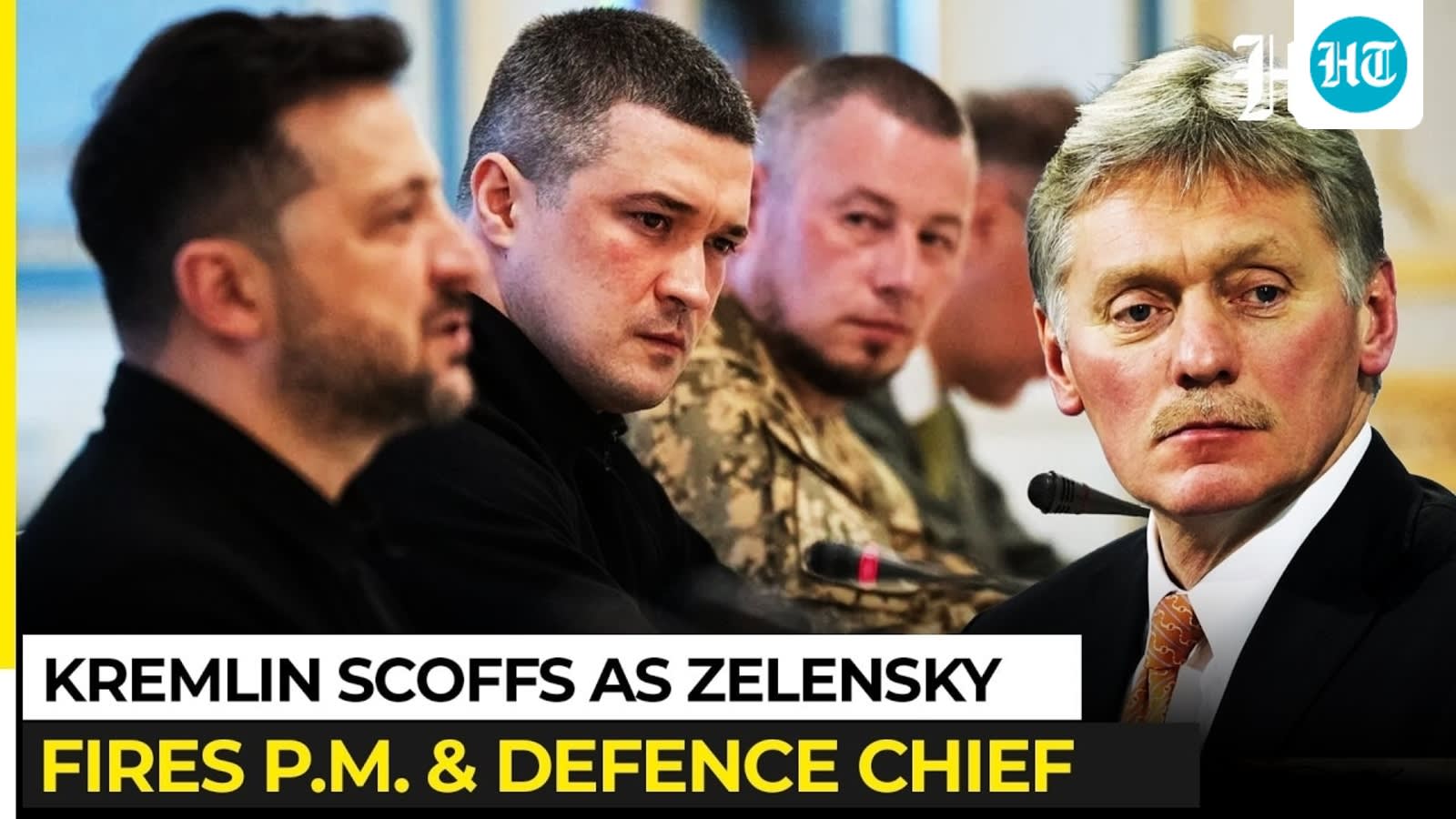
Kremlin spokesperson Dmitry Peskov has dismissed the significance of Ukraine's recent leadership reshuffle, stating that the identity of the defense minister is irrelevant to Russia's objectives. While expressing openness to peace negotiations and acknowledging Türkiye's mediation, Peskov also touched upon Russia's economic stability and the global impact of tensions in the Gulf.
Analysis of Kremlin's Response to Ukrainian Political Shifts
The Rhetoric of Indifference
In a recent briefing, Kremlin spokesperson Dmitry Peskov addressed the political volatility within Kyiv, specifically the reshuffling of Ukraine's military leadership. By stating that the identity of the defense minister "doesn't matter," Moscow is employing a strategic narrative of indifference. This approach is designed to project a sense of stability and superiority, suggesting that Russia views the conflict not as a clash of individual personalities or specific ministerial appointments, but as a structural confrontation involving broader geopolitical goals. By dismissing the reshuffle, the Kremlin attempts to undermine the perceived impact of Ukraine's internal strategic pivots, framing them as superficial changes that do not alter the fundamental reality of the battlefield.
The Stalemate of Peace Negotiations
Russia's reiterated openness to peace negotiations, coupled with the assertion that Kyiv already knows the "decisions needed" for a settlement, highlights a deep diplomatic divide. Historically, Russia has demanded the recognition of annexed territories and a neutral status for Ukraine as prerequisites for any lasting peace. By placing the burden of the "correct decision" on Kyiv, Peskov is shifting the diplomatic pressure onto President Zelenskyy's administration. This suggests that Moscow is not looking for a compromise through negotiation, but rather is waiting for a capitulation to its previously stated terms, utilizing the rhetoric of "openness" to maintain a veneer of diplomatic flexibility to the international community.
Türkiye's Role as a Strategic Conduit
The explicit mention of Türkiye's mediation efforts underscores the critical role Ankara plays as one of the few remaining viable bridges between Moscow and the West. Türkiye's unique position as a NATO member with maintained ties to the Kremlin has previously proven essential in agreements such as the Black Sea Grain Initiative. Peskov's gratitude toward Türkiye suggests that while direct communication between Kyiv and Moscow remains frozen or hostile, the "back-channel" diplomacy facilitated by Ankara remains a primary mechanism for managing the risk of total escalation and for discussing prisoner exchanges or humanitarian corridors.
Economic Resilience and Global Volatility
Beyond the immediate conflict, Peskov's comments on the Russian economic outlook and the tensions in the Gulf reflect Moscow's broader strategic calculations. Russia has spent the last few years pivoting its economic infrastructure toward the Global South and Asia to mitigate the impact of Western sanctions. The mention of Gulf tensions indicates Russia's awareness of how instability in the Middle East—particularly affecting oil prices and shipping lanes—can create economic headwinds or opportunities. By linking the conflict in Ukraine to global economic volatility, the Kremlin is positioning itself as a resilient actor capable of navigating a multipolar world where regional conflicts in the Middle East and Eastern Europe are interconnected through energy markets.
Geopolitical Alignments and the Iranian Factor
The clarification regarding the lack of recent phone calls between President Vladimir Putin and Iranian leaders is a subtle but important detail. Given the widely reported military cooperation between Russia and Iran—specifically regarding drone technology—the Kremlin often seeks to manage the public perception of this partnership. By downplaying the frequency of high-level direct communication, Moscow may be attempting to avoid further provocative narratives from Western intelligence agencies regarding a "formalized axis" of aggression, while still maintaining the underlying strategic partnership that supports its war effort.
Conclusion: A Strategy of Endurance
Ultimately, the Kremlin's current stance is one of strategic endurance. By dismissing Ukraine's internal leadership changes, maintaining a rigid set of demands for peace, and leveraging third-party mediators like Türkiye, Russia is signaling that it is prepared for a long-term war of attrition. The overarching goal appears to be the exhaustion of Ukrainian political will and the erosion of Western support, regardless of who holds the office of the defense minister in Kyiv. The focus remains on the broader geopolitical shift toward a world where Russia operates independently of Western norms, leveraging global instability to its advantage.
Verification Required?