MTG tears into Pete Hegseth over his response to 2 US soldiers' killing by Iran, ‘their deaths fuel your bloodlust...’
Source Entity
Latest News: Today's Latest News Headlines from India & World | Hindustan Times | Hindustan Times
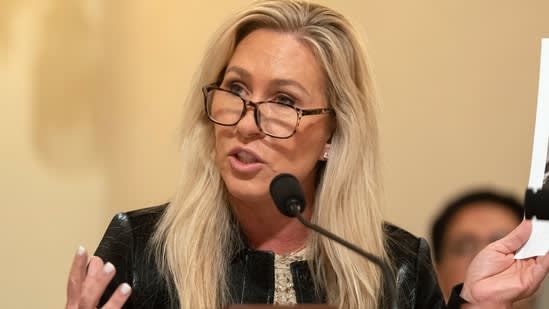
Marjorie Taylor Greene has publicly criticized Defense Secretary Pete Hegseth over his characterization of two soldiers killed in Jordan. The dispute centers on Hegseth's 'sacrifice' narrative versus Greene's accusations of foreign policy overreach.
The Clash Over Military Sacrifice and Foreign Policy
The recent public confrontation between former Congresswoman Marjorie Taylor Greene and Defense Secretary Pete Hegseth marks a significant ideological fracture within the Republican party regarding American foreign policy. The tension stems from Hegseth’s tribute to 1st Lt. Tyler James Feehan and Pvt. Isabella Gonzales, who tragically lost their lives in Jordan during Iranian-led attacks. Hegseth’s public statement on X, which characterized their deaths as a 'sacrifice' that 'stiffens our resolve,' has become the focal point of a heated debate over whether these service members were lost in the pursuit of national security or in the service of foreign agendas.
The 'Sacrifice' Narrative vs. Anti-Interventionism
For Secretary Hegseth, the rhetoric of 'sacrifice' is a traditional pillar of military leadership, intended to honor the fallen while maintaining the morale of the armed forces and the public. By framing their deaths as a source of 'resolve,' he aligns himself with a hawkish stance that views American military presence in the Middle East as a necessary deterrent. However, this traditional framing has met fierce resistance from the isolationist wing of the GOP, represented here by Greene, who rejects the notion that these deaths serve a domestic interest.
Accusations of Foreign Entanglement
Marjorie Taylor Greene’s critique goes beyond simple rhetoric, as she explicitly accuses the current administration of waging what she characterizes as a 'war for Israel.' This indicates a deepening rift between party leadership and a populist base that is increasingly skeptical of American military commitments abroad. By challenging the necessity of the mission in Jordan, Greene is attempting to reframe the narrative from one of heroic sacrifice to one of avoidable tragedy caused by what she perceives as misplaced geopolitical priorities.
Historical Context of GOP Foreign Policy Shifts
The tension displayed here reflects a broader historical evolution within the Republican party. For decades, the party was defined by a strong, interventionist stance in global conflicts. Today, the party is experiencing a pull toward 'America First' isolationism that questions the cost-benefit analysis of foreign deployments. The public nature of this spat suggests that the party’s internal debate over its role in global security is far from settled, with the loss of service members serving as a high-stakes flashpoint for these competing visions.
Broader Implications for the Defense Department
The disagreement between a high-ranking Defense official and a prominent political figure creates a complex environment for the Department of Defense. When the legitimacy of a mission is questioned by political allies, it complicates the Department's ability to maintain a unified message regarding its strategic objectives. This discord likely signals that future military deployments will face increased scrutiny from within the GOP, potentially limiting the administration's flexibility in responding to regional threats in the Middle East.
Concluding Outlook
As the political fallout from the deaths of Feehan and Gonzales continues to unfold, the incident serves as a precursor to future legislative and public debates. It is probable that we will see further pressure on the administration to justify specific military actions in the region, with the 'sacrifice' narrative becoming a central battleground for political messaging. This conflict is not merely about two service members; it is a fundamental struggle over the future direction of American interventionism.
Verification Required?