1 dead, several vehicles crushed after crane collapses from high-rise in Mumbai
Source Entity
TNN
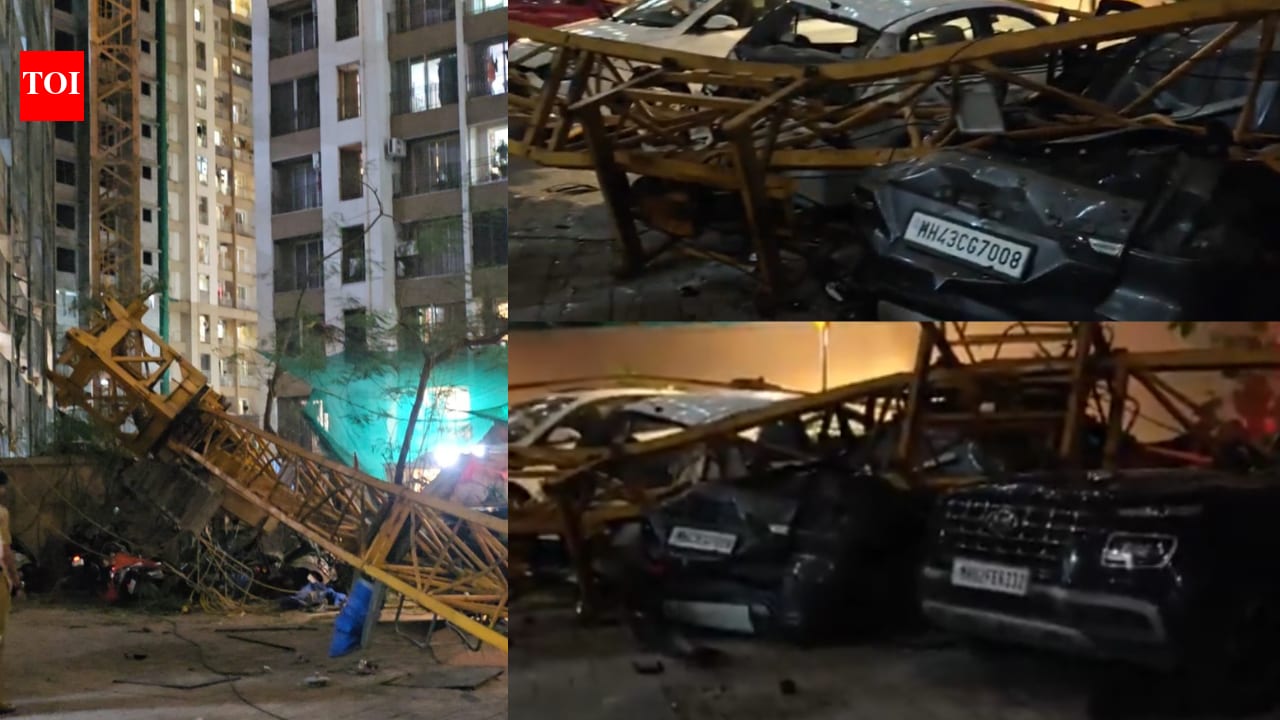
A tower crane collapse at an under-construction high-rise in Mira Road East, Mumbai, resulted in the death of a 21-year-old man, one serious injury, and significant damage to several parked vehicles.
Tragedy in Mira Road: Analysis of the Tower Crane Collapse
On a Thursday night in Mira Road East, Mumbai, a catastrophic structural failure occurred when a massive tower crane collapsed from an under-construction high-rise building. The incident resulted in the tragic death of a 21-year-old man and left another individual seriously injured. Beyond the human toll, the collapse caused extensive property damage, as the crane fell partially into the construction site and partially into the parking area of an adjacent housing society, crushing several cars and two-wheelers. This event underscores the inherent risks associated with high-density urban development and the critical importance of stringent safety protocols in construction.
The Immediate Impact and Site Dynamics
The collapse was not contained within the boundaries of the construction site, which is a significant point of concern. The fact that the crane fell into a residential parking area indicates a dangerous proximity between heavy industrial machinery and civilian living spaces. For the victims and the residents of the affected housing complex, this incident transforms a routine residential environment into a zone of extreme hazard. The death of a young man in his early twenties highlights the vulnerability of workers or bystanders in the vicinity of these massive structures, where a single mechanical failure can lead to instantaneous and fatal consequences.
Broader Context of Mumbai's High-Rise Boom
Mumbai and its surrounding suburbs, including Mira Road, have seen an unprecedented surge in vertical expansion due to land scarcity and rising population density. This "high-rise boom" necessitates the widespread use of tower cranes, which are essential for lifting heavy materials to great heights. However, the rapid pace of development often puts pressure on construction timelines, which can sometimes lead to lapses in maintenance or the bypassing of rigorous safety checks. The Mira Road incident serves as a grim reminder that as cities grow upward, the margin for error decreases, and the potential for collateral damage to surrounding neighborhoods increases exponentially.
Technical Failures and Regulatory Oversight
While an official investigation is currently underway to determine the exact cause, tower crane collapses typically stem from a few recurring issues: structural fatigue, improper installation, overloading, or extreme weather conditions. In the context of Mumbai's humid and coastal environment, corrosion and wear-and-tear can accelerate if maintenance is neglected. This incident will likely prompt a review of the safety certifications issued to the contractor and the crane operator. It raises critical questions about whether the local municipal authorities conducted the necessary periodic inspections and whether the construction firm adhered to the mandated safety buffers between the crane's swing radius and the neighboring residential property.
Implications for Urban Safety and Future Trends
This event is likely to trigger a call for stricter zoning laws and safety mandates regarding "buffer zones" in urban construction. Future trends in the industry may see a shift toward more automated monitoring systems, such as IoT-enabled sensors that can detect structural stress or tilt in real-time, alerting site managers before a collapse occurs. Furthermore, there may be increased pressure on developers to provide comprehensive insurance and safety guarantees to neighboring societies, ensuring that residents are not left vulnerable to the risks taken by adjacent construction projects.
Conclusion
The crane collapse in Mira Road East is more than a localized accident; it is a cautionary tale about the intersection of rapid urban growth and public safety. The loss of a young life and the destruction of property highlight a systemic need for more rigorous oversight and a "safety-first" culture in the construction sector. As investigations continue, the focus must remain on accountability and the implementation of fail-safe mechanisms to ensure that the pursuit of urban development does not come at the cost of human lives.