First riders on Bengaluru’s Namma Metro Pink Line welcomed by Minister with pink roses
Source Entity
India Latest News: Top National Headlines Today & Breaking News | The Hindu
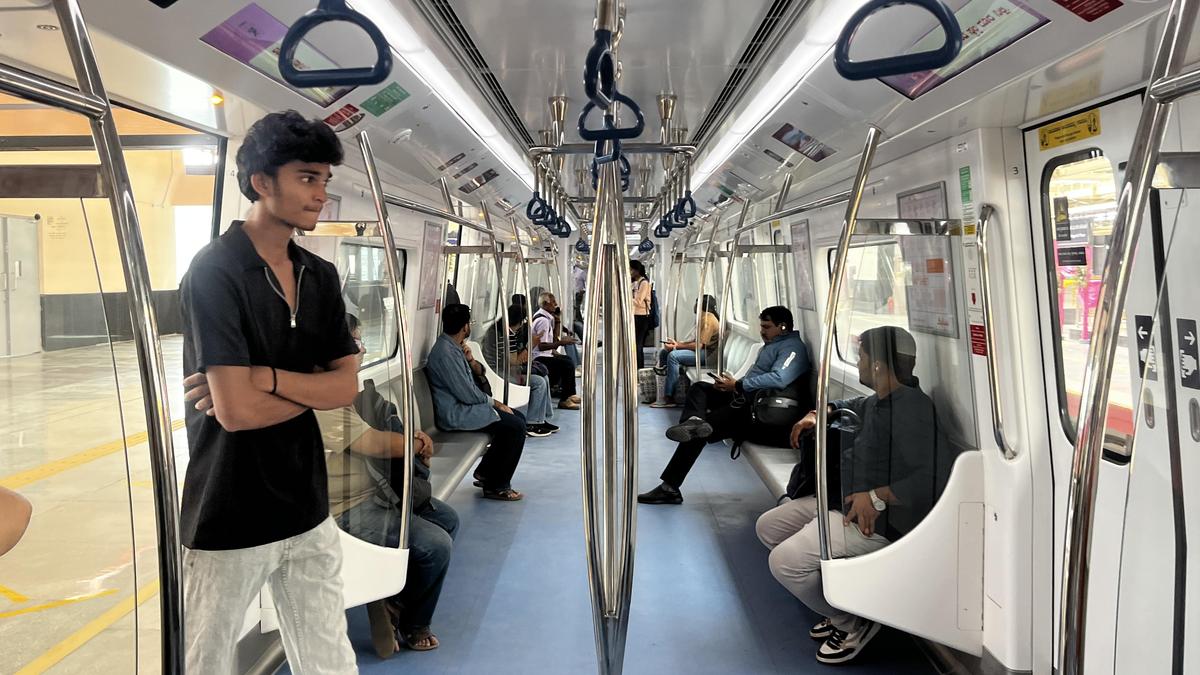
Bengaluru's Namma Metro Pink Line has officially commenced commercial operations, marked by a ceremonial welcome for passengers. The state government is now emphasizing the use of local materials for future station development.
The Pink Line Era: Bengaluru’s Transit Milestone
The commencement of commercial operations on Bengaluru’s Namma Metro Pink Line marks a significant expansion in the city's rapidly evolving public transportation infrastructure. With the first train departing at 6 a.m. on Saturday, the service was inaugurated in a public-facing manner by Greater Bengaluru Development Minister Krishna Byre Gowda, who personally welcomed passengers with pink roses. This gesture underscores the administration's attempt to foster a positive public connection with the project as it integrates into the daily lives of thousands of commuters.
Operational Success and Future Connectivity
Minister Gowda described the initial experience as "flawless and smooth," a critical assessment for a project of this scale. The Pink Line is not merely an isolated segment; it represents a vital component of the broader Namma Metro expansion strategy. The current focus is centered on extending the operational capacity toward M.G. Road and eventually reaching the key corridor of Nagawara. This expansion is essential for alleviating the notorious traffic congestion that plagues Bengaluru’s urban landscape, serving as a backbone for daily transit.
Strategic Oversight by Leadership
The involvement of top-tier leadership, including Chief Minister D.K. Shivakumar, who traveled on the line from Kengeri to the Kidwai Memorial Institute, highlights the political and administrative priority placed on this network. By engaging directly with the transit system, state leaders are signaling a commitment to monitoring service quality and operational efficiency. This high-level oversight is intended to ensure that the project meets international standards for urban mobility while maintaining public trust.
Emphasizing Local Economic Integration
A noteworthy directive issued by Chief Minister D.K. Shivakumar involves the BMRCL (Bangalore Metro Rail Corporation Limited) sourcing granite exclusively from within the State for future station construction. This policy shift is a deliberate move to support local industries and reduce dependency on external supply chains. By mandating the use of indigenous materials, the government is attempting to weave local economic benefits into the fabric of public infrastructure projects.
Long-term Implications for Urban Development
The Pink Line’s successful launch serves as a bellwether for the future of Bengaluru’s urban planning. As the city continues to expand, the integration of mass transit systems like the Namma Metro becomes the primary solution to sustainable growth. The emphasis on both operational excellence and local material sourcing suggests a more holistic approach to infrastructure development, where the project serves not just as a transport utility but as a catalyst for local economic development and urban connectivity.
Conclusion
In summary, the opening of the Pink Line is a landmark achievement for Bengaluru’s transit goals. With the government’s focus on extending the line to critical hubs and prioritizing local resources, the project is well-positioned to transform the city’s commuting experience. Moving forward, the success of the Pink Line will be measured by its reliability and its ability to seamlessly connect the diverse neighborhoods of this sprawling metropolis.
Verification Required?