Taming of ‘Kabra Kaan’: Meet the 3,000-kg tusker that has 100 forest officials on their toes
Source Entity
Jayprakash S Naidu
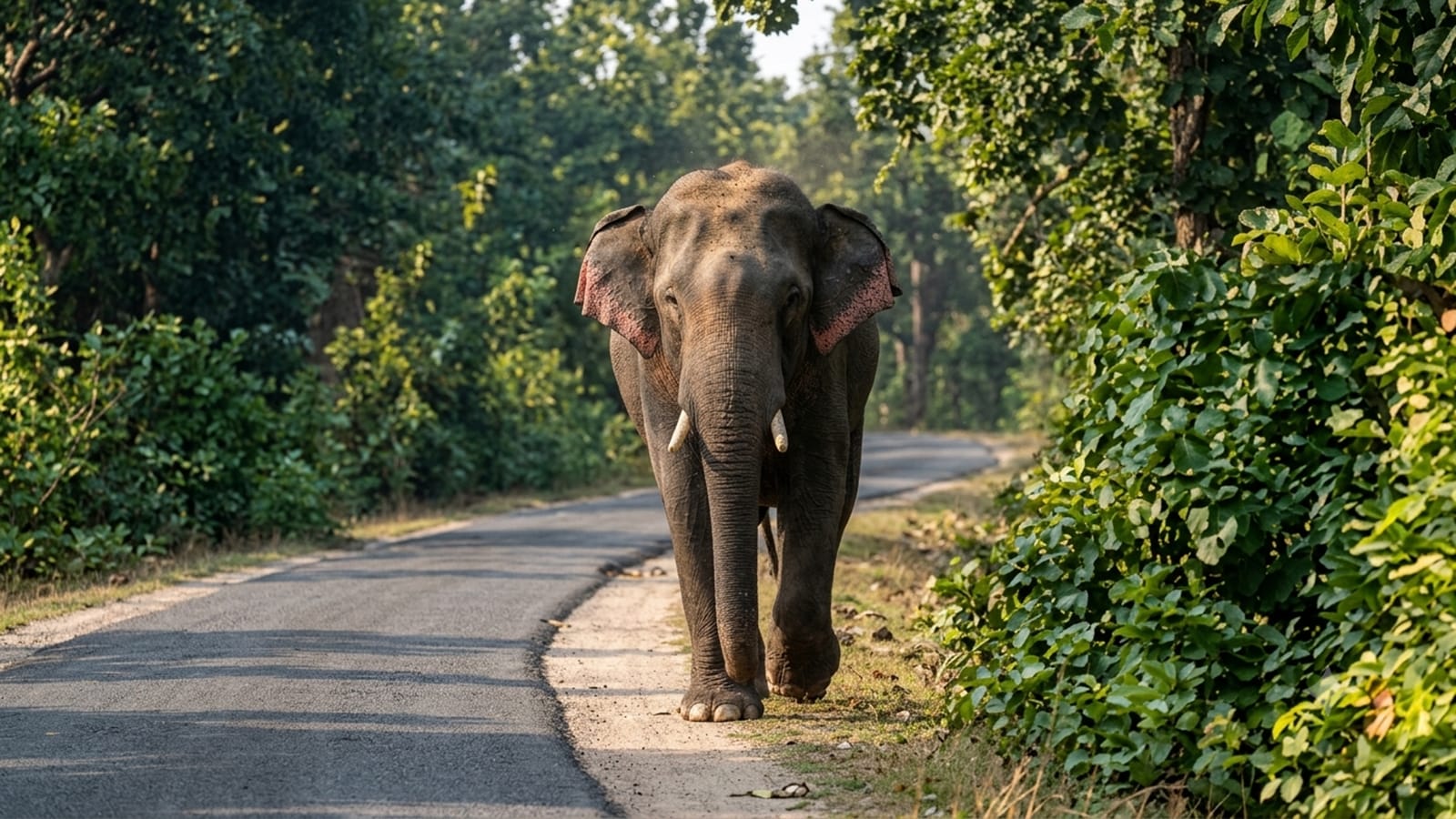
Chhattisgarh forest officials are currently tracking a 3,000-kg elephant named 'Kabra Kaan' responsible for 16 deaths. The tusker has entered a state of musth and is actively evading capture by hiding within larger herds.
The Hunt for 'Kabra Kaan': A Crisis in Chhattisgarh
The forests of northern Chhattisgarh have become the stage for a high-stakes operation involving over 100 forest officials, three veterinary doctors, and a specialized team of trained elephants and drone operators. They are in pursuit of a 3,000-kg, 20-year-old tusker known locally as 'Kabra Kaan'—a name derived from the distinct pigmentation found on its ears. This massive animal has been linked to the deaths of at least 16 people over the last several months, prompting an urgent and complex state-led intervention.
The Biological Challenge: Understanding Musth
At the core of this conflict is the biological phenomenon known as musth. This periodic condition in bull elephants is characterized by a significant surge in testosterone, often leading to unpredictable and highly aggressive behavior. For a 3,000-kg animal, this hormonal spike turns a creature that is typically wary of humans into an active threat. The 20-year-old tusker in question has displayed this aggressive shift, resulting in a series of fatal human-elephant conflicts that have terrorized the northern region of the state.
Strategic Evasion and Tracking Difficulties
Tracking this elephant has proven to be an immense logistical challenge. Officials report that 'Kabra Kaan' appears to demonstrate a high level of situational awareness, having seemingly realized it is being pursued. In a display of tactical evasion, the tusker has integrated itself into a larger herd of other elephants. This behavior complicates the department's mission, as it becomes nearly impossible to identify and isolate the specific target without endangering other animals or the tracking team.
The Escalation of Intervention
After months of escalating fatalities and injuries, the forest department officially received authorization last week to tranquilize the animal. The deployment of drones, coupled with the reliance on trained 'kumki' (trained) elephants, underscores the gravity of the situation. The presence of three veterinary doctors on-site highlights the necessity for precision; tranquilizing a 3,000-kg animal requires careful dosage calculation to ensure the safety of both the elephant and the rescue team, particularly when the animal is surrounded by other members of its species.
Broader Implications for Human-Wildlife Conflict
This situation reflects the growing trend of human-wildlife conflict in India as habitats fragment and human settlements encroach further into forested corridors. The 'Kabra Kaan' case is a stark reminder of the delicate balance between conservation efforts and the immediate need to protect human life. As the state continues its four-day-long pursuit, the incident will likely serve as a case study for future wildlife management policies, emphasizing the need for better early-warning systems and non-lethal mitigation strategies in areas where human populations and elephant corridors intersect.
Future Trends in Wildlife Management
The ongoing operation in Chhattisgarh highlights a shift toward more technologically integrated conservation efforts. The use of drones for aerial surveillance in dense jungle terrain is becoming an essential tool for tracking wildlife in real-time. Moving forward, the success of this mission will depend on the department's ability to safely separate the tusker from its herd. Regardless of the outcome, the saga of 'Kabra Kaan' remains a profound example of the volatility inherent in managing large, wild animals in a rapidly changing environment.