Wildfire forces evacuation of NASA's Deep Space Network complex in Spain
Source Entity
Stephen Clark
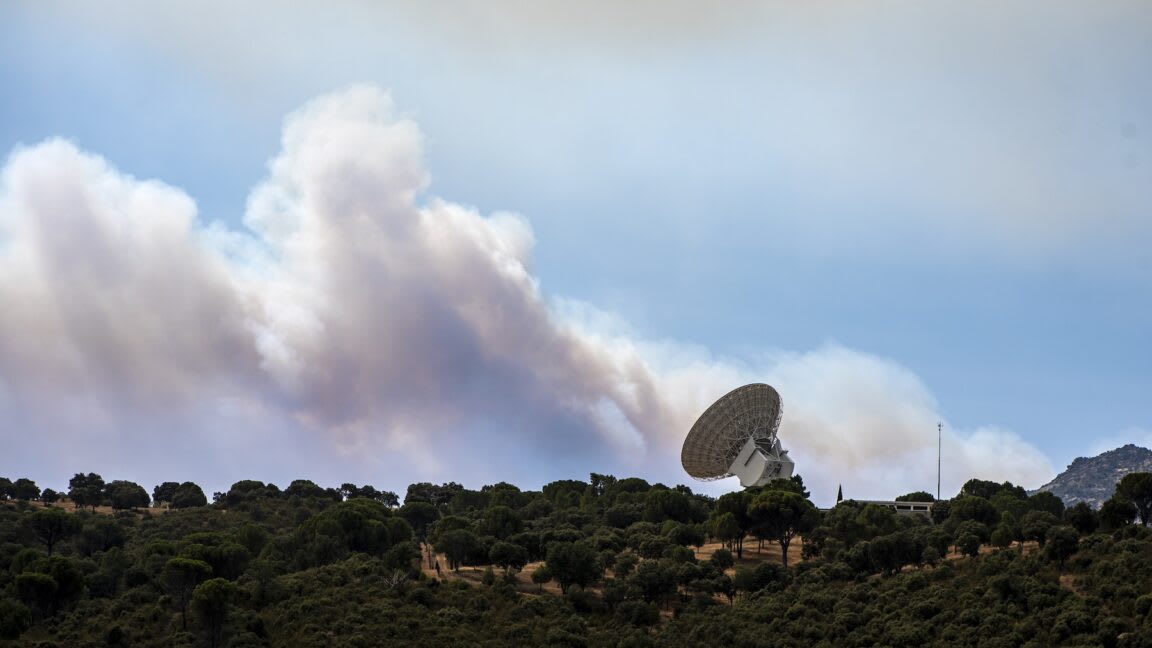
A severe wildfire in Spain forced the evacuation and temporary suspension of operations at NASA's critical Madrid Deep Space Communications Complex. The facility is vital for maintaining contact with over 40 deep space missions, including the James Webb Space Telescope and Voyager probes.
Critical Disruption at NASA's Madrid Tracking Station
On Friday, a rapidly advancing wildfire in Spain necessitated the immediate evacuation of the Madrid Deep Space Communications Complex, a critical node in NASA’s global infrastructure. Located approximately 40 miles west of Madrid, the facility serves as one of three primary sites within the Deep Space Network (DSN). The proximity of the wildfire to such high-value technological infrastructure highlights the increasing vulnerability of remote scientific installations to the intensifying climate-driven fire seasons in Southern Europe.
The Strategic Importance of the Deep Space Network
The Madrid complex, alongside its sister sites in Goldstone, California, and Canberra, Australia, provides essential 360-degree coverage of the sky. This tri-continental configuration is not merely for redundancy; it is a physical necessity. As the Earth rotates, the DSN ensures that NASA maintains a continuous, uninterrupted link with spacecraft regardless of the planet's orientation. Without the Madrid station, there are significant gaps in communication coverage for missions navigating the vast distances of our solar system.
Impact on Global Space Exploration
The implications of this temporary suspension are far-reaching. The DSN currently supports over 40 active missions, ranging from lunar exploration initiatives like the Artemis program to the high-stakes operations of the James Webb Space Telescope and the aging, yet vital, Voyager spacecraft. Any prolonged interruption at the Madrid site threatens the telemetry and command capabilities required to manage these probes as they traverse the edge of our solar system.
Assessing Vulnerability in a Changing Climate
This incident underscores a growing trend where critical scientific assets are increasingly exposed to extreme environmental conditions. While NASA has confirmed that operations were suspended for safety, the agency has noted that any potential damage to the physical hardware will only be assessed once fire crews deem the area secure. The reliance on terrestrial infrastructure for extraterrestrial exploration creates a unique paradox where global space programs remain tethered to the stability of local climate conditions.
Future Trends and Resilience
Moving forward, agencies like NASA will likely need to re-evaluate the fire-resilience of their ground station facilities. As Mediterranean regions face longer, drier summers, the risk of wildfires impacting mission-critical hardware will remain a persistent operational threat. The recovery of the Madrid complex will be closely monitored, as its return to service is essential for maintaining the continuous data flow that powers modern deep space science and ensures the safety of ongoing planetary missions.