Without new landers or rovers, it's helicopters or bust for NASA's Mars program
Source Entity
Stephen Clark
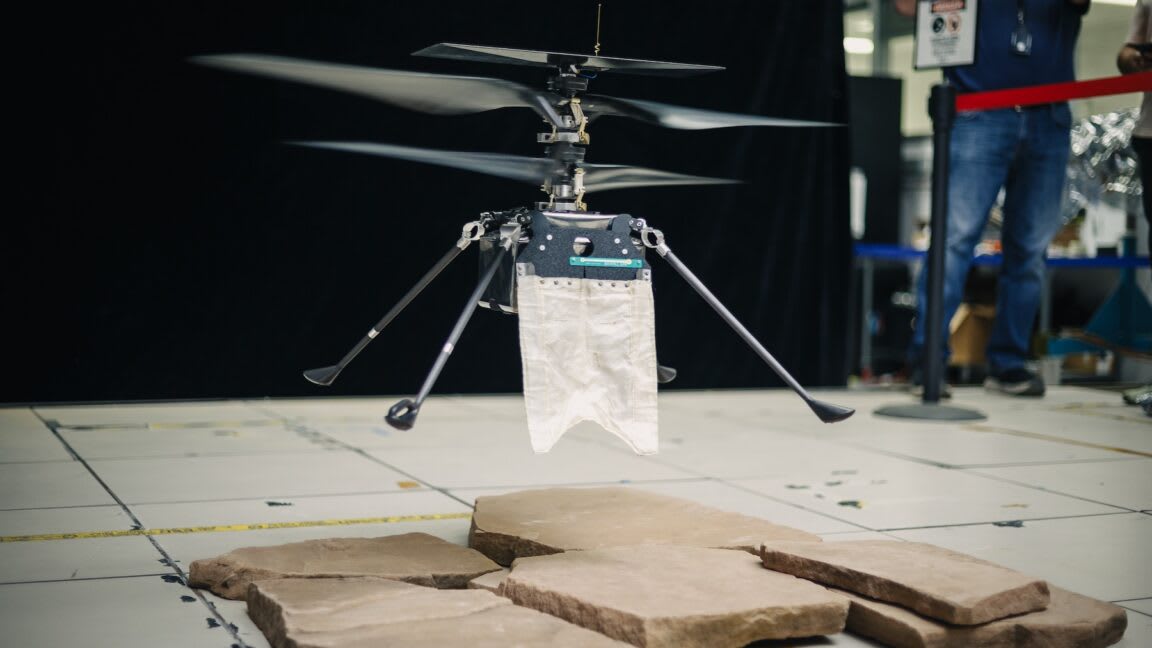
NASA is shifting its Mars exploration strategy toward aerial drone technology, effectively ending the era of new landers and rovers for the near term. The upcoming SkyFall mission will deploy three helicopters alongside the nuclear-powered SR-1 Freedom mission in 2028.
The Shift to Aerial Exploration on Mars
For the first time in over three decades, NASA has pivoted its strategy for Martian exploration, moving away from the traditional model of deploying heavy landers and rovers. This shift represents a fundamental change in how the agency approaches the challenges of the red planet's terrain. By prioritizing aerial drones, NASA is embracing a pioneering mode of exploration that was previously considered impractical, marking a significant evolution in planetary science.
The SkyFall Mission and Technological Innovation
The centerpiece of this new approach is the SkyFall mission, which is slated to deploy a fleet of three helicopters. This mission is scheduled for launch as early as late 2028. This move signifies a departure from the cumbersome, wheel-based exploration that defined missions like Curiosity and Perseverance, opting instead for the agility and broad coverage that flight provides in the thin Martian atmosphere.
Integration with SR-1 Freedom
The SkyFall helicopters will piggyback on the Space Reactor-1 (SR-1) Freedom mission. This mission serves a dual purpose: it acts as the primary transport for the drones while simultaneously demonstrating nuclear electric propulsion technology in deep space. By pairing advanced propulsion testing with aerial reconnaissance, NASA is maximizing the utility of its launch windows and resources.
Financial and Strategic Implications
Financially, the SR-1 Freedom mission is a significant undertaking, with current cost estimates reaching $2.1 billion. Notably, this figure does not include the additional costs associated with the SkyFall helicopter fleet. The aggressive timeline for these projects—neither of which existed in NASA’s portfolio six months ago—highlights a rapid acceleration in the agency’s planning and development cycles to meet new strategic objectives.
Historical Context and Future Trends
The abandonment of new lander and rover programs for the time being creates a vacuum in traditional surface exploration that drones must now fill. Historically, NASA’s reliance on rovers allowed for localized, high-resolution geological sampling. The transition to helicopters suggests that the agency is prioritizing broad-scale mobility and the ability to survey inaccessible areas, potentially setting a new standard for future planetary missions.
Conclusion
NASA’s transition to an 'aerial-first' strategy on Mars is a bold, high-stakes gamble on emerging drone technology. While the $2.1 billion price tag for SR-1 Freedom underscores the economic demands of deep-space exploration, the success of the SkyFall mission could redefine the future of interplanetary scouting. As the agency moves toward the 2028 launch window, the focus will remain on whether these helicopters can provide the scientific return necessary to justify the end of the rover era.