'Won't let go of our right to vote': Anti-SIR protesters march to EC headquarters
Source Entity
AADRITA HALDER
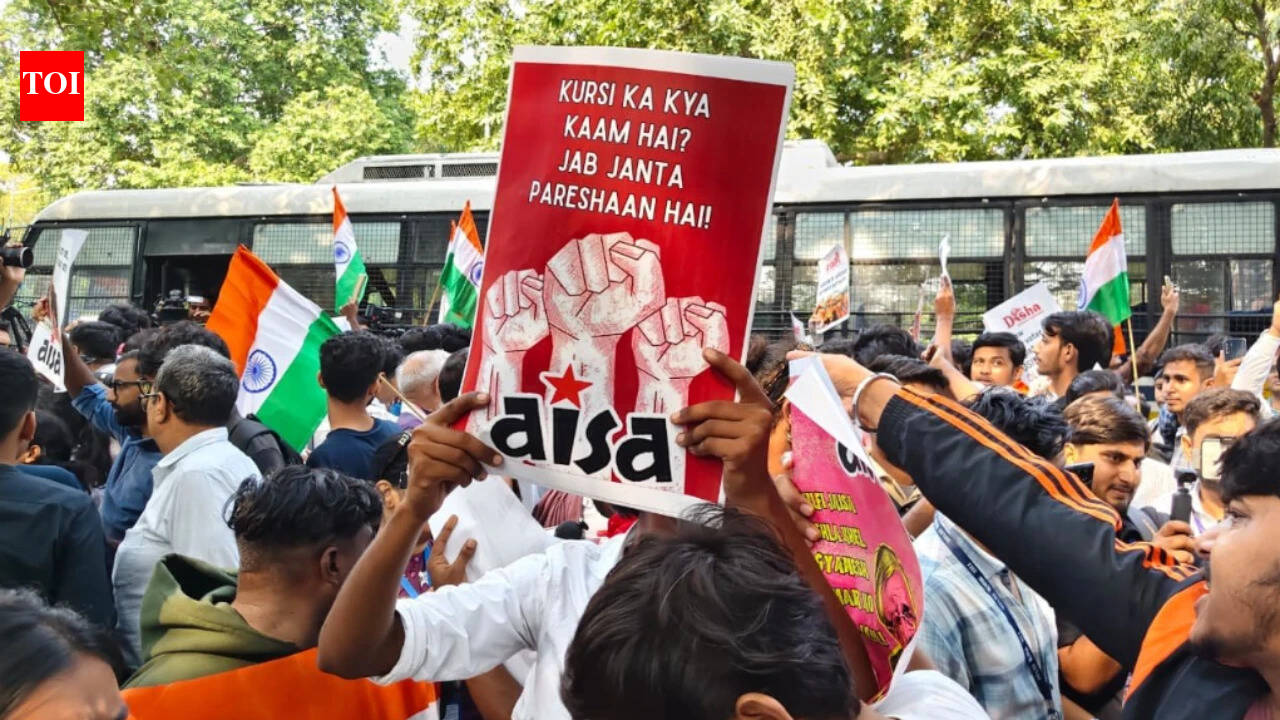
Diverse civil society groups and the Samyukt Kisan Morcha are holding nationwide protests against the Special Intensive Revision of electoral rolls. The demonstrations demand the removal of CEC Gyanesh Kumar and the restoration of deleted voting rights.
Nationwide Protests Erupt Over Electoral Integrity
On October 23, 2026, a broad coalition of civil society organizations, led by the Samyukt Kisan Morcha (SKM) and the 'People Against SIR' platform, initiated nationwide demonstrations to protest the Special Intensive Revision (SIR) of electoral rolls. The movement, which encompasses farmers, trade unions, student organizations, and prominent activists, centers on allegations of systemic irregularities in the voter registration process. By targeting district headquarters and state capitals, the protesters aim to draw national attention to their grievances regarding the perceived disenfranchisement of voters.
The Core Demands and Governance Concerns
The primary grievance of the 'People Against SIR' movement is the systematic deletion of voters from electoral rolls under the current revision process. Protesters are demanding the immediate restoration of voting rights for those affected and have called for the removal and prosecution of Chief Election Commissioner (CEC) Gyanesh Kumar. The SKM has even escalated the matter by writing to President Droupadi Murmu, signaling a deep erosion of trust in the constitutional body tasked with overseeing the democratic process.
Strategic Mobilization in the Capital
In Delhi, the protest has taken a highly visible form with a planned march to the Election Commission’s office. Prominent figures, including activist Tushar Gandhi, farmer leader Rakesh Tikait, senior advocate Prashant Bhushan, and student leaders like Neha Bora and Aishe Ghosh, have been invited to participate. The organizers have adopted the slogan 'Har Gali mein Jantar Mantar,' symbolizing their intent to decentralize protest actions and reclaim democratic spaces across the country, while explicitly stating they will not seek formal police permission for their march.
Logistical Impact and Public Safety
As the march proceeds from key landmarks such as Connaught Place, Gurudwara Bangla Sahib, and Gol Market, the Delhi Police have issued a comprehensive traffic advisory. With diversions scheduled between 1 p.m. and 5 p.m. near sensitive areas like Jantar Mantar and Bangla Sahib, the city faces significant logistical disruptions. The authorities are balancing the management of public movement with the presence of large, determined crowds, as organizers have issued stern warnings against the use of force by law enforcement.
The Future of the 'No SIR' Campaign
The 'People Against SIR' platform, which was formally established on October 14 at Surjeet Bhavan, represents a growing unified front of diverse interest groups. By linking the concerns of farmers with those of students and laborers, the movement is attempting to build a long-term pressure campaign. The success of this protest will likely depend on the government's response to the specific allegations regarding voter roll revisions and whether the Election Commission addresses the calls for administrative accountability.
Conclusion
The events of October 23 mark a significant moment in contemporary Indian civil society advocacy. By centering their dissent around the fundamental right to vote and the transparency of the Election Commission, the coalition has elevated the 'No SIR' campaign into a broader discourse on the health of democratic institutions. The outcome of these protests will be closely watched as a gauge of political stability and the responsiveness of constitutional authorities to public grievance.
Multiple Citing Sources