Is NATO planning to cut off Kaliningrad? The bloc is 'quietly' preparing Europe for war with Russia
Source Entity
Latest News: Todays Latest News Headlines from India & World | Hindustan Times | Hindustan Times
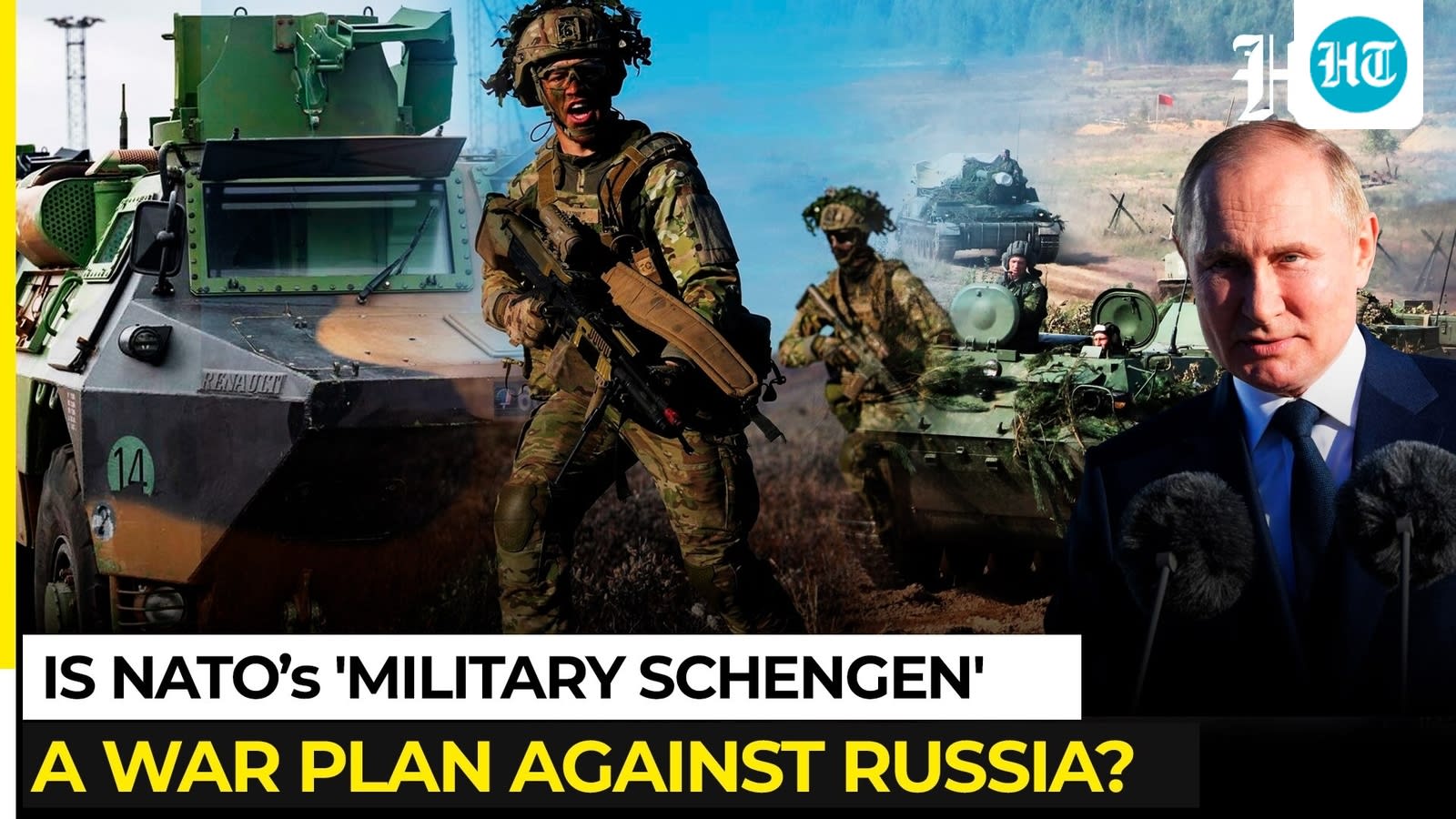
Russia has accused NATO of preparing for a direct military confrontation by 2030, citing infrastructure upgrades and alleged blockade scenarios for Kaliningrad. While NATO maintains these are defensive measures, tensions are escalating due to Finland’s involvement in nuclear-deterrence initiatives. Experts note no evidence of an imminent invasion, highlighting instead a critical risk of miscalculation.
The Escalating Rhetoric: NATO-Russia Tensions in the Baltic
Recent accusations from Russian diplomat Yulia Zhdanova have brought the security architecture of Northern Europe into sharp focus. Russia claims that NATO is systematically preparing for a direct military "hot phase" against Moscow by 2030, citing the rapid expansion of dual-use infrastructure—including upgraded airports, railways, and bridges—across the continent. From the Kremlin’s perspective, these logistical enhancements are not merely defensive but are intended to facilitate the rapid movement of heavy weaponry toward Russia’s borders.
The Kaliningrad Factor
Central to these Russian allegations is the status of Kaliningrad, Russia’s strategic exclave nestled between Poland and Lithuania. Moscow has explicitly accused NATO members of running war-game scenarios designed to blockade this territory and isolate key northwestern ports like St. Petersburg. These concerns have been exacerbated by Poland’s recent advocacy for increased NATO military exercises in the region, which Russia interprets as a direct, provocative pressure campaign rather than standard alliance training.
The Nuclear Deterrence Dispute
Beyond conventional logistics, the friction has shifted toward nuclear signaling. Russia has issued multiple warnings following Finland’s decision to join France’s "forward deterrence" initiative. This move, while perceived by Helsinki and Paris as a necessary adjustment to a post-2022 security reality, is viewed by Moscow as an unacceptable expansion of NATO’s nuclear posture. This has turned the Baltic and Arctic regions into a volatile theater where nuclear rhetoric is becoming increasingly normalized.
Assessing the Strategic Reality
Despite the alarmist tone coming from Moscow, it is vital to distinguish between political signaling and actual military intent. Currently, there is zero verifiable evidence to suggest that NATO is planning an invasion of Kaliningrad or any other Russian territory. The alliance maintains that its activities are strictly defensive and intended to deter further Russian aggression in Europe. However, the sheer volume of military movement in the region creates a "security dilemma," where defensive actions by one side are perceived as offensive threats by the other.
Risks of Miscalculation
the most significant danger in the current climate is not necessarily a planned invasion, but the rising risk of accidental miscalculation. As both sides increase their military footprint in the Baltic, the proximity of forces makes the threshold for a tactical error dangerously low. If a routine training exercise is misinterpreted as a prelude to a blockade or an offensive, the potential for rapid escalation remains a primary concern for international security analysts.
Future Trends and Outlook
Looking forward, we can expect the Baltic region to remain the primary flashpoint for NATO-Russia relations. As Europe continues to strengthen its military mobility and Finland integrates further into NATO’s nuclear-deterrence planning, the Kremlin is likely to continue its rhetoric regarding "encirclement." The future of European security will hinge on whether diplomatic channels can be maintained to manage these logistical build-ups and prevent a cold-war style standoff from turning into a direct, unintended conflict.
Verification Required?