Three charts that possibly explain Monday’s student protest | Number Theory
Source Entity
Latest News: Todays Latest News Headlines from India & World | Hindustan Times | Hindustan Times
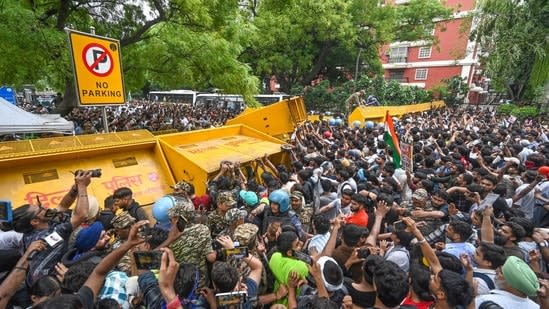
Recent student protests surrounding NEET suggest growing public dissatisfaction with employment prospects. Data indicates a decline in consumer confidence regarding jobs since the start of the government's second term.
The Intersection of Educational Aspirations and Economic Sentiment
The recent wave of student protests surrounding the NEET examination has transcended the immediate grievances of medical aspirants to become a broader barometer of national sentiment. While the protests were triggered by specific concerns regarding testing integrity and fairness, the resonance of these demonstrations suggests a deeper, more systemic anxiety regarding the state of employment and future opportunity in India.
The Role of RBI Consumer Confidence Data
Data from the Reserve Bank of India’s (RBI) Urban Consumer Confidence Survey (UCCS) provides a crucial lens through which to view these protests. The survey tracks net sentiment by measuring the difference between respondents who perceive improvement in employment and those who do not. Historically, these metrics serve as a reliable proxy for the electorate's satisfaction with the prevailing economic trajectory and the government’s ability to generate meaningful livelihoods for the youth.
Historical Trends in Economic Perception
An analysis of long-term UCCS data reveals a distinct arc in public perception. During the early years of the first Narendra Modi-led government, sentiment regarding both current employment and future outlook reached a notable peak, buoyed by the promise of economic prosperity and governance reform. While there was a slight moderation in sentiment during the mid-term, the outlook recovered toward the end of that first term, suggesting a period of sustained public trust in the administration’s economic agenda.
The Shift in the Second Term
Conversely, the government's second term marked a visible stagnation in employment-related sentiment. According to the UCCS indicators, the performance on both current perception and future outlook metrics deteriorated significantly. This decline is not merely a statistical anomaly; it reflects a growing disconnect between the government's stated objectives and the lived realities of urban consumers, particularly those entering the workforce.
Broader Implications for Governance
When a specific event like the NEET protest occurs against such a backdrop of economic stagnation, it acts as a catalyst for latent frustration. The fact that these protests have resonated with a constituency far wider than just NEET aspirants indicates that the issue has become a proxy for the broader 'employment crisis.' The inability to secure perceived economic stability has transformed educational grievances into a wider sociopolitical challenge for the government as it begins its third term.
Conclusion and Future Outlook
As the government moves into its third term, the data suggests that the burden of restoring public confidence is significant. The path forward requires addressing not only the technical issues within the examination system but also the underlying anxieties regarding job creation. Unless the government can pivot to address these long-standing concerns identified by the UCCS, protests of this nature are likely to remain a recurring feature of the national discourse.
Verification Required?