Nepal flash floods LIVE: Death count crosses 150, hundreds missing, including 133 Indians; India sends relief materials
Source Entity
Latest News: Todays Latest News Headlines from India & World | Hindustan Times | Hindustan Times
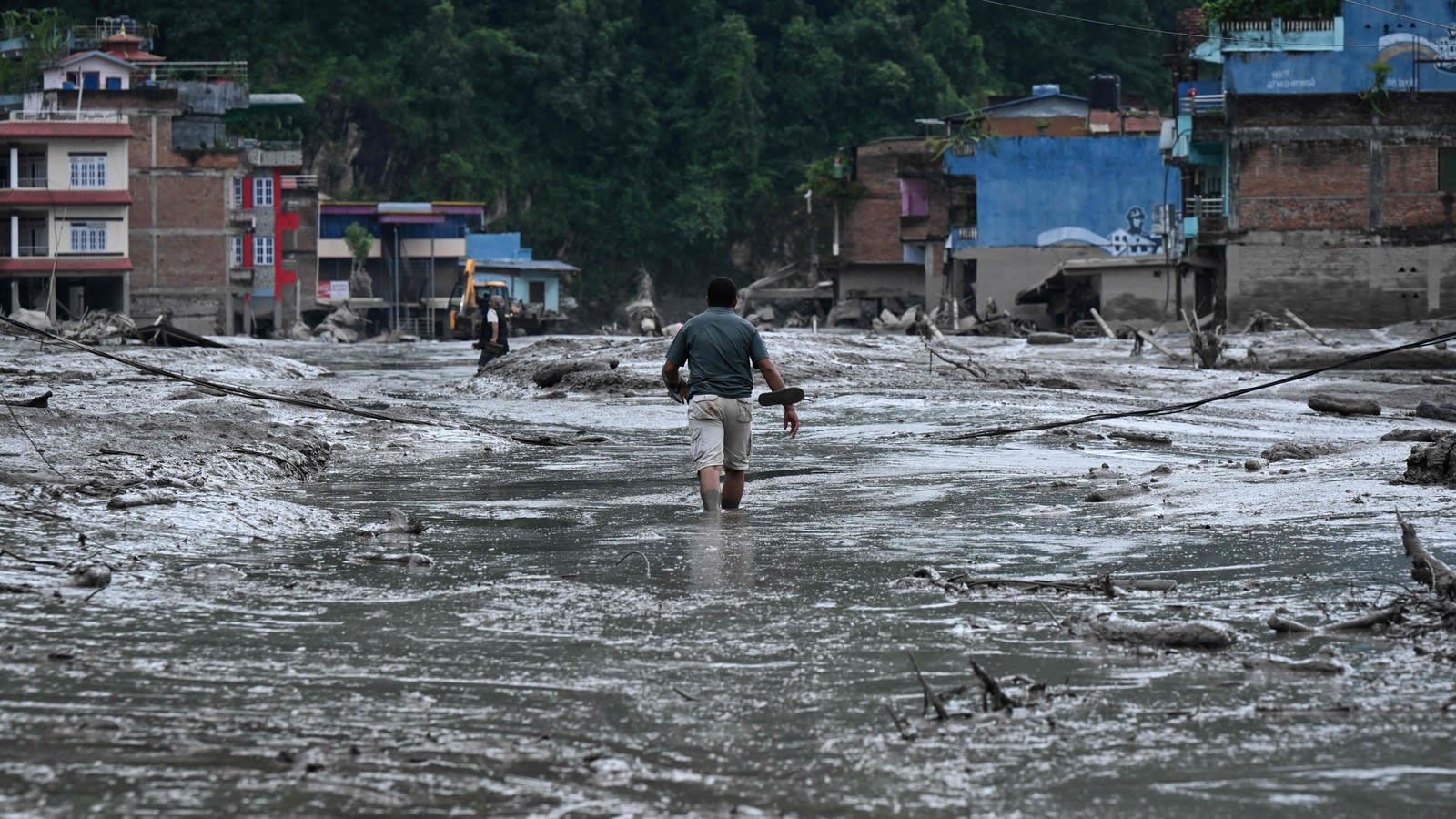
A massive flash flood in Nepal's Rasuwa district has claimed at least 160 lives, with hundreds still missing. Scientists are currently investigating an ice-rock avalanche on the Nepal-Tibet border as the likely catalyst for the disaster.
The Tragic Aftermath of Nepal's Flash Floods
On Wednesday, August 26, 2026, a catastrophic disaster struck the northern regions of Nepal, specifically the Rasuwa district. The event, characterized by sudden and overwhelming flash floods, resulted in a tragic loss of life, with at least 160 confirmed fatalities and hundreds of individuals reported missing. The scale of the destruction is profound, as the torrents—composed of a lethal mixture of water, sediment, and massive boulders—surged through the Bhote Koshi and Trishuli rivers, leaving a trail of devastation across the landscape.
The Role of Geological Instability
Scientists from the International Centre for Integrated Mountain Development (ICIMOD), working alongside partner institutions in Nepal and China, are currently conducting a forensic investigation into the origins of the flood. Preliminary findings suggest that the disaster was likely triggered by an ice-rock avalanche originating from a high-altitude area near the Nepal-Tibet border. This phenomenon highlights the inherent geological volatility of the Hindu Kush Himalaya (HKH) region, where rapidly shifting terrain can transform atmospheric and cryogenic events into life-threatening surges of debris.
The Vulnerability of the Himalayan Region
Nepal’s geography makes it uniquely susceptible to such events. The combination of steep topography and the presence of numerous glacial lakes creates a high-risk environment. When an ice-rock avalanche enters water bodies or river channels, it can cause immediate displacement of water, resulting in the violent floods observed in the Nuwakot and Rasuwa districts. The constant movement of the Himalayan range, coupled with the instability of high-altitude glacial features, presents a continuous challenge for local and regional disaster mitigation strategies.
Challenges in Search and Rescue
Following the disaster, rescue operations have been severely hampered by the terrain and the sheer volume of debris deposited by the flood. Reports indicate that rescuers have been forced to utilize heavy earthmovers to reach submerged houses and trapped survivors along the banks of the Trishuli River. The logistical difficulty of navigating areas where infrastructure has been obliterated by mud and boulders underscores the immense pressure placed on local authorities during such high-intensity events.
Institutional Response and Broader Implications
ICIMOD, as a Nepal-based intergovernmental institution, is at the forefront of efforts to understand and protect the HKH region. This event serves as a critical case study for regional cooperation between Nepal and China, as the disaster originated across the border in Tibet and cascaded downstream. The collaborative investigation highlights the necessity of cross-border data sharing and early warning systems to mitigate the impact of future transboundary environmental disasters.
Future Outlook and Conclusion
As the search for the missing continues, the focus will likely shift toward long-term recovery and the implementation of more robust monitoring systems. The tragedy on August 26, 2026, serves as a sobering reminder of the environmental risks associated with living in the shadow of the Himalayas. Understanding the mechanics of ice-rock avalanches and their relationship to flash flooding is no longer merely an academic exercise; it is an urgent requirement for the safety and resilience of the millions of people who reside in these high-risk river valleys.
Multiple Citing Sources
Verification Required?