Nepal flash flood: What triggered the deadly Himalayan disaster?
Source Entity
India Latest News: Top National Headlines Today & Breaking News | The Hindu
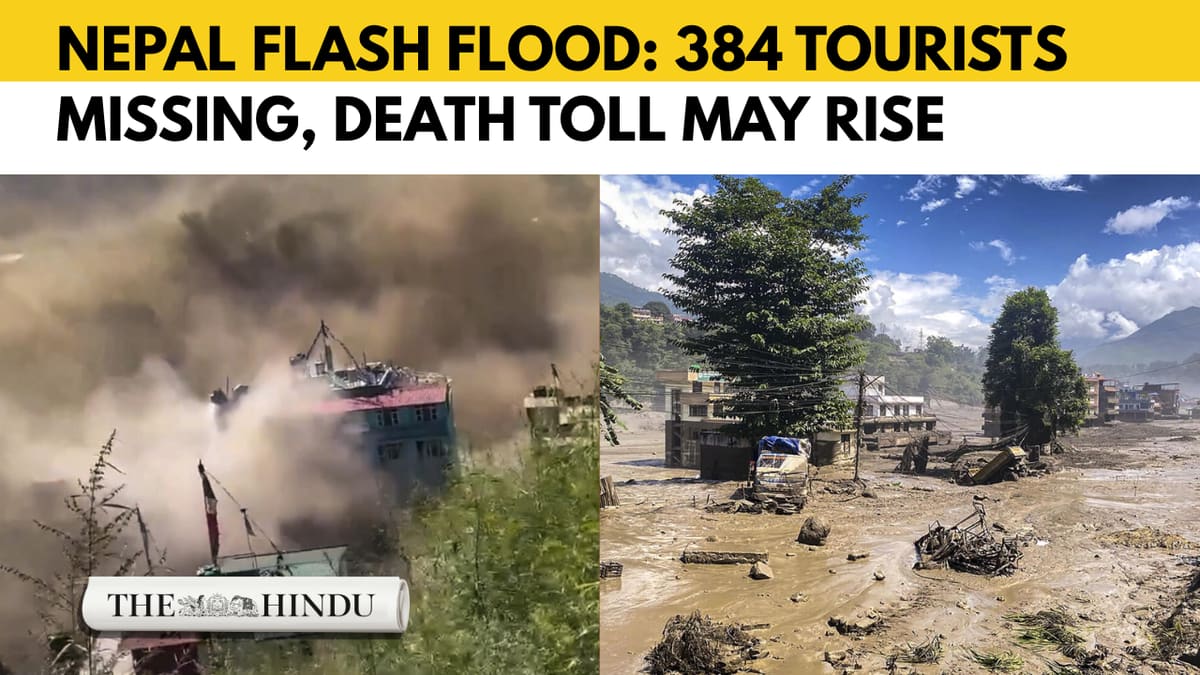
A suspected ice-rock avalanche in the Himalayas has triggered devastating flash floods on the Nepal-Tibet border, resulting in significant casualties and missing persons. Concurrently, Indian authorities in Uttar Pradesh and Bihar are on high alert for potential riverine flooding, while local tensions rise in Rae Bareli following the desecration of an Ambedkar statue.
Himalayan Flash Floods: A Geopolitical and Environmental Crisis
The Trigger: Ice-Rock Avalanches in the Hindu Kush Himalaya
Scientific investigations led by the International Centre for Integrated Mountain Development (ICIMOD) are currently centered on an ice-rock avalanche as the primary catalyst for the catastrophic flash floods that struck the Nepal-Tibet border. The Hindu Kush Himalaya (HKH) region is increasingly susceptible to such high-altitude geological instability, often exacerbated by shifts in glacial stability. This event, which sent a torrent of water, sediment, and boulders through the Bhote Koshi and Trishuli rivers, underscores the extreme vulnerability of mountain communities to rapid environmental changes in the region.
Humanitarian Impact and Search Operations
The human cost of this disaster has been significant, with reports confirming dozens of fatalities and nearly 400 individuals, including 105 Indian nationals, listed as missing. Rescuers are currently utilizing heavy earthmoving equipment to navigate the devastated landscape in Nepal’s Rasuwa and Nuwakot districts. The destruction of submerged houses and the debris-choked riverbeds present significant logistical hurdles for search-and-rescue teams working in treacherous terrain.
Transboundary Water Risks: The India-Nepal Connection
The environmental impact extends well beyond the point of origin. Because the Trishuli river feeds into the Gandak system, authorities in the Indian states of Uttar Pradesh, Bihar, and Uttarakhand have been placed on high alert. The combination of heavy rainfall and the necessary opening of barrage gates in Nepal creates a high probability of rising water levels in the Ghaghara, Rapti, and Kosi rivers. This highlights the delicate nature of transboundary water management in South Asia, where sudden upstream events dictate immediate downstream safety protocols.
Socio-Political Tensions in Rae Bareli
In a seemingly unrelated but significant domestic development, the village of Baburiha in Rae Bareli, India, has experienced heightened tensions following the desecration of a statue of Dr. B.R. Ambedkar. The act of smearing mud and soot on the statue has sparked local outrage, testing the social fabric of the community. The swift response by the Additional Superintendent of Police and the deployment of security forces emphasize the government's priority in maintaining public order and preventing the incident from escalating into wider communal unrest.
Broader Implications and Future Trends
These events, while geographically distinct, highlight the dual challenges facing the region: environmental volatility and social stability. The Himalayan floods serve as a stark reminder of the urgent need for robust early-warning systems and international cooperation between Nepal, China, and India regarding glacial monitoring. Simultaneously, the incident in Rae Bareli reflects the ongoing necessity for local administration to act decisively against acts of vandalism that threaten social harmony. As the region navigates these crises, the intersection of climate-driven disasters and domestic governance will remain a critical focal point for policymakers in the coming months.
Multiple Citing Sources
Verification Required?