‘Bizarre’ for world to incur more debt to deal with high debt: NK Singh
Source Entity
Siddharth Upasani
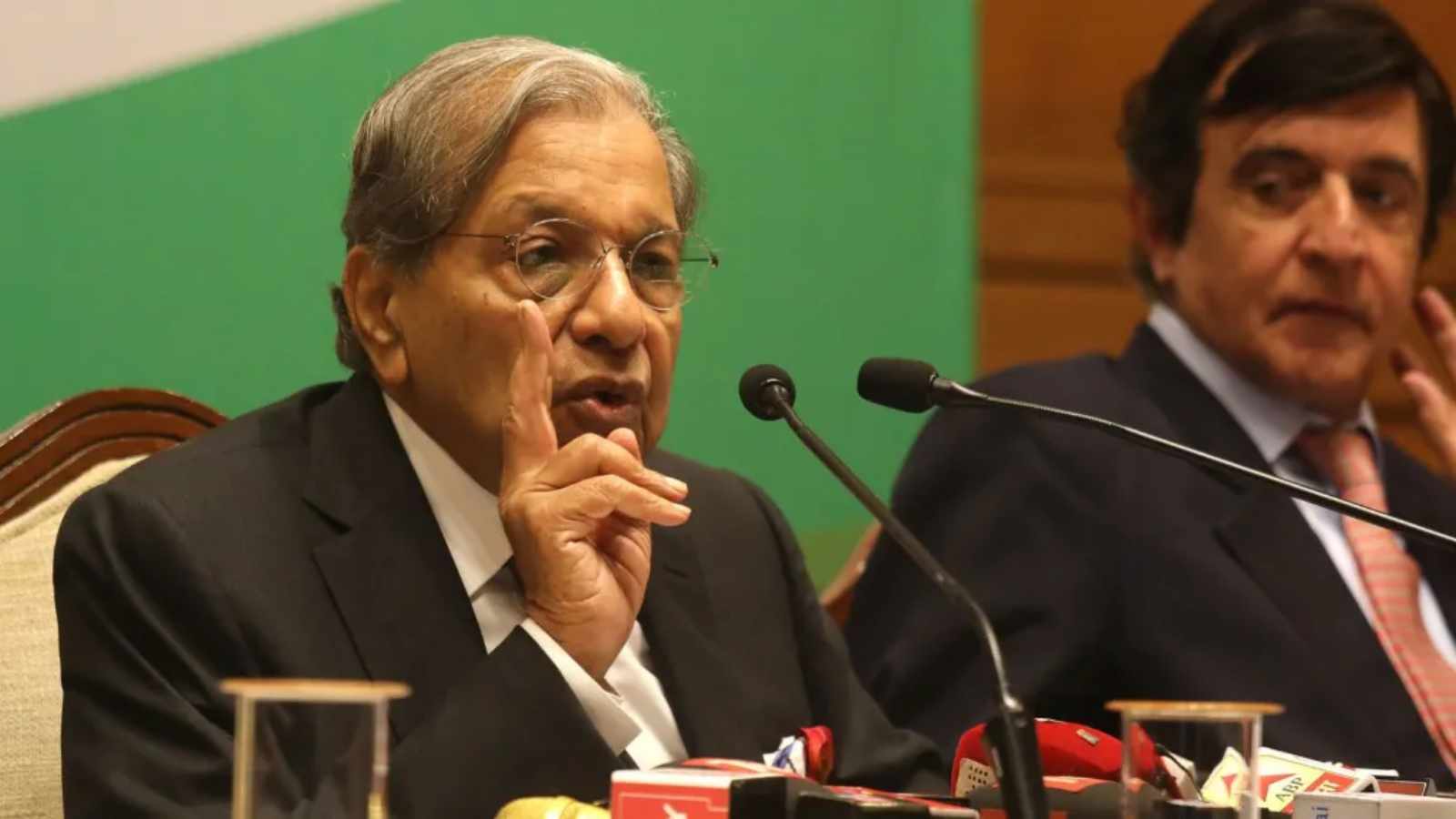
NK Singh, Chairman of the 15th Finance Commission, has criticized the global economic trend of addressing high debt levels by incurring further debt. During his book launch, he and economist Minouche Shafik discussed the unsustainable political and fiscal challenges facing advanced economies.
The Paradox of Global Debt: An Expert Analysis
NK Singh, the Chairman of the 15th Finance Commission, recently highlighted a growing concern regarding the global economic landscape: the counterintuitive practice of using new debt to resolve existing debt burdens. Speaking at the launch of his book, Endeavours: An Ensemble of My Life, Singh characterized this financial strategy as "bizarre," arguing that it ignores the fundamental risks associated with long-term fiscal instability.
The Structural Crisis of Modern Finance
Singh’s assessment stems from the observation that the world is currently enduring a "severe crisis of multiple kinds." By suggesting that borrowing more to pay off current liabilities is a flawed prescription, he touches on the core issue of fiscal sustainability. Historically, economic theory suggests that debt is a tool for investment and growth; however, when the debt-to-GDP ratio enters an exponential growth phase, the cost of servicing that debt often begins to stifle the very economic activity required for repayment.
The Political Economy of Indebtedness
Echoing these concerns, economist Minouche Shafik, former Deputy Governor of the Bank of England, added a critical layer to the discussion. She noted that advanced economies seem uniquely positioned to manage higher levels of debt due to their market credibility. However, she emphasized that these nations appear "politically incapable" of addressing their underlying fiscal structural issues. This suggests that the problem is not merely mathematical but a deep-seated political failure to prioritize long-term stability over short-term budgetary convenience.
Beyond Economics: A Multi-Faceted Perspective
The context of these comments, provided during the launch of Singh’s memoir, reflects his unique positioning in global policy. His work, Endeavours, bridges the gap between rigid economic policy and personal passions, such as homeopathy, classical music, and his diplomatic experiences in Japan. This breadth of experience allows Singh to view fiscal policy not just as an abstract set of numbers, but as a component of a larger, interconnected human and societal experience.
Future Trends and Global Implications
Looking ahead, the consensus between experts like Singh and Shafik suggests a looming reckoning for global markets. If advanced economies continue to rely on debt expansion rather than structural reform, the risk of a systemic liquidity crisis increases. Future trends will likely favor nations that can demonstrate fiscal discipline, as the global appetite for infinite debt expansion is showing signs of exhaustion. The "bizarre" cycle of borrowing must eventually face the reality of limited global capital and rising interest rate environments, making the current discourse on fiscal responsibility more urgent than ever.