North Korean FM arrives in Russia ahead of Kim Jong Un's visit, reaffirms support for Moscow over Ukraine
Source Entity
Latest News: Today's Latest News Headlines from India & World | Hindustan Times | Hindustan Times
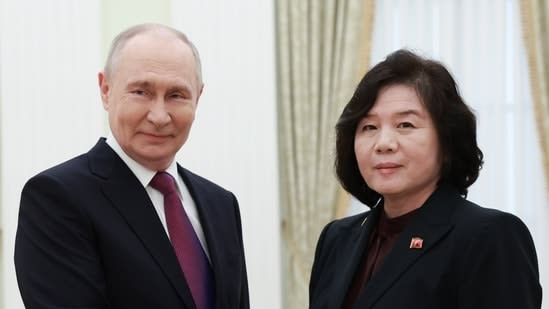
North Korean Foreign Minister Choe Son Hui has arrived in Moscow to reaffirm support for Russia's war in Ukraine. This high-level meeting signals deepening military ties and suggests an upcoming visit by Kim Jong Un to the Kremlin.
Strategic Realignment: North Korea and Russia Deepen Ties
The arrival of North Korean Foreign Minister Choe Son Hui in Moscow marks a significant escalation in the burgeoning strategic partnership between Pyongyang and the Kremlin. As Russia continues its full-scale invasion of Ukraine—a conflict that has left the nation increasingly isolated from Western markets and diplomatic channels—the reaffirmation of support from North Korea serves as a critical lifeline. This diplomatic choreography, confirmed by state media, suggests that the two nations are moving beyond mere rhetoric toward a more integrated geopolitical alliance.
The Mechanics of the Moscow-Pyongyang Axis
Since the onset of the Ukraine conflict in 2022, the relationship between these two diplomatically isolated states has shifted from peripheral cooperation to a core military-industrial exchange. Analysts have observed a distinct transactional nature to this partnership: Pyongyang has reportedly supplied Moscow with essential weapons systems and, more recently, deployed troops to the embattled Kursk region. In exchange, North Korea has secured vital resources, including financial assistance, food, and energy supplies, which are crucial for maintaining the stability of the Kim regime amidst ongoing international sanctions.
Technological and Military Implications
Beyond immediate logistical support, the exchange of military technology remains a primary concern for the international security community. The deepening cooperation suggests that Russia may be providing North Korea with advanced defense capabilities or expertise in exchange for conventional munitions. This technological transfer has the potential to alter the security landscape on the Korean Peninsula, potentially emboldening Pyongyang’s nuclear and missile development programs while simultaneously bolstering Russia's ability to sustain its offensive operations in Ukraine.
Diplomatic Signaling and Future Summits
Choe’s presence in Moscow is widely viewed as a precursor to a potential state visit by Kim Jong Un later this year. Such a meeting would be more than symbolic; it would formalize the operational cooperation that has developed behind closed doors. By signaling this visit, both nations are projecting an image of strength to the West, demonstrating that they have the capacity to circumvent international isolation by creating an alternative, self-sustaining sphere of influence.
Broader Geopolitical Consequences
This axis poses a significant challenge to the global security architecture established in the post-Cold War era. By aligning their military efforts, Russia and North Korea are effectively testing the resolve of global coalitions and the efficacy of sanctions regimes. As the war in Ukraine drags on, the reliance of the Kremlin on Pyongyang’s arsenal highlights the desperation of the Russian military machine, while simultaneously providing North Korea with the resources to modernize its own military posture, thereby increasing volatility in Northeast Asia.
Conclusion
The strengthening of the Moscow-Pyongyang relationship is a clear indicator that the geopolitical divisions exacerbated by the war in Ukraine are deepening. With North Korean officials actively coordinating with their Russian counterparts, the international community must prepare for a long-term, multi-front challenge where the security of European borders and the stability of the Korean Peninsula become increasingly intertwined.
Verification Required?