Norway and Finland leaders hold rare call with Putin
Source Entity
BBC News
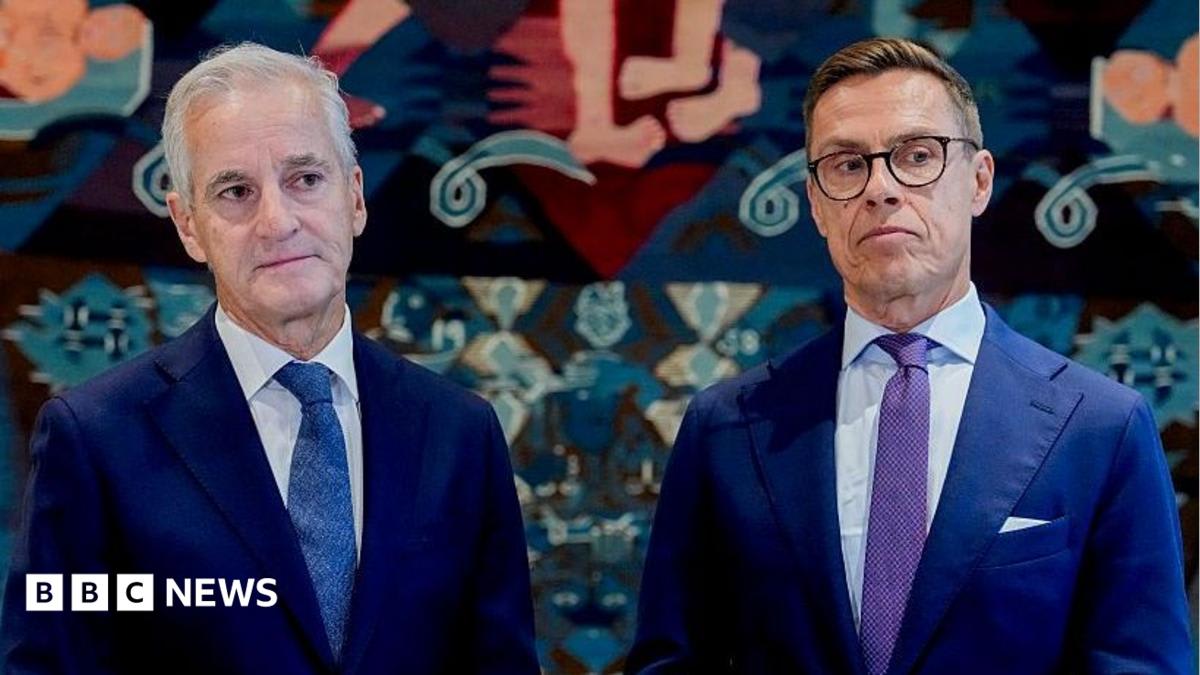
Finnish and Norwegian leaders have held a rare joint call with Vladimir Putin to discuss potential pathways for ending the war in Ukraine. While the initiative reflects a diplomatic push, Russia continues to attribute the conflict's duration to NATO and EU policies.
Diplomatic Breakthrough or Isolated Initiative?
In a significant departure from the diplomatic freeze that has characterized the relationship between European leadership and the Kremlin since the February 2022 invasion of Ukraine, Finnish President Alexander Stubb and Norwegian Prime Minister Jonas Gahr Støre have engaged in a joint call with President Vladimir Putin. This marks the first instance of direct high-level communication between Russian leadership and European heads of state in over a year, signaling a potential, albeit cautious, shift in the diplomatic landscape regarding the ongoing conflict.
The Strategic Intent and Limitations
The primary objective of this dialogue, as articulated by the offices of the two Nordic leaders, was to explore the possibility of future negotiations aimed at de-escalating and ultimately ending the war in Ukraine. However, the leaders were quick to clarify that this initiative does not represent the European Union as a whole. This distinction is critical; it suggests that while Finland and Norway are testing the waters for a diplomatic off-ramp, they are operating outside the formal consensus of the broader European bloc, likely to avoid political friction while maintaining a channel for communication.
Russian Perspectives on Regional Security
Following the conversation, the Kremlin reiterated its long-standing narrative that the prolongation of the conflict is a direct result of 'confrontational' policies adopted by the European Union and NATO. By framing the war through the lens of external Western interference, Putin continues to deflect from the reality of the 2022 full-scale invasion. This rhetoric indicates that despite the willingness to engage in a call, the ideological divide between Moscow and its Nordic neighbors remains profoundly deep, with little immediate change in Russia's core strategic justifications.
Alignment with Ukrainian Leadership
The role of the Nordic leaders appears to be that of intermediaries or facilitators who remain in close coordination with Kyiv. Following the call with Putin, President Volodymyr Zelensky spoke with both Stubb and Støre to debrief on the conversation. This follows a high-profile meeting held in Oslo just last week, which included the Ukrainian President and US special envoy Steve Witkoff. These synchronized diplomatic efforts suggest that any potential negotiation strategy is being carefully vetted by the Ukrainian government to ensure that any push for peace does not compromise the sovereignty or territorial integrity of the nation.
Broader Geopolitical Implications
This development underscores the complex position of Finland and Norway, both of which share borders or significant strategic interests with Russia. Finland’s recent accession to NATO and Norway’s role as a key energy supplier to Europe place them at the heart of the security architecture currently being tested by the war. By maintaining this delicate balance—supporting Ukraine militarily and politically while attempting to keep a diplomatic door ajar—these nations are navigating a high-stakes environment where the risk of miscalculation remains high.
Future Trends and Outlook
Looking forward, this rare contact may serve as a barometer for future international mediation efforts. While it is unlikely to produce immediate cease-fire agreements, the fact that such a conversation occurred indicates a growing recognition among certain European leaders that long-term stabilization will eventually require some form of direct communication with Moscow. Whether this leads to a broader diplomatic thaw or remains a singular, isolated event will depend heavily on the willingness of both sides to move beyond their current, entrenched positions on the conflict's origins and resolution.