Congress workers court arrest protesting against Rahul Gandhi’s detention
Source Entity
India Latest News: Top National Headlines Today & Breaking News | The Hindu
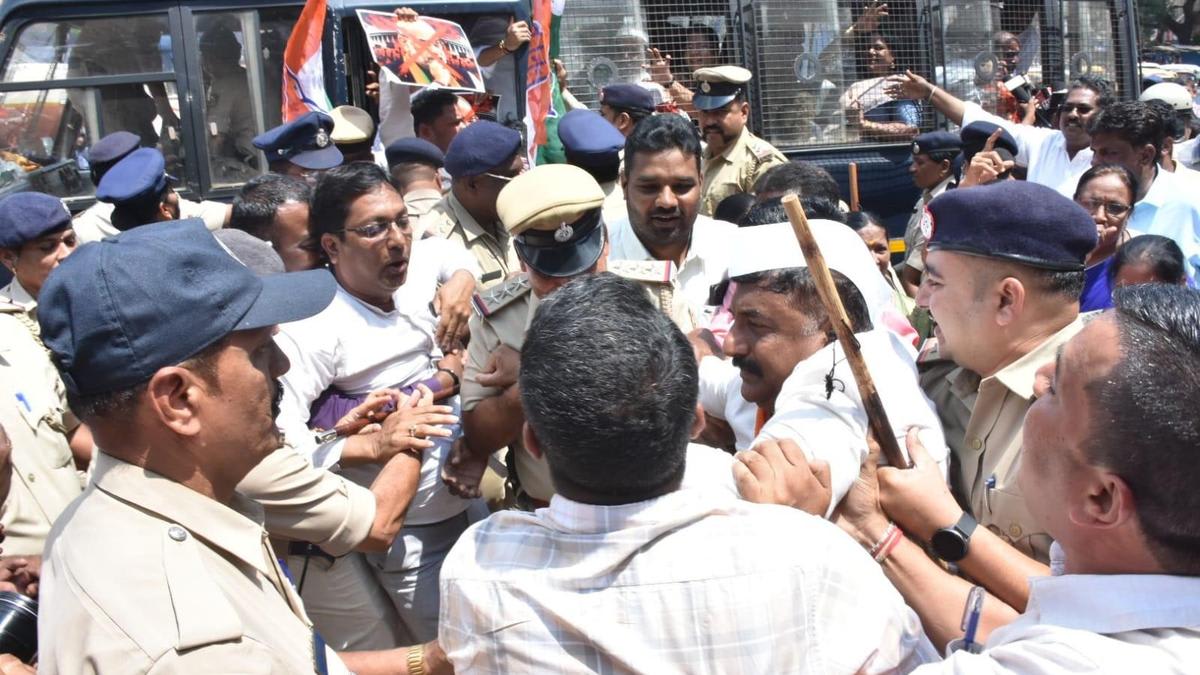
NSUI and Congress workers have launched protests across India, citing police inaction in Delhi and the detention of Rahul Gandhi. These demonstrations highlight growing political tensions between the opposition and government authorities.
Escalating Political Tensions: Protests Erupt Across India
Recent days have seen a surge in political mobilization across India, as both student wings and established party cadres take to the streets to voice grievances against government and law enforcement actions. In Delhi, members of the National Students' Union of India (NSUI) gathered outside the Parliament Street Police Station to protest what they characterize as institutional inaction following an alleged assault on their activists. The core of their grievance lies in the failure of local authorities to register a First Information Report (FIR), a critical legal step required to initiate a formal investigation into the alleged violence.
The Delhi Standoff: Accountability and Student Activism
The protest at Parliament Street underscores a recurring friction point between student political organizations and law enforcement agencies. By demanding an FIR, the NSUI is effectively challenging the police’s administrative discretion, arguing that the delay in filing a report signals a lack of protection for activists. This incident reflects broader concerns regarding student safety and the role of police in mediating or investigating political disputes on or near university campuses, where tensions often run high.
The Hubballi Demonstrations and Rahul Gandhi's Detention
Simultaneously, in Hubballi, Karnataka, the political climate intensified as Congress workers staged a road blockade at Ambedkar Circle. The catalyst for this demonstration was the detention of the Leader of the Opposition in the Lok Sabha, Rahul Gandhi. This event serves as a focal point for the party's broader critique of the Union government, with local leaders like Sadanand Danganavar explicitly linking these detentions to a pattern of political suppression.
Electoral Integrity and Institutional Criticism
The protests in Hubballi extended beyond the issue of detention to encompass fundamental concerns regarding the democratic process. District Congress president Sadanand Danganavar utilized the platform to question the integrity of the Special Intensive Revision (SIR) of electoral rolls. By alleging that election officials are acting under the influence of the Prime Minister and Union Home Minister, the Congress party is signaling a strategic shift toward challenging the neutrality of constitutional bodies.
Broader Implications for the Opposition
These coordinated actions suggest a concerted effort by the Congress and its affiliated student bodies to maintain pressure on the ruling BJP government. By framing individual incidents—such as the assault on NSUI activists and the detention of their national leader—within a larger narrative of systemic bias, the opposition is attempting to consolidate its base and challenge the government's legitimacy on national platforms.
Conclusion and Future Trends
As these protests continue, the intersection of legal disputes and political rhetoric will likely define the upcoming legislative sessions. The demand for transparent police action in Delhi and the scrutiny of electoral processes in Karnataka indicate that the opposition intends to keep these issues at the forefront of public discourse. Whether these localized protests translate into a wider national movement remains to be seen, but they clearly signal an era of heightened political confrontation in the Indian landscape.
Verification Required?