Answer-key fee meant to deter frivolous claims, not make profit: NTA
Source Entity
The Indian Express
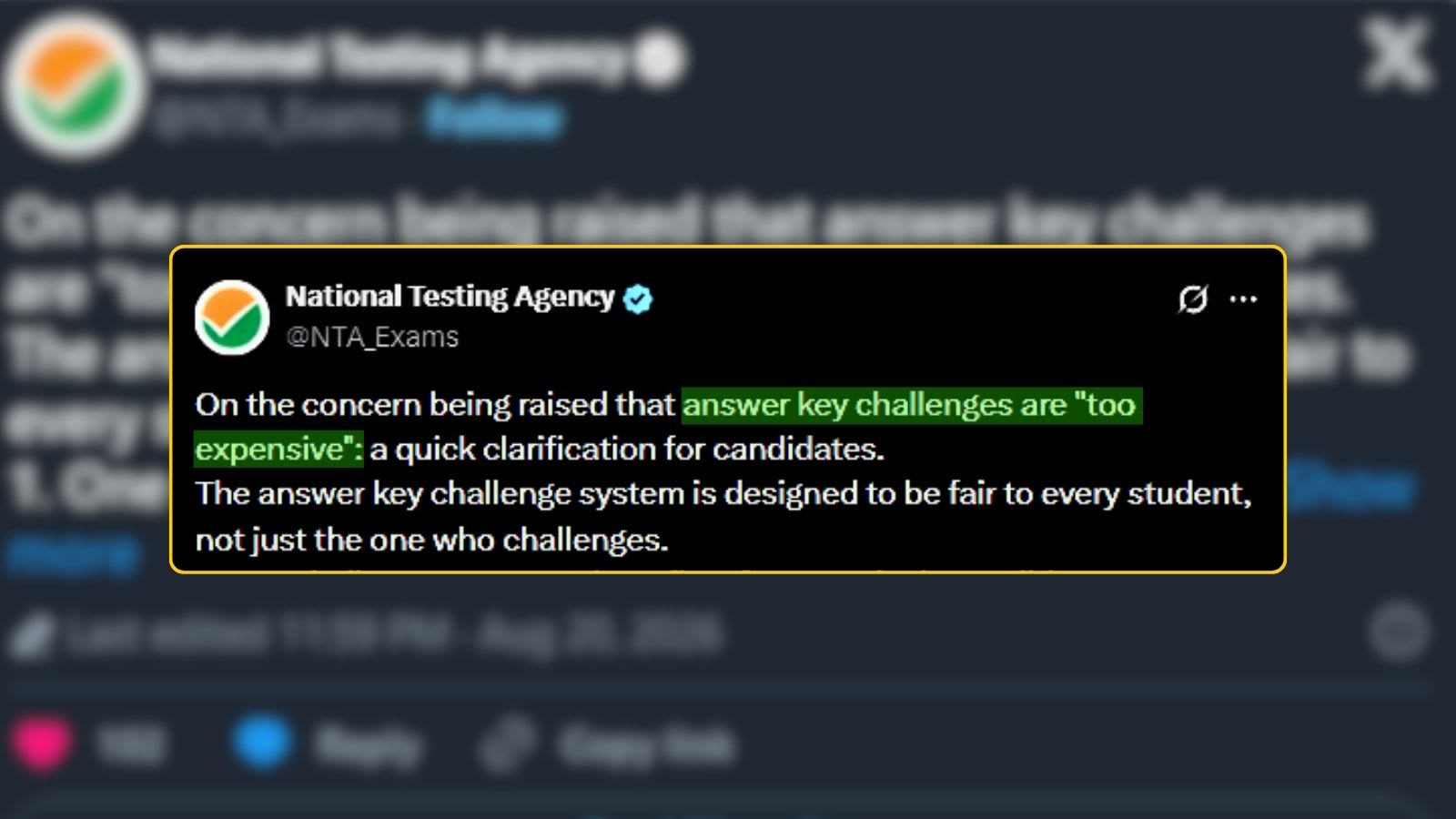
The NTA has defended its Rs 200 answer key challenge fee as a measure to prevent frivolous objections. They clarified that any successful challenge results in a revised key applied to all candidates, ensuring collective fairness.
Understanding the NTA Answer Key Challenge Fee Policy
The National Testing Agency (NTA) has recently addressed significant public discourse regarding the Rs 200 fee mandated for challenging answer keys in their competitive examinations. By framing this fee as a deterrent against frivolous claims rather than a revenue-generating model, the agency aims to streamline the post-examination evaluation process. This administrative balance is critical for maintaining the integrity of large-scale assessments where millions of students compete simultaneously.
The Logic of the Deterrence Mechanism
Operating high-stakes examinations involves a massive logistical undertaking, where even minor delays in result processing can impact academic calendars nationwide. The NTA contends that without a nominal financial barrier, the system could be overwhelmed by unsubstantiated claims. By attaching a cost to the challenge process, the agency ensures that students and stakeholders perform due diligence before formally questioning the validity of an answer, thereby protecting the sanctity of the timeline required to finalize results.
Collective Benefit of Valid Challenges
One of the most vital aspects of the NTA's clarification is the mechanism of systemic correction. When a candidate raises a challenge and subject matter experts determine the objection is valid, the resulting correction is not isolated to that single individual. Instead, the revised answer key is applied to the entire pool of candidates who appeared for that specific examination. This ensures that a single valid objection serves the interests of the collective, preventing potential inaccuracies from skewing the final rankings of lakhs of participants.
Balancing Accessibility and Efficiency
While the fee is intended to discourage frivolous activity, it also highlights the challenge of maintaining accessibility in public testing. Critics often argue that any fee could potentially hinder lower-income candidates from seeking justice for errors. However, the NTA’s policy suggests a trade-off: by discouraging mass, non-substantive challenges, the agency can provide a more rigorous review process for the challenges that are actually submitted.
Implications for Future Examination Integrity
As the NTA continues to refine its digital testing infrastructure, the transparency of the answer key challenge process remains paramount. The current policy emphasizes that the system is designed for accuracy at scale. Moving forward, the effectiveness of this policy will likely be measured by the agency's ability to maintain a quick turnaround on expert reviews while ensuring that the barrier to entry does not prevent genuine errors from being corrected.
Conclusion
The NTA's stance underscores the complex reality of managing national-level testing. By clarifying that the Rs 200 fee is a procedural tool for efficiency rather than a profit-driven initiative, the agency is attempting to manage public perception. Ultimately, the policy serves to facilitate a fair and equitable evaluation process for all, provided that the expert review system remains robust and responsive to valid inputs.