Cramer says Jensen Huang betrayed Nvidia shareholders. How to pick up the pieces
Source Entity
US Top News and Analysis
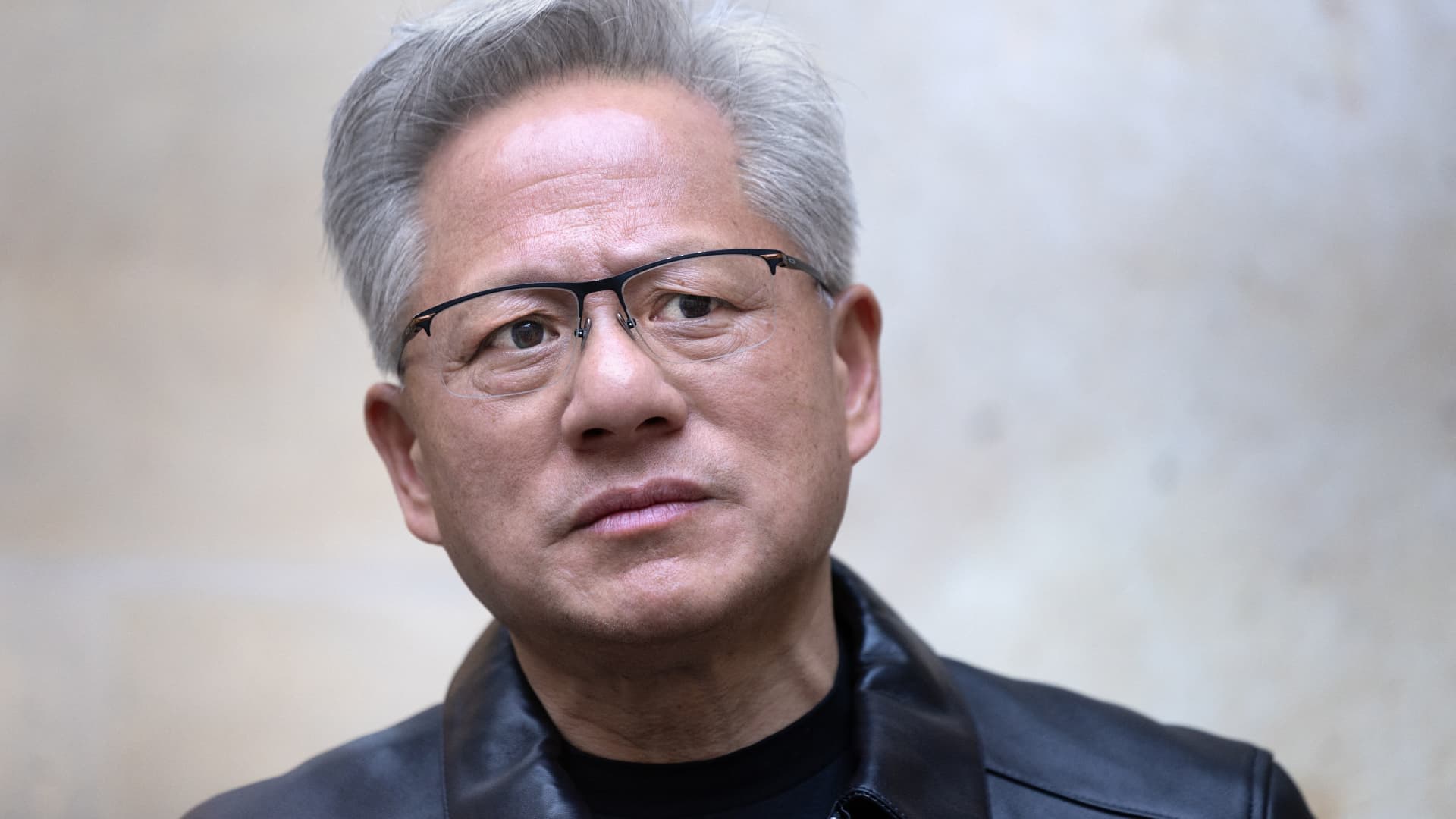
Nvidia CEO Jensen Huang has admitted to an affair with Alice Huang, an executive linked to the firm Megaspeed who is suspected of being a Chinese intelligence asset. Nvidia's board has launched an independent investigation as U.S. lawmakers demand a briefing on potential national security risks.
The Intersection of Corporate Leadership and National Security
In a development that has sent shockwaves through the global technology sector, Nvidia CEO Jensen Huang has publicly admitted to an extramarital affair with Alice Huang, a former executive at the Singapore-based firm Megaspeed. This personal admission, communicated via an internal company memo, has transcended the boundaries of private conduct to become a significant matter of national security. Intelligence agencies have reportedly identified Alice Huang as a potential recruit of China’s Ministry of State Security, raising profound questions about the vulnerability of one of the world's most critical semiconductor companies to foreign espionage.
The Espionage Allegations
The central tension of this controversy lies in the U.S. government's assessment that the relationship was not merely a private matter, but a targeted intelligence operation. A government memo circulating among policymakers suggests that Alice Huang may have been utilized by Beijing to gain unauthorized access to proprietary information or strategic influence over Nvidia. Because Nvidia sits at the heart of the global AI and data center infrastructure, any compromise of its leadership constitutes a high-stakes risk for American technological dominance.
Corporate Governance and the Board's Response
Nvidia’s board of directors has moved quickly to contain the fallout, initiating an independent investigation into the nature of the relationship and whether any corporate secrets or anti-espionage protocols were breached. In his apology to staff, Jensen Huang acknowledged his failure to meet the responsibilities expected of his position, stating, 'I was unfaithful to my wife' and admitting he had 'fallen short' of his duties. The board now faces the arduous task of balancing the need for transparency with the preservation of institutional stability during a period of intense scrutiny.
Congressional Scrutiny and Political Pressure
Beyond internal corporate investigations, the political ramifications are rapidly escalating. Three House Republican chairmen have formally requested a closed-door briefing from Jensen Huang, scheduled for November 18. This legislative inquiry is designed to probe the depth of Nvidia’s ties to Megaspeed and the efficacy of the company’s existing anti-espionage safeguards. Lawmakers are likely to focus on whether the CEO’s personal choices created a 'backdoor' for foreign intelligence services to exploit.
Broader Implications for Global Tech
The semiconductor industry remains a primary theater of geopolitical competition between the United States and China. This incident highlights the 'human element' of industrial espionage, where personal relationships are leveraged as tools of statecraft. As Nvidia continues to lead the AI hardware market, the company's ability to demonstrate that its leadership is secure and uncompromised will be critical to maintaining the trust of both its shareholders and the U.S. government.
Future Trends and Outlook
Looking forward, this event will likely trigger a tightening of executive vetting processes and internal compliance standards across the tech sector. Companies are expected to intensify their focus on 'insider threat' training, specifically addressing how executives can be targeted by foreign intelligence. While the immediate focus remains on the findings of the independent investigation, the long-term impact on Nvidia’s stock performance and government relations will depend on the clarity with which the company can disentangle its CEO’s personal error from the integrity of its corporate operations.
Multiple Citing Sources