Jensen Huang is back, and so are the memes: A look at posts celebrating his return to Nvidia
Source Entity
Latest News: Todays Latest News Headlines from India & World | Hindustan Times
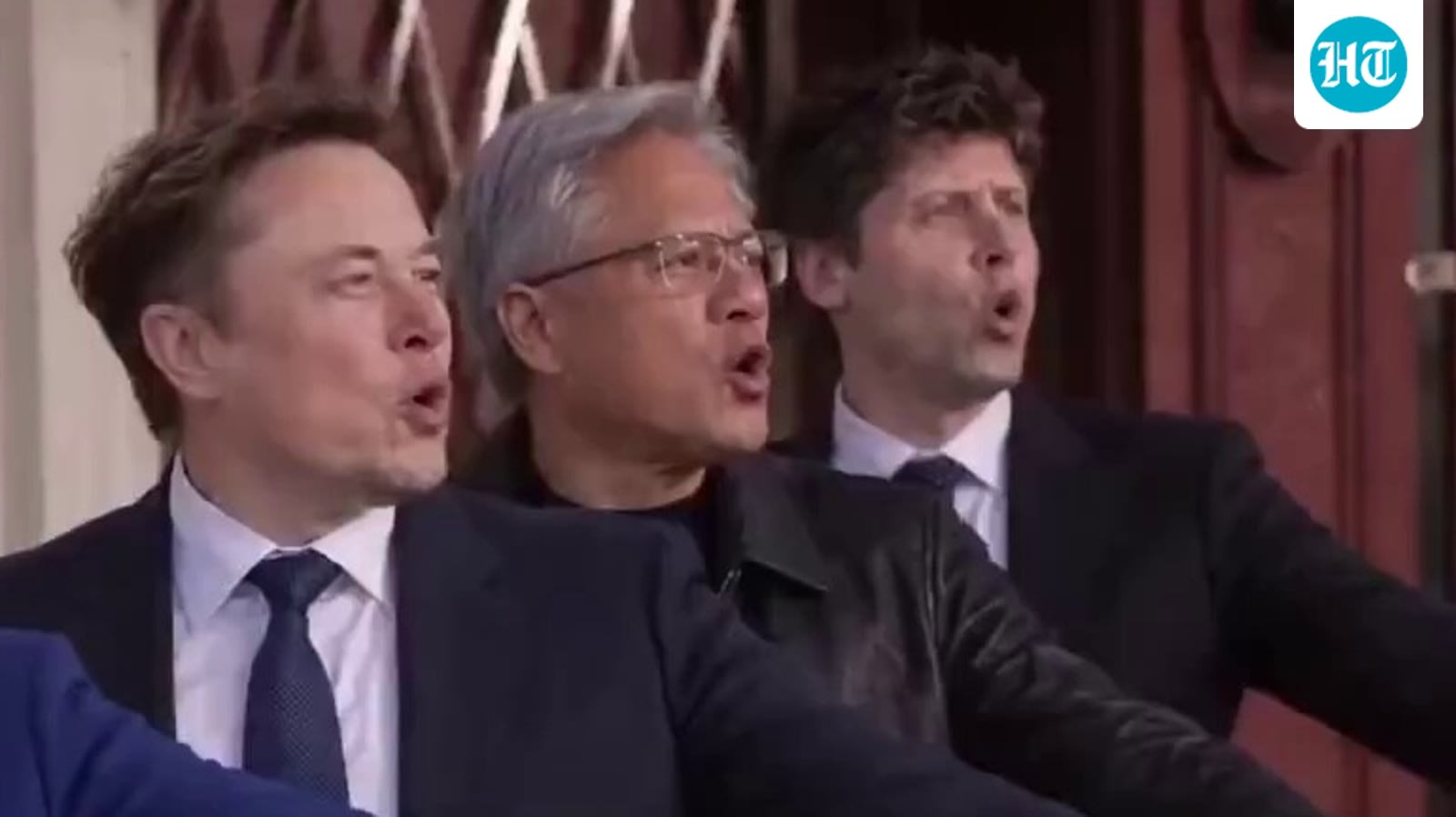
Nvidia CEO Jensen Huang has returned to his position following a brief resignation, sparking both market volatility and political scrutiny. President Trump’s intervention in the leadership transition has raised concerns regarding the intersection of corporate governance and national security.
The Nvidia Leadership Crisis: A Convergence of Markets and Policy
The recent return of Jensen Huang to the helm of Nvidia after a brief and tumultuous resignation has sent shockwaves through both the technology sector and the corridors of political power. After an initial surge that added over $900 billion to the company’s market valuation, investors are now grappling with the reality of a volatile AI sector. The rapid oscillation in Nvidia’s stock price—including a 9% mid-session drop following the initial 30% rally—highlights the fragile nature of market confidence when linked to a single, albeit pivotal, figure in the semiconductor industry.
Political Intervention and National Security
President Trump’s direct involvement in orchestrating Huang’s return has ignited a firestorm of debate regarding the boundaries of presidential authority in private enterprise. By pressuring the Nvidia board to reinstate Huang, the administration has effectively signaled that certain corporate entities are now considered critical infrastructure that cannot be left to standard market or governance corrections. Critics argue that this creates a dangerous precedent, where adversaries like Beijing, Tehran, and Moscow may perceive U.S. national security policy as susceptible to an 'economic veto,' potentially compromising the autonomy of American firms.
The Internal Reckoning at Nvidia
Beyond the macroeconomic implications, the incident has forced a profound internal reckoning within Nvidia. In his first all-hands meeting since returning, Huang issued a public apology for 'very serious personal mistakes' that impacted his family and violated the company’s code of conduct. His admission of undergoing daily therapy and his commitment to implementing regular performance reviews for leadership represent a significant shift in corporate accountability. Huang’s attempt to reassure employees, particularly regarding the company’s environment for women, signals an effort to restore internal stability amidst the external chaos.
Market Volatility and Investor Sentiment
The immediate market reaction reflects a broader anxiety among investors. As the 'euphoria' of Huang’s reinstatement dissipates, the market is recalibrating for what appears to be a period of sustained volatility. Since Nvidia sits at the center of the global AI boom, any instability in its leadership or internal governance has outsized effects on the global economy. Investors are now questioning whether the company’s growth trajectory can remain decoupled from the political pressures currently being exerted upon its board.
The Future of Corporate Governance
This episode serves as a case study in the risks of 'key man' dependence in the modern era. When a CEO’s personal conduct leads to a crisis that requires presidential intervention to resolve, the traditional separation between government and private industry becomes blurred. The long-term impact on Nvidia’s institutional integrity remains to be seen, as the company attempts to balance the demands of national security with the need for transparent, meritocratic governance.
Conclusion: A Precarious Path Forward
Ultimately, the situation at Nvidia is a multifaceted crisis that transcends simple stock market fluctuations. It is a cautionary tale about how personal conduct at the executive level can trigger geopolitical concerns and market-wide instability. As Huang attempts to rebuild trust through institutional reform and the company navigates the scrutiny of the U.S. government, the tech industry will be watching closely to see if Nvidia can maintain its market dominance without compromising its corporate principles.
Multiple Citing Sources
Verification Required?