Mamdani's 'millionaire home tax' reveals New York's big 'Ghost cars' problem
Source Entity
TOI TECH DESK
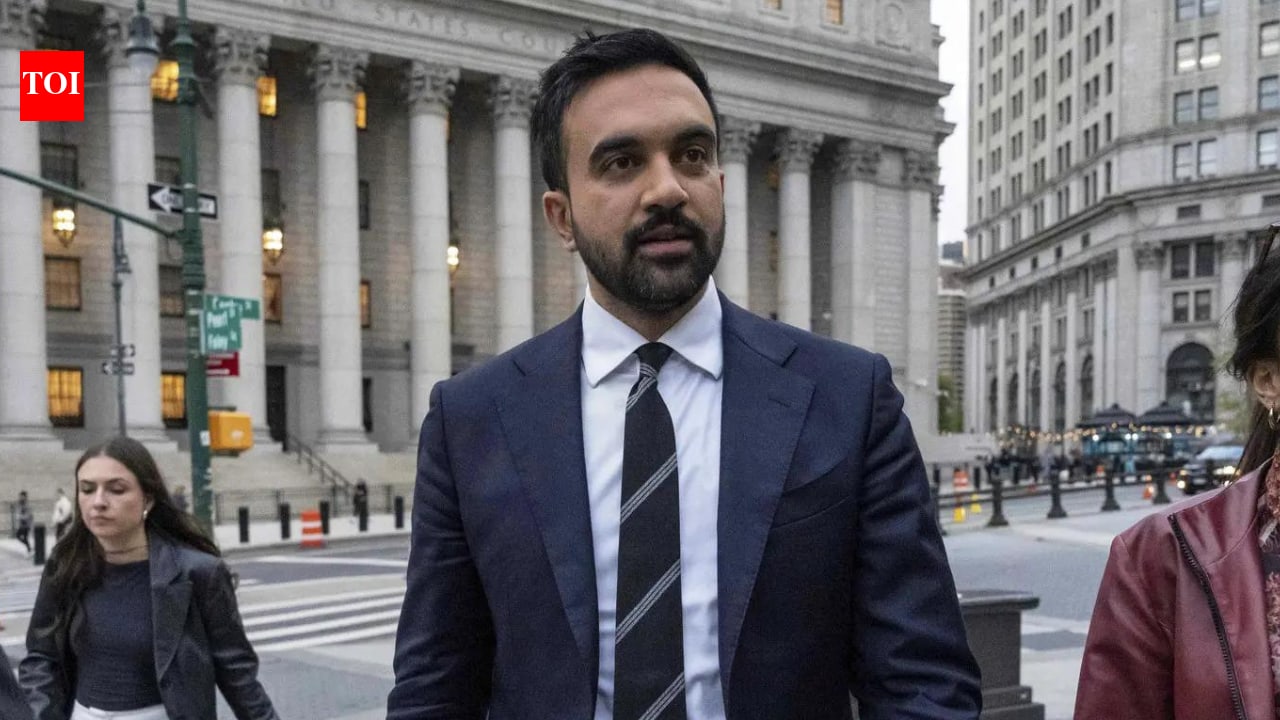
New York City's proposed millionaire home tax has inadvertently exposed a widespread 'ghost car' epidemic involving out-of-state vehicle registration fraud. This practice, used to evade local taxes and insurance, mirrors similar issues currently plaguing urban centers in Italy and France.
The Intersection of Taxation and Urban Fraud
New York City’s legislative landscape has recently been shaken by Assemblyman Zohran Mamdani’s proposal for a 'millionaire home tax.' While the primary objective of this policy is to address housing affordability and wealth inequality, the vetting process required to verify primary residency has inadvertently pulled the curtain back on a clandestine crisis: the proliferation of 'ghost cars.' By requiring homeowners to provide concrete proof of residency, city officials are uncovering a web of systemic vehicle registration fraud that has long remained in the shadows.
Defining the 'Ghost Car' Phenomenon
At the heart of this issue is the practice of 'garage fraud,' where residents register their vehicles in states with lower insurance premiums or more lenient tax requirements, despite keeping and driving those vehicles primarily within New York City. These vehicles, often referred to as 'ghost cars,' are effectively invisible to local tolling authorities and traffic enforcement systems. Because they lack valid local plates, these vehicles accumulate thousands of dollars in unpaid parking tickets and traffic fines, which the city struggles to collect due to the deceptive nature of the registration.
The Economic and Safety Implications
Beyond the loss of municipal revenue, the ghost car problem poses significant public safety concerns. These vehicles are frequently linked to reckless driving and high-speed violations, yet their out-of-state registrations make them nearly impossible to track or hold accountable through standard enforcement channels. When high-net-worth individuals engage in this form of tax and insurance evasion, it undermines the integrity of the city’s transit and legal infrastructure, forcing law-abiding citizens to subsidize the administrative costs of managing an unidentifiable fleet of vehicles.
Global Parallels: A Transnational Issue
It is critical to recognize that this is not a localized New York phenomenon. Reports indicate that similar registration schemes are currently being utilized in various urban centers across Italy and France. In these nations, as in New York, the motivation remains the same: the exploitation of regional regulatory discrepancies to avoid the financial obligations associated with metropolitan living. This suggests that the 'ghost car' issue is an unintended consequence of modern urban governance, where local jurisdictions struggle to harmonize vehicle registration laws against a mobile and increasingly evasive populace.
Future Trends and Regulatory Responses
Moving forward, the spotlight cast by Mamdani’s tax proposal may serve as a catalyst for stricter enforcement protocols. If New York City successfully implements a residency-verification standard for tax purposes, it could provide a blueprint for other global cities grappling with similar fraud. We can expect to see an increase in inter-agency data sharing between tax departments and traffic enforcement bureaus. As cities become more sophisticated in their digital surveillance and data integration, the window of opportunity for 'ghost car' owners to hide their assets and traffic violations is likely to narrow significantly.
Conclusion
The revelation of widespread vehicle registration fraud via the millionaire home tax debate serves as a stark reminder of how policy initiatives can uncover deeper systemic corruption. By forcing transparency in residency, the city is not only addressing housing finance but is also forcing a long-overdue reckoning with the 'ghost car' industry. The challenge for policymakers will be to maintain this momentum, ensuring that the enforcement of tax laws also results in safer, more accountable streets for all urban residents.