China's slowdown pushes New Zealand exporters to diversify away from their top buyer, RBNZ official tells CNBC
Source Entity
US Top News and Analysis
New Zealand exporters are pivoting away from China as demand from their primary trading partner wanes. Reserve Bank of New Zealand official Karen Silk confirms this shift toward alternative markets to mitigate economic risks.
New Zealand Shifts Export Strategy Amid Chinese Economic Cooling
New Zealand’s trade landscape is undergoing a significant transformation as local exporters increasingly pivot away from China, the nation's historically dominant trading partner. This strategic shift follows reports from Karen Silk, an assistant governor at the Reserve Bank of New Zealand (RBNZ), who noted that businesses are actively redirecting shipments originally intended for China toward more diverse international markets. This development underscores the mounting pressure on New Zealand’s export-oriented economy as it navigates the cooling demand from its largest buyer.
The Economic Catalyst: China’s Slowdown
The fundamental driver behind this movement is the ongoing deceleration of China's economic engine. For years, China has served as the primary destination for New Zealand’s agricultural and industrial products. However, as China faces internal economic headwinds and shifting consumption patterns, the reliance on a single, dominant market has introduced significant volatility for New Zealand firms. By diversifying their export destinations, these companies are attempting to build a buffer against the structural slowdown currently impacting their biggest buyer.
Strategic Diversification and Risk Mitigation
Karen Silk’s comments emphasize that exporters are not merely reacting to a temporary dip but are fundamentally re-evaluating their global reach. The RBNZ’s observation that "it is not the only export market" signals a broader institutional encouragement toward trade diversification. This strategy is vital for maintaining economic stability; by expanding into Southeast Asia, India, or other Pacific Rim economies, New Zealand exporters can reduce their exposure to the idiosyncratic risks of the Chinese market.
Diplomatic Context and Bilateral Relations
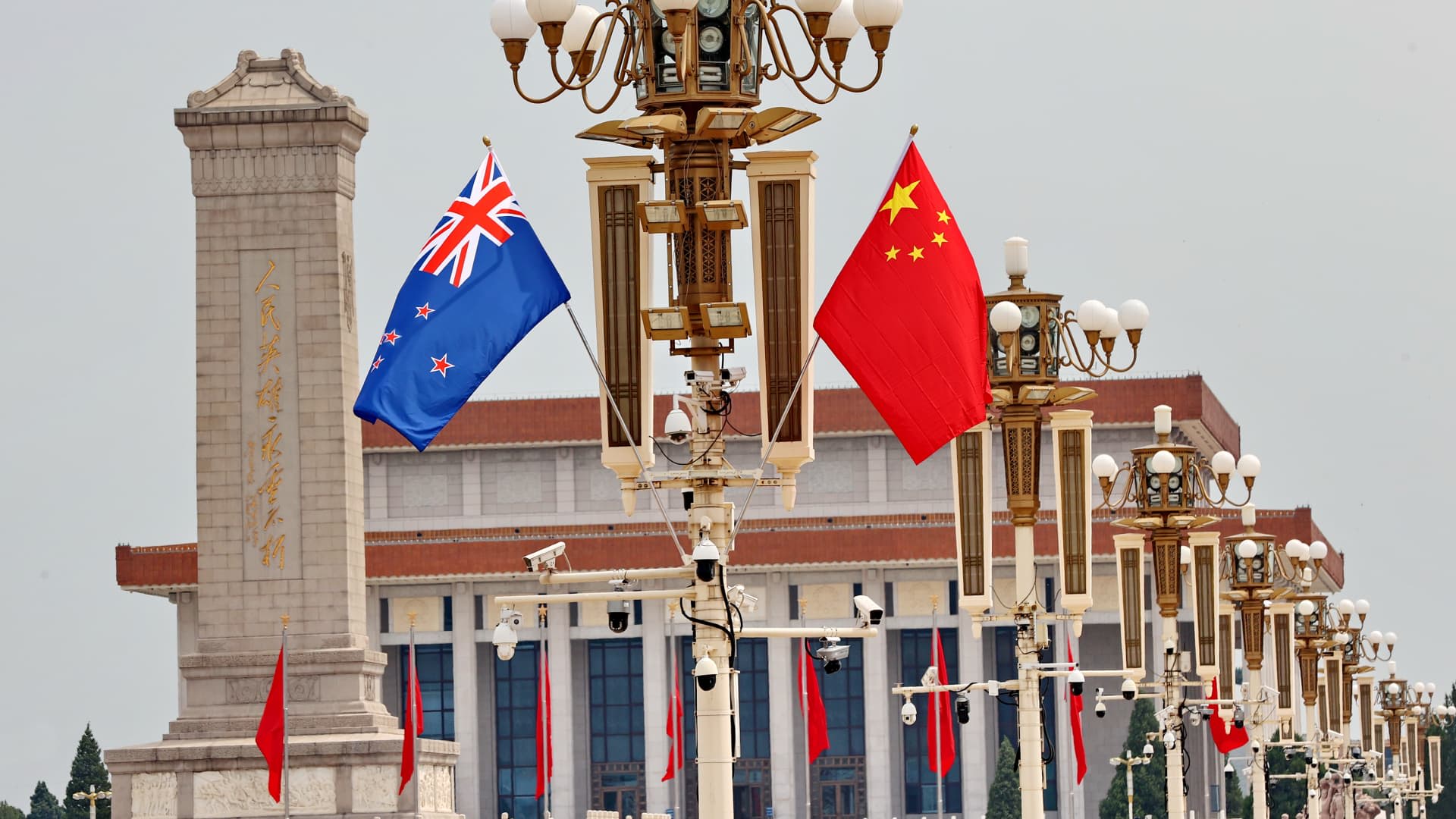
This shift in trade dynamics coincides with high-level diplomatic engagement. Prime Minister Christopher Luxon’s official visit to China in June 2025 highlights the importance of maintaining a balanced relationship with Beijing, even as commercial realities force a diversification of trade routes. The presence of both national flags in Tian'anmen Square serves as a visual marker of this complex relationship—one that balances deep historical trade integration with the necessity of modern economic pragmatism.
Broader Implications for the Global Supply Chain
Beyond New Zealand, this move reflects a growing global trend where nations are seeking to 'de-risk' their supply chains. The decision to divert shipments is a bottom-up response by private enterprises to macroeconomic realities. As exporters find success in alternative markets, the global flow of goods is likely to see a more decentralized distribution pattern. This suggests a future where New Zealand’s trade policy will be defined by agility and a move away from over-dependence on a singular economic giant.
Future Trends and Outlook
Looking ahead, the success of this diversification strategy will depend on the ability of New Zealand exporters to establish long-term trade agreements and logistical routes in emerging markets. While China will remain a critical partner, the era of unquestioned reliance on its market is clearly evolving. The RBNZ’s proactive monitoring of these shifts suggests that the central bank is prepared to support an economy that is increasingly looking beyond its traditional horizons to ensure long-term prosperity.