‘Saddam Hussein opened a cheesecake factory’: Obama’s jibe at Trump’s White House
Source Entity
ABHISHEK MISHRA
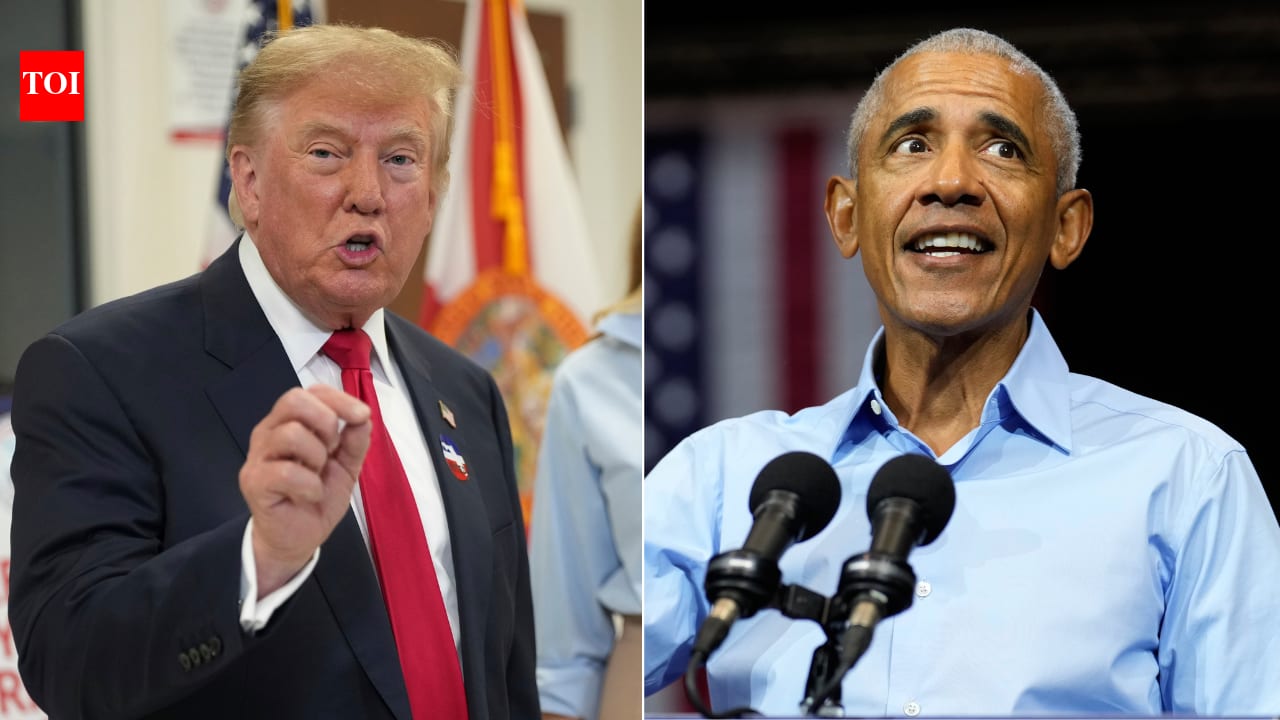
Former President Barack Obama criticized Donald Trump's White House renovations and policy priorities during a midterm campaign rally. He famously quipped that the decor changes made the residence look like 'Saddam Hussein opened a Cheesecake Factory.'
Obama’s Sharp Critique of the Trump Administration
Former President Barack Obama recently delivered a scathing critique of his successor, Donald Trump, during a high-stakes midterm campaign rally in Ohio. The focal point of his remarks centered on the aesthetic and structural changes made to the White House under the Trump administration. By contrasting the perceived opulence and gold-heavy decor with the gravity of his office, Obama characterized the President's priorities as misplaced, suggesting that the former reality television star was more interested in home renovations than in addressing the pressing economic challenges facing the American public.
The 'Cheesecake Factory' Allegory
The most memorable moment of the speech occurred when Obama delivered his biting remark, stating that the White House had come to look as though "Saddam Hussein opened a Cheesecake Factory." This hyperbolic comparison served to highlight what Obama perceived as a garish and inappropriate transformation of a historic government building. By invoking the imagery of a dictator’s aesthetic mixed with a casual dining chain, Obama sought to paint the Trump administration’s interior design choices as both extravagant and fundamentally lacking the dignity expected of the executive residence.
Policy Priorities vs. Interior Decor
Beyond the aesthetic mockery, Obama’s speech was anchored in a deeper critique of executive focus. At the time of these remarks, the country was grappling with significant economic distress, including high gas prices exacerbated by the ongoing conflict with Iran. Obama utilized the contrast between the "gold decor" and the "eight-month war" to argue that the administration was distracted by superficial projects—such as new helicopter pads, ballroom renovations, and changes to the Rose Garden—while the citizenry struggled with tangible policy failures.
Political Rivalry and Midterm Stakes
The timing of these comments, just one week before the midterm elections, underscores the intensity of the political rivalry between the two men. Obama’s rhetoric was designed to mobilize the Democratic base by framing the Republican leadership as out of touch with the average voter. By pivoting from the "jawlines and testosterone" of political appointees to the specific vanity projects of the President, Obama aimed to characterize the entire Republican platform as one prioritized toward self-interest rather than public service.
Broader Implications for Presidential Norms
This incident highlights a broader debate regarding presidential decorum and the use of the White House as a reflection of the incumbent's personality. While every president leaves a mark on the residence, the scale and style of the changes under Trump became a flashpoint for critics who argued that the administration was eroding the traditional restraint associated with the office. Obama’s intervention serves as a historical marker of the deep polarization that defined the era, where even the architecture of the seat of government became a battleground for ideological and aesthetic warfare.
Future Trends in Political Discourse
Looking ahead, the use of such sharp, memorable "soundbites" in political campaigns is likely to persist. As political rhetoric becomes increasingly performative to capture media attention, candidates will continue to use vivid, sometimes absurd, imagery to define their opponents. The "Cheesecake Factory" line remains a case study in how personal attacks on taste and priorities can effectively distill complex political frustrations into a single, viral moment that resonates with the electorate.
Multiple Citing Sources