Left parties oppose renaming Odisha's Phulbani medical college after Sangh Parivar ideologue
Source Entity
India Latest News: Top National Headlines Today & Breaking News | The Hindu
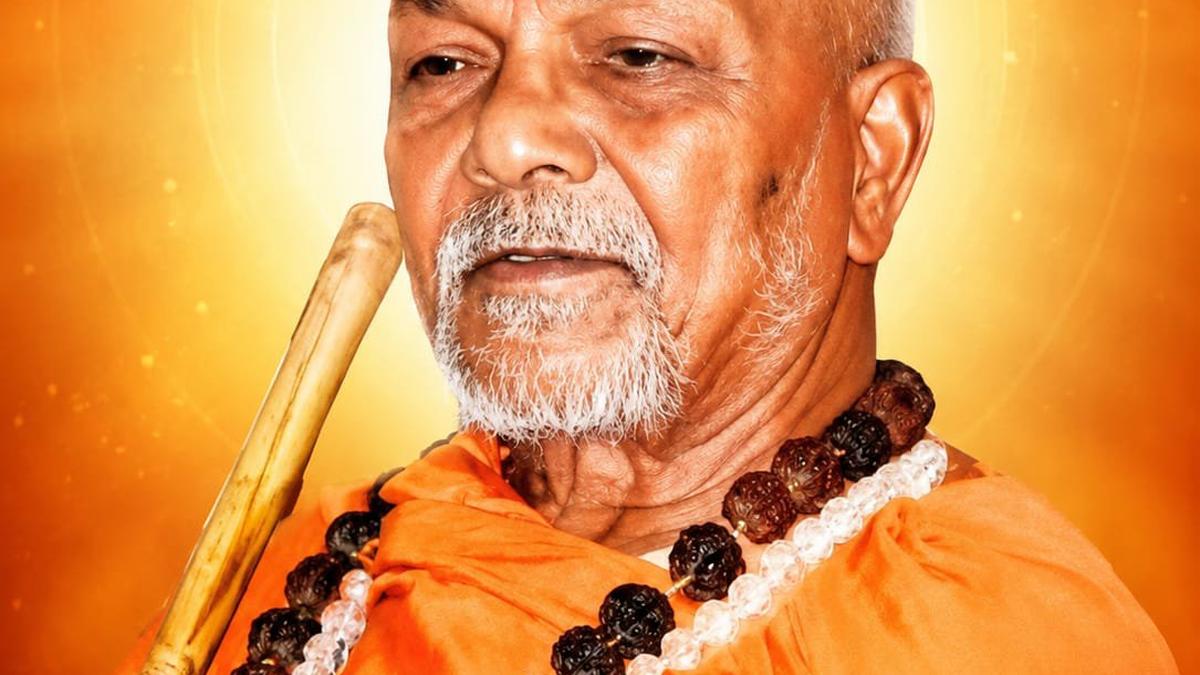
Odisha Chief Minister Mohan Charan Majhi has renamed the Phulbani Medical College after VHP leader Swami Laxmanananda Saraswati, triggering significant political backlash. Left parties have condemned the move, arguing for the institution to be named after tribal freedom fighter Chakra Bisoyi instead.
The Renaming of Phulbani Medical College: A Deep Dive
Odisha Chief Minister Mohan Charan Majhi has ignited a fresh political debate in the state by announcing that the Government Medical College and Hospital in Phulbani, Kandhamal, will be renamed after the late Vishva Hindu Parishad (VHP) leader, Swami Laxmanananda Saraswati. This decision, announced via the Chief Minister’s official social media channels, is framed by the current administration as a tribute to Saraswati’s decades-long commitment to tribal welfare and educational advancement in the district. Alongside the renaming, the government has pledged ₹13 crore in funding for the Jalespata ashram, specifically targeting infrastructure upgrades for its school and a new 300-seat girls' hostel.
Historical Context and Political Polarization
The choice of Swami Laxmanananda Saraswati as the namesake for a public institution is inherently complex due to the historical volatility of the Kandhamal region. Saraswati, who was assassinated on August 23, 2008, was a polarizing figure; his death served as the catalyst for widespread anti-Christian violence that remains one of the most significant communal episodes in Odisha’s history. By honoring a figure so deeply associated with the Sangh Parivar, the Majhi government is signaling a shift in the state's symbolic landscape, prioritizing the acknowledgment of Saraswati's influence on tribal education over the potential for renewed communal friction.
The Opposition’s Perspective
In response, a coalition of Left parties—including the CPI(M), CPI, CPI(ML)-Liberation, and the All India Forward Bloc—has issued a formal condemnation of the renaming. The opposition argues that a government-funded medical institution represents a public service that must remain neutral and inclusive of all religious, caste, and social demographics. Their contention is that the institution should instead bear the name of a figure with universal appeal, such as the tribal freedom fighter Chakra Bisoyi, whose historical legacy is widely recognized as a symbol of anti-colonial resistance and indigenous pride in Odisha.
Socio-Economic Implications for Kandhamal
The allocation of ₹13 crore for the Jalespata ashram, its school, and the proposed girls' hostel underscores the government's strategy to bolster educational infrastructure in a district that has historically faced significant challenges in accessibility and development. While the naming controversy dominates the headlines, the practical infusion of funds into tribal education infrastructure may provide tangible benefits to the local population. However, the intersection of public welfare spending with ideologically charged naming conventions creates a dual-track narrative where development goals are inextricably linked to political identity.
Future Trends and Social Cohesion
This development suggests a trend toward the re-evaluation of public spaces in Odisha under the current administration. As the government continues to align its infrastructure projects with figures from the Sangh Parivar's history, it risks deepening the ideological divide between the ruling party and opposition groups. Moving forward, the success of this medical college as a neutral, community-serving institution will depend on how the administration manages these competing narratives. The tension between the government’s desire to honor its ideological roots and the opposition’s demand for secular, inclusive symbolism will likely remain a focal point of Odisha’s political discourse in the coming years.
Multiple Citing Sources
Verification Required?