Supreme Court approval hits record low as Republicans' support declines
Source Entity
US Top News and Analysis
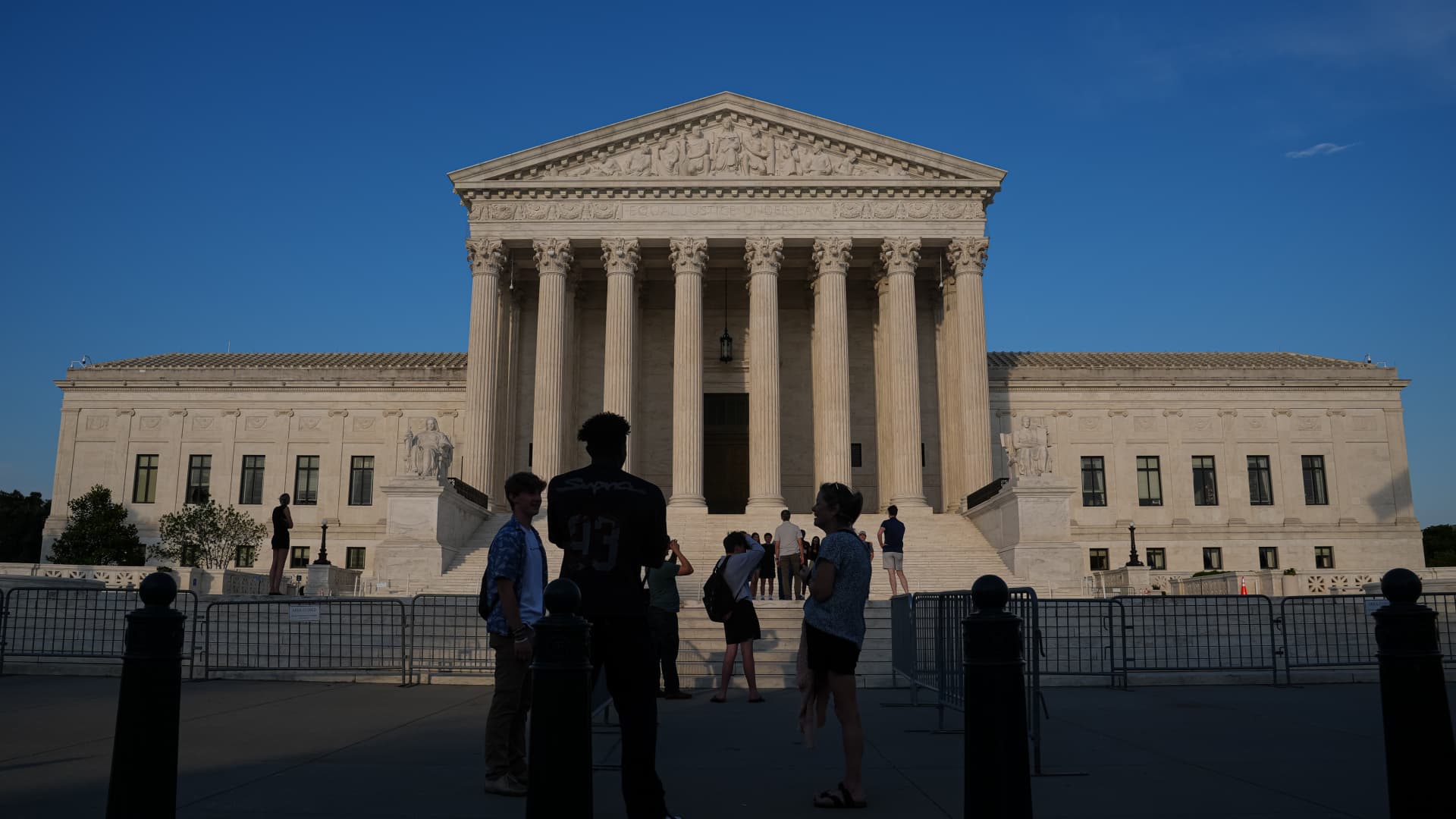
Public approval of the U.S. Supreme Court has plummeted to a record low of 33% amid significant legal losses for the Trump administration. Notably, Republican support has sharply declined following rulings on tariffs, birthright citizenship, and the Federal Reserve.
The Erosion of Judicial Legitimacy: An Analysis of the 2026 Supreme Court Crisis
A Historic Decline in Public Trust
The latest Gallup polling data reveals a profound shift in the American public's perception of the U.S. Supreme Court. With a record-high disapproval rating of 61% and a meager 33% approval rating, the judiciary finds itself in a precarious position. This 6-percentage-point decline since July 2025 underscores a growing disillusionment with the institution, marking a significant departure from historical norms of judicial respect that have been tracked for over two decades.
The Republican Pivot
Perhaps the most striking development is the collapse of support from the Republican base. Having previously enjoyed a near-record high approval of 79% in September, Republican sentiment has cratered to 58%. This shift suggests that the Court’s recent jurisprudence has diverged sharply from the expectations of conservative voters, signaling a potential realignment in how partisan groups view the independence and ideological trajectory of the bench.
Impact of Key Legal Rulings
This decline in support is not occurring in a vacuum. The 2026 term has been defined by high-stakes litigation that directly challenged the priorities of the Trump administration. By ruling against the executive branch on critical issues such as tariff authority, birthright citizenship, and the regulatory autonomy of the Federal Reserve, the Court has invited direct political backlash. These decisions have effectively neutralized key pillars of the administration's policy agenda, placing the Court at the center of a brewing constitutional confrontation.
The Intersection of Law and Policy
By engaging with matters involving the Federal Reserve and international trade tariffs, the Court has moved beyond traditional social issues and into the realm of core economic governance. When the judiciary limits the scope of executive power in these areas, it inevitably triggers a response from the political apparatus. The current disapproval rates reflect a public that is increasingly sensitive to how these legal constraints impact national economic stability and executive authority.
Future Trends and Judicial Stability
As the Court concludes its current term, the record-low approval ratings present a challenge for the institution's long-term perceived legitimacy. Historically, the Court relies on the public's perception of its impartiality to enforce its rulings. If the trend of plummeting support continues—particularly among its former defenders—the Court may face increased scrutiny and calls for structural reform, as its role as an arbiter of executive power becomes increasingly contested.
Conclusion
The 2026 term will be remembered as a pivotal moment where the Supreme Court faced a massive crisis of confidence. With approval ratings hitting historic lows and traditional coalitions of support fracturing, the Court’s future influence depends heavily on its ability to navigate the tension between constitutional oversight and the political demands of a polarized nation.