Show HN: OmniDiff – Opensource, super fast, content aware Git difftool, in Rust
Source Entity
Hacker News
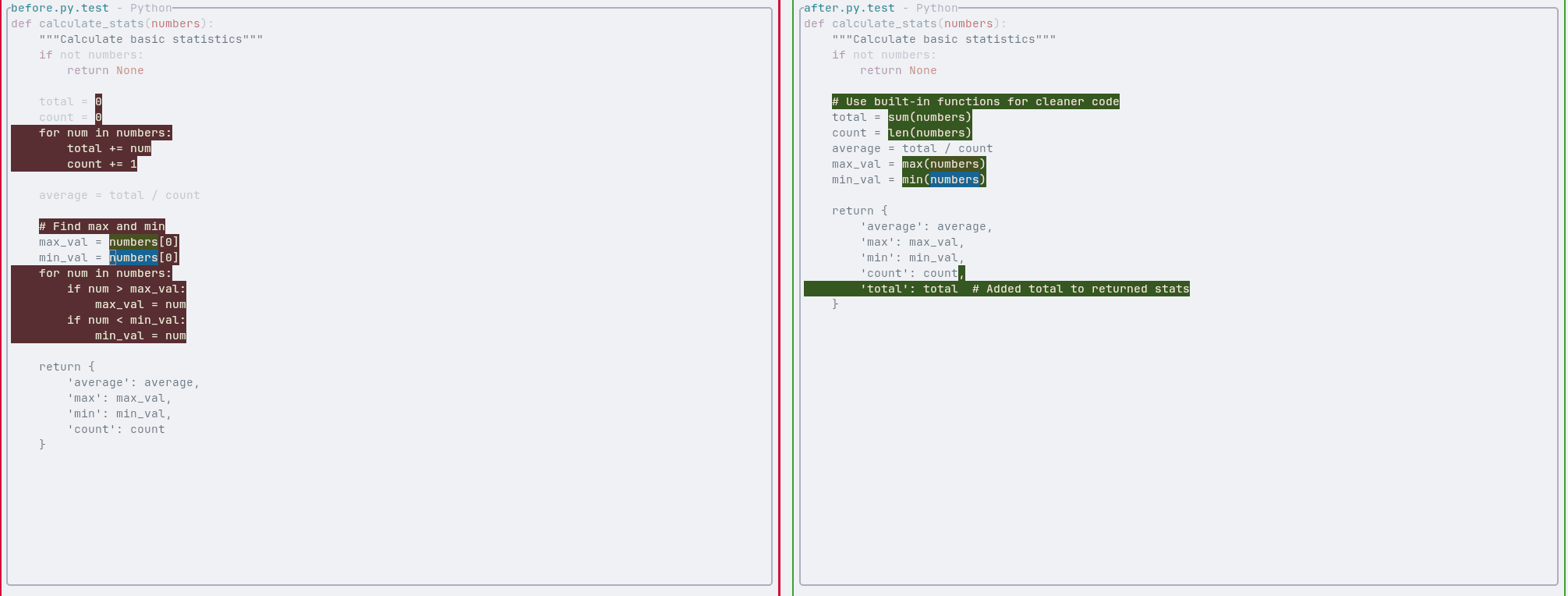
OmniDiff is a new open-source, Rust-based Git difftool designed for high-speed, content-aware code comparison. It achieves high accuracy rates across diverse file types, including code, images, and documents, by utilizing specialized algorithms.
The Emergence of OmniDiff: A New Paradigm in Version Control
In the landscape of software development, the ability to effectively track and compare changes is paramount. The introduction of OmniDiff, an open-source, content-aware Git difftool written in Rust, marks a significant evolution in developer tooling. By leveraging Rust’s memory safety and performance capabilities, OmniDiff addresses the limitations of traditional line-based diff utilities, offering a more nuanced approach to code and asset comparison.
Technical Architecture and Performance
At its core, OmniDiff is engineered for extreme speed and robustness. Testing on an Intel Core i7-1370P processor demonstrates sub-100ms processing times, a critical threshold for developers who rely on rapid feedback loops during code reviews. Unlike standard Unix diff tools that primarily operate on text streams, OmniDiff employs content-specific algorithms, enabling it to handle 99.95% of code changes with high fidelity.
Content-Aware Precision
The tool’s efficacy is highlighted by its varied performance across different file formats. With a 98% accuracy rate for code and significant successes in analyzing complex assets like binary images (96%), fonts (95%), and message catalogs (100%), OmniDiff bridges the gap between text-based version control and modern multimedia development. While its performance on PDFs shows lower reliability due to a limited sample size, the tool remains a potent utility for diverse project environments.
Why Content-Awareness Matters
Traditional diff tools often struggle with non-text files, frequently outputting unreadable binary noise. OmniDiff’s shift toward content-awareness allows it to interpret the internal structure of files—such as archives, cursors, and compiled translation catalogs—rather than just detecting byte-level differences. This capability is essential for teams working on cross-functional projects where documentation, assets, and source code are tightly integrated.
Broader Implications for DevOps
The adoption of Rust for performance-critical dev-tools is a growing trend that OmniDiff exemplifies. By providing a command-line interface that integrates seamlessly into existing Git workflows, it allows developers to visualize changes in complex file types directly. As software projects grow in complexity, the demand for tools that can interpret project context will only increase, potentially setting a new standard for how version control systems handle non-code assets.
Conclusion
OmniDiff represents a sophisticated advancement in the developer ecosystem. By combining the speed of Rust with intelligent, content-aware heuristics, it provides a robust alternative to legacy utilities. As it continues to evolve—evidenced by its real-world demonstrations in browser-based side-by-side comparisons—it is positioned to become an indispensable asset for developers seeking clarity in their versioning processes.