UPSC Key: Shamonda Virus, Arunachal stand-off and Legislative Councils
Source Entity
Raveena Baneta
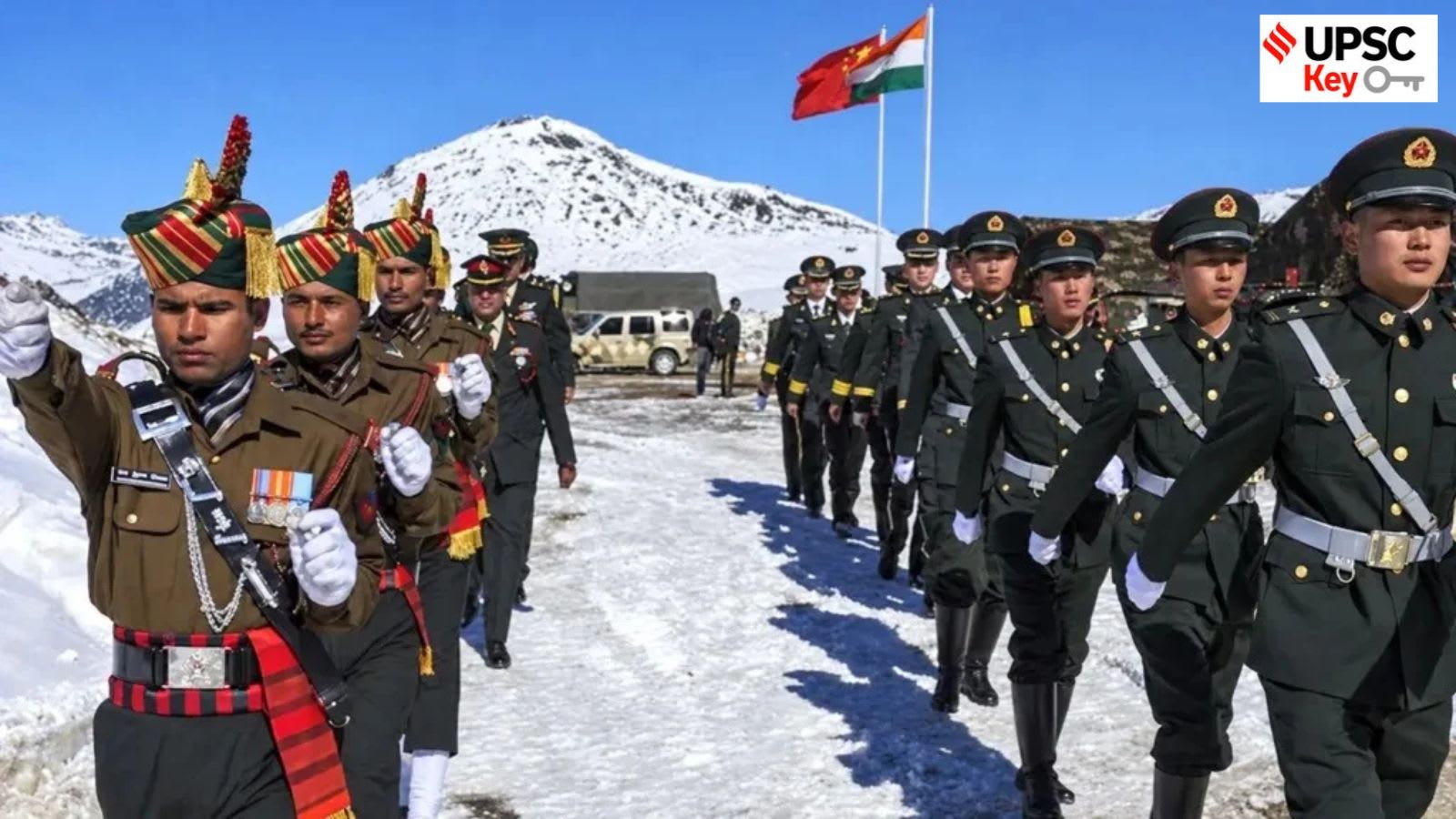
Indo-Tibetan Border Police DG Shatrujeet Kapur has confirmed ongoing face-offs with the Chinese PLA at multiple locations along the Arunachal Pradesh border. This development follows recent Corps Commander-level talks aimed at de-escalating tensions in the Taksing area.
Tensions Along the Line of Actual Control: An Analysis of the Arunachal Standoff
The Current Security Landscape
Recent admissions by Shatrujeet Kapur, the Director General of the Indo-Tibetan Border Police (ITBP), have brought renewed focus to the volatile border dynamics between India and China. By acknowledging that face-offs are occurring at 'several locations' in Arunachal Pradesh, the ITBP has validated concerns regarding the stability of the Line of Actual Control (LAC). This confirmation follows a period of heightened activity in the Taksing area of the Upper Subansiri district, where Chinese People’s Liberation Army (PLA) maneuvers have necessitated a robust Indian response.
Diplomatic and Military Negotiations
The persistence of these standoffs despite recent Corps Commander-level talks underscores the complexity of the India-China border dispute. These high-level military dialogues are designed to serve as a friction-reduction mechanism; however, the ongoing nature of the face-offs suggests a significant gap between diplomatic intent and ground-level tactical reality. For observers of the UPSC Civil Services Examination, this situation serves as a critical case study in the challenges of managing neighborhood relations and maintaining territorial integrity in disputed border zones.
Strategic Implications for India
Arunachal Pradesh remains a focal point of geopolitical contention. The current friction is not merely a localized tactical issue but a reflection of broader strategic positioning along the Himalayan frontier. The ITBP’s role, as the primary border guarding force, is pivotal in maintaining the status quo, yet the frequency of these encounters signals an increasingly assertive posture from the Chinese side. Understanding the nuances of the LAC—a de facto border that lacks universal demarcation—is essential for analyzing why these standoffs remain a recurring theme in India’s foreign policy.
Historical Context and Border Management
Historically, the border in the Eastern Sector has been characterized by varying perceptions of the LAC. The Taksing area, situated in the Upper Subansiri district, has previously witnessed localized friction, but the current escalation suggests a more sustained effort by the PLA to probe Indian defenses. The reliance on Corps Commander-level talks highlights the shift toward institutionalized military diplomacy, even as the risk of tactical miscalculation persists in the absence of a formal, mutually agreed-upon boundary.
Future Trends and Outlook
Looking ahead, the situation in Arunachal Pradesh will likely remain a litmus test for the effectiveness of India’s 'deterrence through preparedness' strategy. The ongoing face-offs suggest that the border will remain a theater of 'gray zone' tactics, where both nations test the limits of the other without triggering a full-scale kinetic conflict. As India continues to bolster its border infrastructure, the ability of the ITBP to manage these localized standoffs without allowing them to escalate into wider regional instability will be the defining challenge for the coming months.