OpenAI is making big claims as it rolls out ChatGPT Health to everyone
Source Entity
Emma Roth
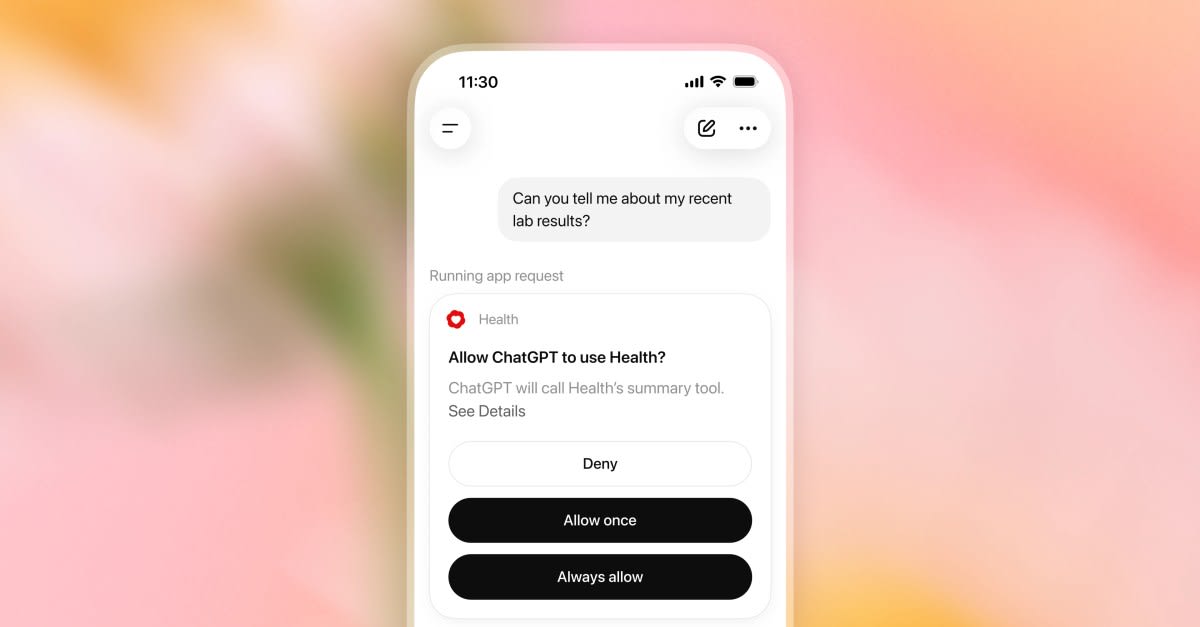
OpenAI has launched ChatGPT Health in the U.S., allowing users to integrate personal medical and fitness data for personalized insights. Despite claims of clinician-level reasoning, the rollout faces scrutiny following recent legal challenges regarding medical advice accuracy.
The Expansion of AI into Personal Healthcare
OpenAI has officially launched its "ChatGPT Health" feature to all users across the United States. This expansion marks a significant shift in how individuals interact with their personal health data, as the platform now enables the secure integration of medical records and information from health-tracking services such as Apple Health, Function, and MyFitnessPal. By centralizing disparate data streams, OpenAI aims to provide users with more personalized insights into their physical well-being.
Advancements and Ambitions in Clinical Reasoning
During recent briefings, OpenAI representatives, including vice president of health product Ashley Alexander, have made bold assertions regarding the capabilities of their models, suggesting that they are now capable of reasoning at levels exceeding those of human clinicians. This claim positions the company at the forefront of AI-driven medical diagnostics and support. However, these assertions are not without nuance; when pressed for empirical evidence regarding this comparison, OpenAI health lead Karan Singhal advised that such claims should be "tempered," highlighting the ongoing tension between technological optimism and the reality of clinical safety.
The Data Integration Ecosystem
Central to this new functionality is the ability for users to aggregate their health data from hospital systems, such as Epic, alongside consumer fitness trackers. By connecting these records, the system aims to offer a holistic view of a user's health history. The scale of this utility is evident in the usage statistics provided by the company: health-related queries directed at ChatGPT have surged from 230 million per week during the early testing phase in January to 300 million per week, underscoring a massive consumer appetite for AI-assisted health information.
Legal and Ethical Hurdles
Despite the rapid adoption, the rollout occurs under a cloud of legal uncertainty. OpenAI is currently facing a lawsuit initiated by a Florida-based pastor who alleges that the chatbot provided a near-fatal suggestion to avoid consulting a doctor. This incident serves as a critical reminder of the risks inherent in deploying generative AI for medical guidance. The legal challenge highlights the high stakes of "hallucinations" or incorrect advice in a health context, where the margin for error is significantly smaller than in general-purpose computing.
Future Trends and Regulatory Implications
The introduction of ChatGPT Health represents a broader trend of integrating Large Language Models (LLMs) into the healthcare sector. As these tools become more deeply embedded in daily life, the focus will likely shift from mere data aggregation to the rigorous validation of clinical accuracy. Future developments will undoubtedly necessitate stricter regulatory oversight to ensure that AI-driven insights complement, rather than replace, professional medical judgment, protecting users from potentially dangerous recommendations while still leveraging the benefits of automated data analysis.
Multiple Citing Sources