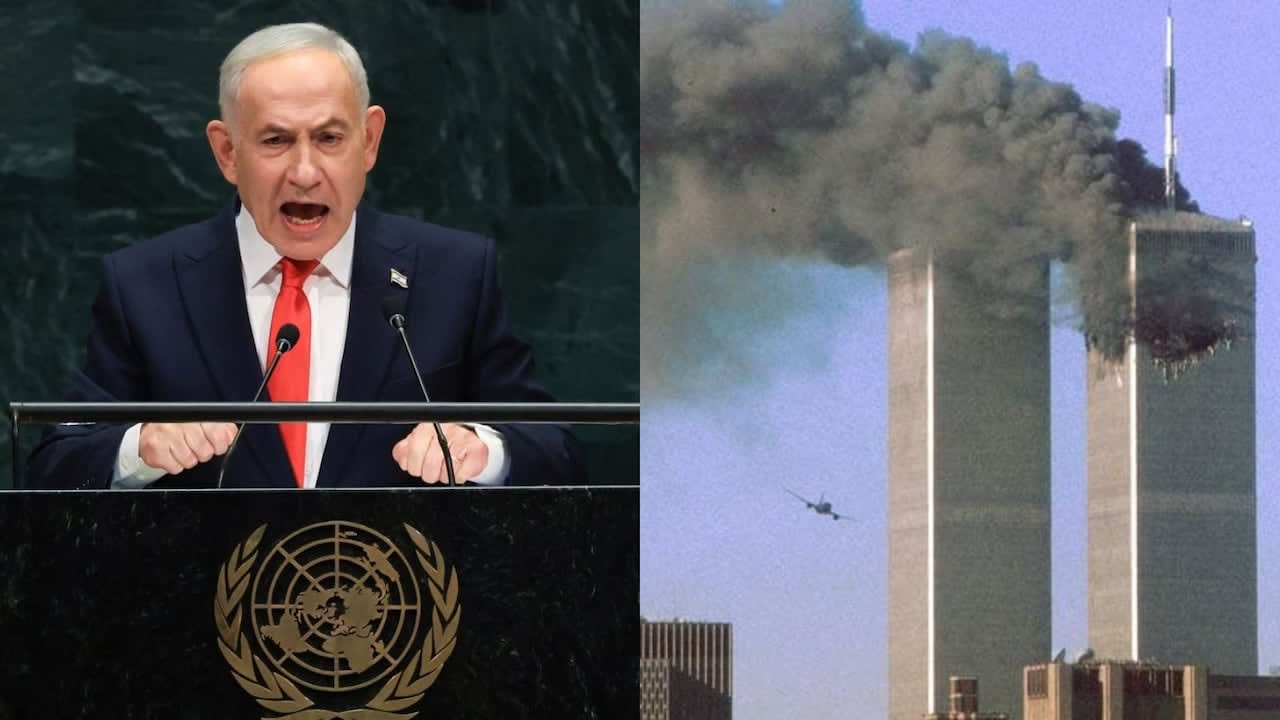
Netanyahu Says October 7 Attack On Israel Is Like 9/11 Happening 16 Times
Source Entity
NDTV News Search Records Found 1000
Pakistan's PM Shehbaz Sharif addressed the UNGA, thanking Donald Trump for intervening in the May 2025 India-Pakistan conflict. He simultaneously warned that any Indian efforts to divert Indus River waters would be viewed as an act of war.
Tensions Escalate: Pakistan’s UNGA Address and the Indus Waters Dispute
A Diplomatic Reckoning at the UN
At the 81st United Nations General Assembly (UNGA), Pakistan Prime Minister Shehbaz Sharif utilized the global platform to address the precarious state of South Asian security. Central to his address was a formal acknowledgment of United States involvement in de-escalating a four-day military confrontation between India and Pakistan in May 2025. Sharif credited former President Donald Trump with a "timely intervention" that purportedly pulled the two nuclear-armed nations back from the brink of a broader, catastrophic conflict following India’s launch of Operation Sindoor.
The Shadow of Operation Sindoor
Operation Sindoor, which took place in the spring of 2025, represents a significant inflection point in contemporary Indo-Pakistani relations. According to the Prime Minister, the operation was the catalyst for the military standoff that required high-level international mediation. By bringing this to the floor of the UN, Islamabad is clearly seeking to internationalize the friction that exists between New Delhi and Islamabad, framing the conflict not merely as a bilateral border issue, but as a regional instability that necessitates global oversight.
The Indus Waters Treaty: A New Flashpoint
Perhaps the most alarming element of Sharif’s address was his direct warning regarding the Indus Waters Treaty. Sharif declared that any attempt by India to stop, impede, or divert Pakistan’s share of the Indus River waters would be treated as an "act of war." This rhetoric follows India’s decision to place the landmark 1960 water-sharing agreement in abeyance, a move New Delhi justified citing the Pahalgam terror attack. Sharif categorically dismissed the legal basis for this suspension, signaling that water security has now overtaken conventional military border disputes as a primary existential threat for Pakistan.
Water as a Geopolitical Weapon
Sharif’s assertion that "water must never be weaponized" underscores the vulnerability of Pakistan’s agricultural and economic infrastructure. The Indus River system serves as the lifeblood for the nation, and by framing its diversion as an act of war, the Prime Minister has established a clear red line. This shift suggests that future Indo-Pakistani tensions may increasingly focus on resource management and environmental security, moving beyond the traditional kinetic military clashes that have historically defined the rivalry.
Historical Context and Future Trends
While an Indian diplomat in the audience dismissed the claims with a gesture of skepticism, the implications of these statements are profound. The reliance on international figures like Trump to mediate in regional South Asian conflicts highlights a shift in diplomatic strategy for Pakistan. Looking forward, the international community faces the challenge of stabilizing a region where two nuclear powers are now fundamentally divided over the management of a critical shared resource, potentially escalating the conflict from a geopolitical struggle to a struggle for fundamental survival.
Multiple Citing Sources
Verification Required?