Pilot writes 'I'm bored' in sky during flight
Source Entity
BBC News
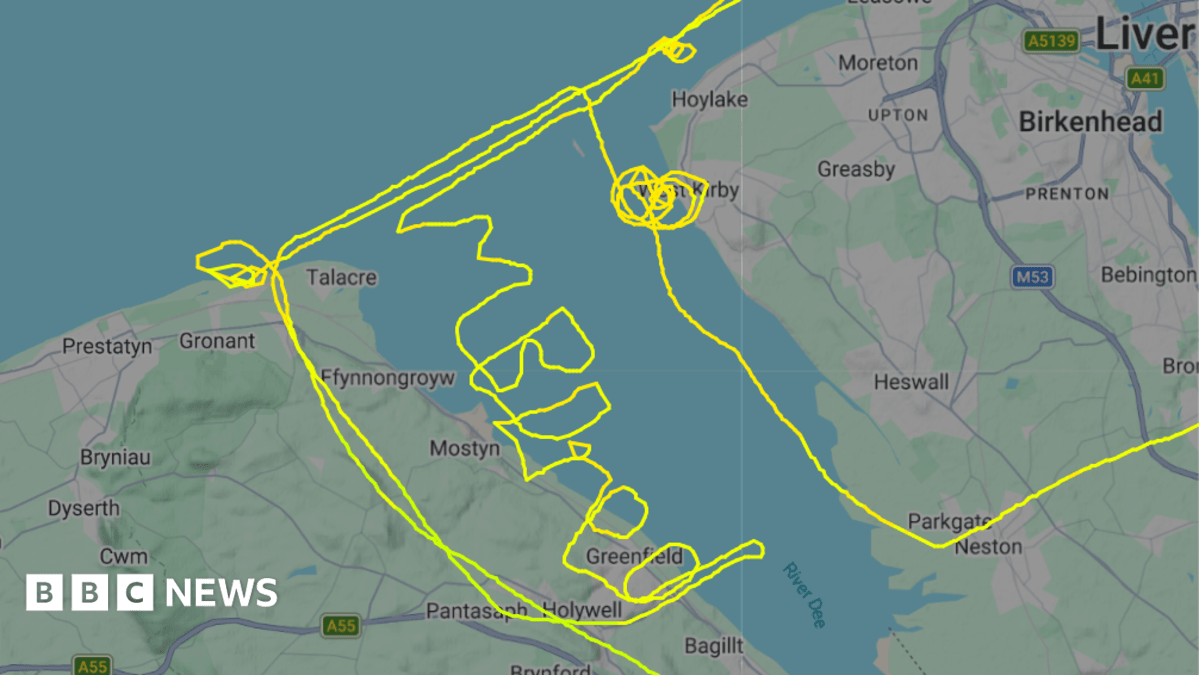
The pilot's mischievous flight path was noticed by plane spotters on the flightradar24 tracking app
The Sky as a Canvas: Analyzing the 'I'm Bored' Flight Path
In a quirky display of aerial whimsy, a pilot recently utilized the vast expanse of the sky to communicate a simple, relatable sentiment: "I'm bored." The message was not written with traditional smoke or chemicals, but rather through the aircraft's GPS coordinates, creating a visual trail that was captured and shared by the global community of plane spotters via the Flightradar24 tracking app. This incident highlights a modern phenomenon where the private actions of cockpit crews are now subject to real-time public scrutiny and entertainment through accessible aviation technology.
The Role of ADS-B and Digital Tracking
To understand how this event occurred, one must look at the underlying technology of Automatic Dependent Surveillance-Broadcast (ADS-B). Flightradar24 and similar platforms rely on a network of ground-based receivers that pick up signals broadcast by aircraft. Every turn, climb, and descent is logged and plotted on a digital map. By intentionally maneuvering the aircraft in specific geometric patterns, the pilot essentially used the flight path as a digital pen. This transformation of a professional navigation tool into a medium for personal expression demonstrates how the 'democratization' of flight data has turned the sky into a transparent gallery for anyone with a smartphone.
The Psychology of Cockpit Boredom
While aviation is often associated with high-stress emergencies, a significant portion of flight—particularly during cruise phases or specific types of 'ferry flights' (moving an aircraft from one location to another without passengers)—can be remarkably monotonous. The pilot's decision to spell out "I'm bored" reflects a human impulse to break the monotony of highly regulated environments. However, this act of mischief exists in a delicate balance with the rigorous discipline required for flight safety. The psychological need for stimulation in a sterile cockpit environment is a known factor in aviation human factors research, though usually, it is managed through checklists and crew coordination rather than skywriting.
Regulatory Implications and Safety Concerns
From a regulatory standpoint, deviating from a filed flight plan for non-operational reasons is generally frowned upon by aviation authorities. Air Traffic Control (ATC) expects aircraft to follow predictable paths to ensure separation and safety. Depending on the airspace—whether it was uncontrolled or strictly monitored—this maneuver could be viewed as a breach of protocol. If the pilot performed these turns in a busy corridor, it could have created unnecessary work for controllers. This event raises questions about where professional conduct ends and harmless pranksterism begins, especially when the evidence is permanently archived in digital flight logs.
The Culture of Plane Spotting
This incident would have gone unnoticed decades ago, but the rise of the 'plane spotting' community has changed the landscape. Enthusiasts who monitor flight paths for sport now act as an unofficial global surveillance network. The rapid viral spread of the 'I'm bored' path shows how niche hobbies have integrated with social media to create a feedback loop of instant discovery. The plane spotters did not just observe a flight; they decoded a message, turning a routine transit into a digital event. This reflects a broader trend where the boundaries between professional operations and public entertainment are increasingly blurred.
Conclusion: A Digital-Age Footprint
Ultimately, the 'I'm bored' flight path is a harmless but telling example of the digital footprints we leave behind. It serves as a reminder that in the era of ubiquitous tracking, there is very little 'private' space, even at 30,000 feet. While the pilot likely viewed the act as a momentary distraction, the permanence of the data ensures that the joke lives on. As aviation technology continues to evolve, we can expect more instances of pilots and operators interacting with the public through these digital breadcrumbs, blending the precision of aerospace engineering with the unpredictability of human nature.