West Asia crisis shows conflicts have global impact: Modi at SCO Summit
Source Entity
Shubhajit Roy
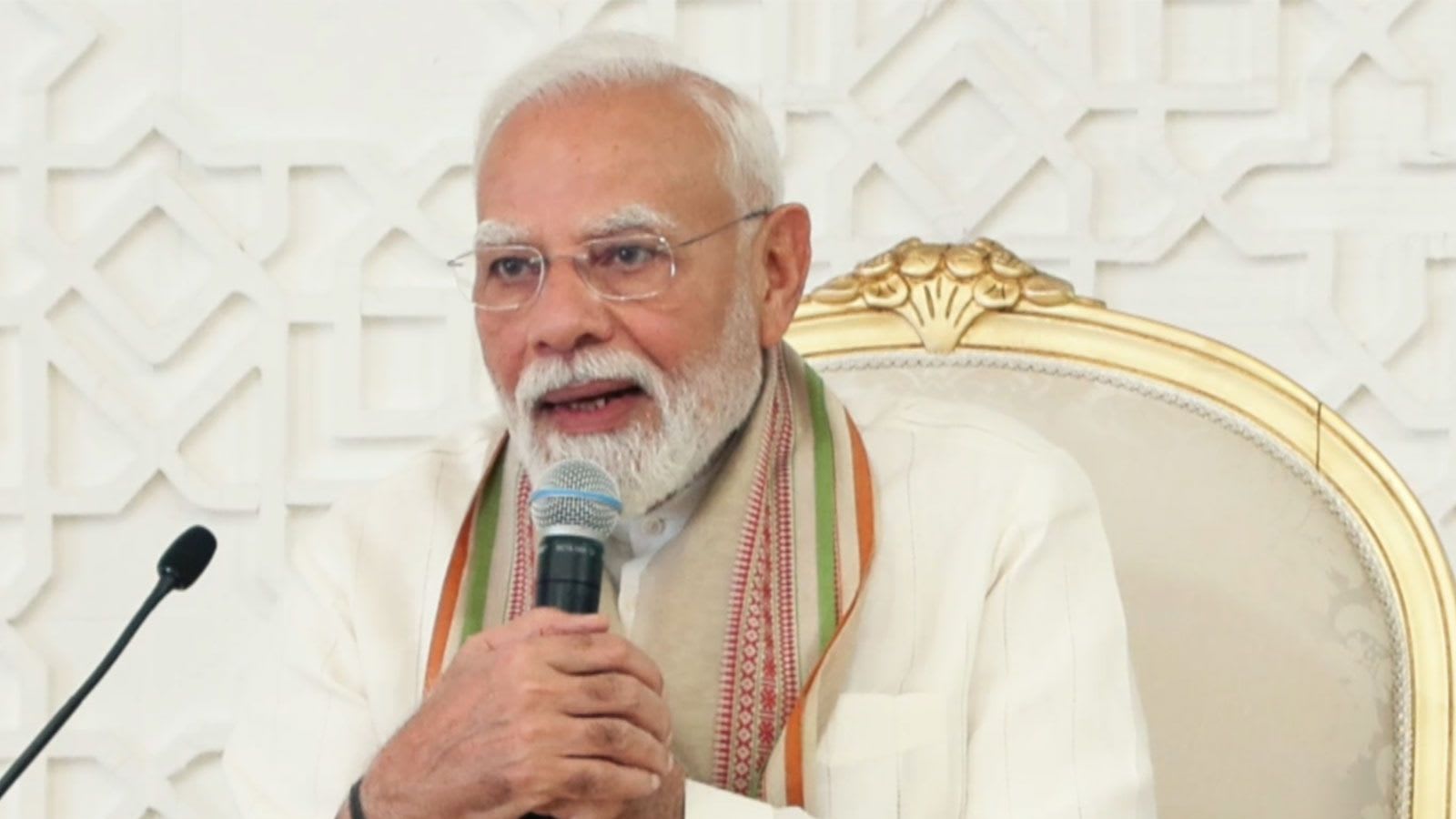
PM Narendra Modi held high-level discussions with leaders from Iran and Russia during the SCO summit, emphasizing peaceful conflict resolution and economic connectivity. He urged for an end to the ongoing wars while advocating for maritime security and the protection of global trade infrastructure.
India's Diplomatic Pivot: Balancing Global Conflict and Regional Connectivity
Prime Minister Narendra Modi’s recent engagements at the Shanghai Cooperation Organization (SCO) summit in Bishkek signify a robust assertion of India’s role as a global bridge-builder. By convening with both Iranian President Masoud Pezeshkian and Russian President Vladimir Putin, the Prime Minister has underscored a consistent foreign policy doctrine: that the era of conflict must give way to the era of diplomacy, and that economic prosperity is inextricably linked to regional stability.
Strengthening the Chabahar Connection
In his bilateral meeting with President Pezeshkian, PM Modi focused on the strategic importance of the Chabahar port. This collaboration is not merely a bilateral trade project but a vital artery for regional logistics, connecting India to Central Asia and beyond. By prioritizing maritime freedom and the safety of commercial shipping, both leaders acknowledged that the stability of West Asian trade routes is essential for the economic security of the entire region. Despite the looming pressure of international sanctions, their commitment to expanding trade ties highlights a pragmatic approach to regional development.
The Imperative of Peace in Ukraine
Parallel to his discussions on trade, PM Modi’s direct dialogue with President Putin regarding the Russia-Ukraine conflict marks a continuation of India’s firm stance on global security. By explicitly stating that the world must transition from an 'endless war' to an 'end of war,' Modi is signaling that India’s strategic autonomy allows it to act as a neutral arbiter. His previous statements—that 'this is not the era of war' and that solutions cannot be found on the battlefield—reflect a consistent belief that civilian lives and infrastructure must remain the primary priority for all involved parties.
Modernizing Regional Logistics
Beyond the specific geopolitical crises, the SCO summit served as a platform for Modi to emphasize the modernization of trade and logistical connectivity. The integration of modern infrastructure is seen as a prerequisite for the economic empowerment of member nations. India’s push for streamlined trade corridors suggests a forward-looking strategy aimed at insulating regional commerce from the volatility of ongoing territorial conflicts.
Geopolitical Implications and Future Trends
Looking ahead, India’s dual focus on economic integration via projects like Chabahar and its vocal advocacy for peace in Ukraine suggests a long-term goal of fostering a multipolar order. By maintaining open lines of communication with both Iran and Russia—nations often at odds with Western geopolitical interests—India is positioning itself as a vital stakeholder capable of facilitating dialogue where traditional alliances have reached a stalemate.
Conclusion
The diplomatic efforts displayed in Bishkek reflect a sophisticated balancing act. As India navigates the complexities of global sanctions and regional instability, its emphasis on 'peace over conflict' and 'connectivity over isolation' remains the cornerstone of its foreign policy. The success of these initiatives will likely dictate the pace of economic growth and diplomatic influence for the region in the coming years.
Multiple Citing Sources