Delhi Chief Minister Rekha Gupta Celebrates Chhath Puja, Offers Prayers At Yamuna Ghat
Source Entity
NDTV News Search Records Found 1000
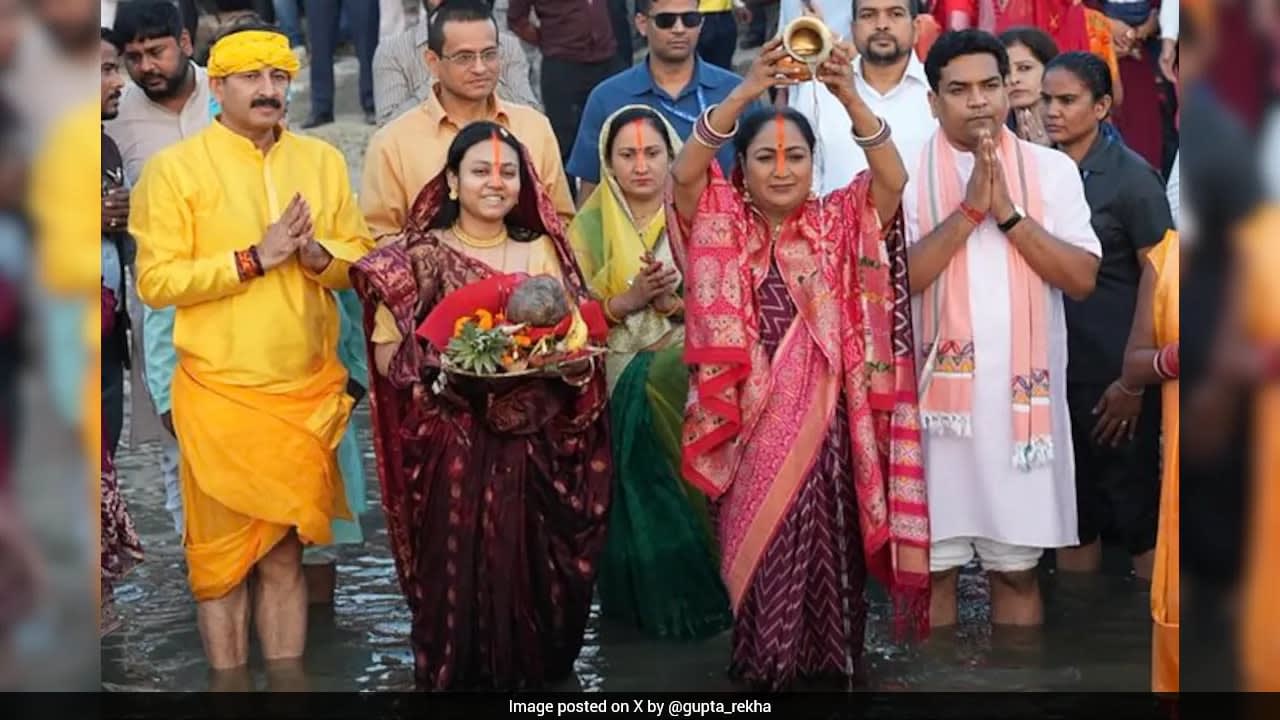
Chhath Puja celebrations have triggered political tension in Delhi and West Bengal. Parties are clashing over river pollution, administrative responsibility, and regional identity politics.
Political Tensions Rise Over Chhath Puja Observances
Chhath Puja, a significant festival dedicated to the Sun God, has become the epicenter of heightened political friction in both Delhi and West Bengal. As millions of devotees gathered at riverbanks to offer prayers, the sanctity of the festival has been overshadowed by partisan blame games, highlighting the intersection of cultural identity and administrative accountability in Indian politics.
The Delhi Yamuna Crisis: Governance vs. Accountability
In the national capital, the celebration has been marred by the visible presence of toxic foam on the Yamuna River. The Aam Aadmi Party (AAP) has utilized this environmental hazard to target Delhi Chief Minister Rekha Gupta and the BJP-led central government, arguing that claims of river cleaning efforts are superficial or non-existent. The slogan "Not AI, this is Yamuna" serves as a biting critique of the state of urban infrastructure, suggesting that the reality of the river's pollution is far removed from official narratives.
BJP and AAP: A Cycle of Recrimination
The BJP has countered these accusations by pointing to the historical management of the city's resources under previous administrations. By shifting the focus back to the AAP’s tenure, the BJP aims to negate the party’s criticism, framing the current environmental crisis as a legacy issue rather than a failure of the current leadership. This cycle of blame demonstrates how environmental health has become a proxy for broader political competition in Delhi.
Identity Politics in West Bengal
Simultaneously, a separate controversy has erupted in West Bengal, where TMC MP Kalyan Banerjee’s remarks regarding the celebration of Chhath Puja have ignited a firestorm. By questioning whether the state belongs to "Bengalis or rogue Biharis," Banerjee has introduced a polarizing narrative centered on regionalism and the preservation of Bengali culture. This rhetoric has forced a defensive response from leaders like Chief Minister Suvendu Adhikari and minister Indranil Khan, who have sought to protect the inclusive nature of the festival.
Broader Implications for National Integration
The dual controversies underscore a deepening trend of regional and cultural politics influencing major religious festivals. When political leaders frame public celebrations through the lens of "insiders vs. outsiders" or use environmental neglect as a political weapon, the festival itself risks becoming a tool for electoral mobilization rather than a communal event. This trend suggests that political parties are increasingly willing to leverage cultural anxieties to solidify their respective voter bases.
Future Trends and Outlook
Looking ahead, it is likely that festivals will continue to be flashpoints for political discourse, particularly in urban centers where diverse populations congregate. As the degradation of water bodies continues to intersect with public rituals, the pressure on administrations to provide clean and safe environments for worship will only intensify. Unless these issues are addressed through objective environmental policy rather than rhetoric, the political theater surrounding festivals like Chhath Puja is poised to escalate in future election cycles.
Multiple Citing Sources
Verification Required?