Prakash Raj says anti-CEC protests will continue despite crackdown: 'There is Gandhi's blood in us'
Source Entity
Latest News: Todays Latest News Headlines from India & World | Hindustan Times | Hindustan Times
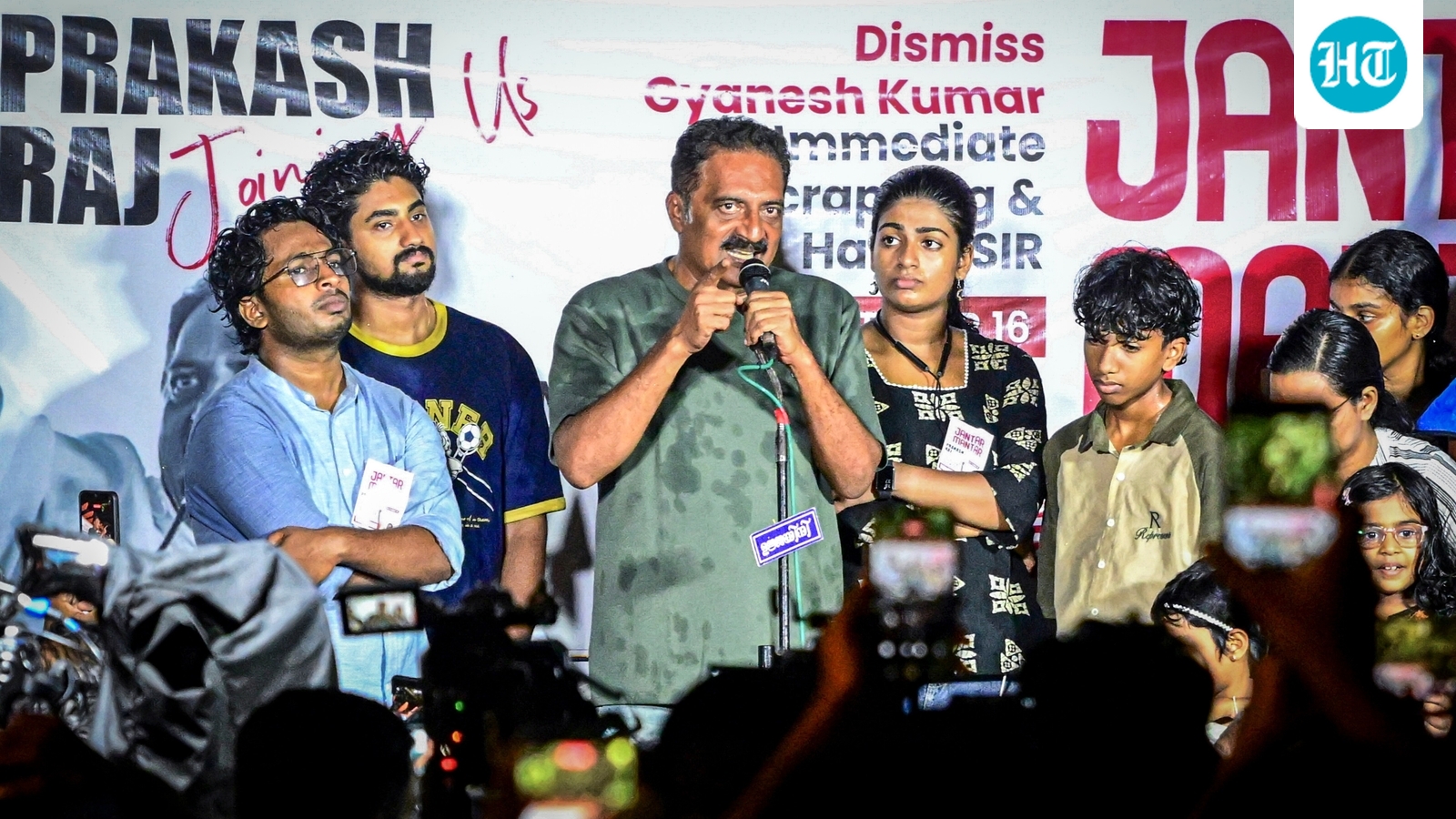
Actor and activist Prakash Raj has declared that nationwide peaceful protests against CEC Gyanesh Kumar and electoral roll revisions will persist. Raj emphasized the democratic right to dissent, invoking the legacies of Gandhi, Ambedkar, and Bhagat Singh to justify the ongoing movement.
The Call for Accountability: Prakash Raj and the CEC Protests
Actor and activist Prakash Raj has emerged as a prominent voice in the growing dissent against Chief Election Commissioner (CEC) Gyanesh Kumar. Following a protest in Thiruvananthapuram, Raj reaffirmed that the movement, which focuses on alleged irregularities in the Special Intensive Revision (SIR) of electoral rolls, remains undeterred by state crackdowns. His rhetoric underscores a broader anxiety regarding the integrity of electoral processes in India.
The Historical and Ideological Framework of Dissent
In articulating the rationale behind these protests, Raj invoked the legacies of Mahatma Gandhi, B.R. Ambedkar, and Bhagat Singh. By stating, "There is Gandhi's blood in us," he is positioning the current movement within the historical tradition of non-violent civil disobedience. This appeal to foundational figures of Indian democracy serves to frame the protest not as an act of disruption, but as a patriotic duty to protect the constitutional mechanisms that define the nation.
Concerns Over the Special Intensive Revision (SIR)
The core of the controversy lies in the Special Intensive Revision (SIR) of electoral rolls. Critics and activists like Raj allege that these revisions have been conducted with irregularities, threatening the fairness of future electoral outcomes. By demanding the resignation of CEC Gyanesh Kumar, the protesters are targeting the leadership of the Election Commission, suggesting that the perceived lack of transparency in these administrative updates has eroded public trust in the institution.
The Role of Celebrity Activism in Modern India
Prakash Raj’s involvement highlights the increasing role of public figures in mobilizing youth groups and civil society. His presence at the Manaveeyam Veedhi protest demonstrates a shift where cultural icons use their platform to amplify specific administrative grievances. This strategy aims to bring technical electoral issues into the public discourse, forcing authorities to address claims of procedural bias that might otherwise remain confined to bureaucratic channels.
Implications for Democratic Discourse
The assertion that protests will continue despite attempts to "suppress" them points to a deepening divide between activist groups and election authorities. This standoff reflects a critical juncture in Indian democratic practice, where the right to question the state is being tested. The resilience of these protests suggests that the demand for electoral transparency is likely to remain a significant friction point in national politics for the foreseeable future.
Future Trends and Concluding Outlook
As the movement gains momentum across the country, the government and the Election Commission face the challenge of reconciling administrative procedures with the demands for accountability. If the allegations of irregularities persist without a transparent resolution, the pressure on the CEC is likely to intensify. Ultimately, the outcome of this struggle will serve as a bellwether for the health of India's democratic institutions and the efficacy of public dissent in the digital age.
Verification Required?