Punjab issues licences for 2,800 new ration depots, says 5.5 lakh cardholders to benefit
Source Entity
Latest News: Today's Latest News Headlines from India & World | Hindustan Times | Hindustan Times
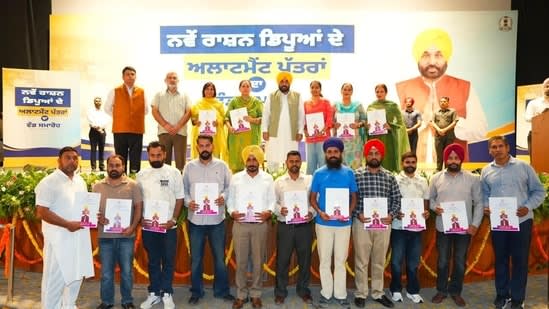
The Punjab government has expanded its public distribution network by issuing 2,800 new ration depot licences. This initiative aims to improve food security by providing easier access to subsidized rations for approximately 5.5 lakh cardholders.
Strengthening Food Security in Punjab: A Strategic Expansion
The Punjab government, under the leadership of Chief Minister Bhagwant Singh Mann, has taken a significant step toward bolstering the state’s Public Distribution System (PDS) by issuing licenses to 2,800 new ration depot holders. This strategic expansion, formalized at an event at Vikas Bhawan in Sahibzada Ajit Singh Nagar, marks a concerted effort to decentralize food grain distribution and improve the efficacy of welfare delivery across the state.
Improving Accessibility for the Vulnerable
At the core of this initiative is the objective of accessibility. By establishing 2,800 additional points of distribution, the state government is effectively reducing the physical barriers that many citizens face when attempting to secure their monthly food entitlements. The government estimates that 5.5 lakh ration cardholders will directly benefit from this move, as these new depots will bring essential supplies significantly closer to their residences, minimizing the need for long-distance travel.
Economic and Social Implications
Beyond the immediate benefit to consumers, this expansion carries broader socio-economic implications. For the beneficiaries, the proximity of these depots translates into tangible time savings, allowing individuals to avoid taking time off work—a critical factor for daily wage earners who struggle with the opportunity costs of navigating bureaucratic processes. Furthermore, the selection of 2,800 new depot holders serves as a mechanism for job creation, providing new livelihood opportunities within local communities.
Scaling the Public Distribution Network
The PDS remains a cornerstone of India’s social safety net, and by scaling the number of outlets, the Punjab government is addressing historical bottlenecks in service delivery. Historically, centralizing distribution often leads to overcrowding, delays, and supply chain inefficiencies. By expanding the network, the state is demonstrating a commitment to operational efficiency and the modernization of its welfare distribution infrastructure.
Future Trends and Administrative Impact
Looking forward, the success of this expansion will likely hinge on the government’s ability to maintain the supply chain integrity and ensure that these new depots are well-stocked and managed efficiently. If successful, this model of localized distribution could serve as a template for other regions in India struggling with the logistical challenges of reaching rural and semi-urban populations. The emphasis on 'closer to home' services represents a shift toward more citizen-centric governance in the administration of state-sponsored welfare programs.
Conclusion
The issuance of 2,800 new licenses is a proactive policy measure that aligns with the broader national goal of food security. By prioritizing the needs of 5.5 lakh cardholders, the Punjab administration is not only enhancing the reach of its social welfare initiatives but also strengthening the administrative framework that supports the most vulnerable sections of society.
Verification Required?