'Pahandi' procession, choked Grand Road : What triggered crowd scare at Puri Rath Yatra
Source Entity
TOI CITY DESK
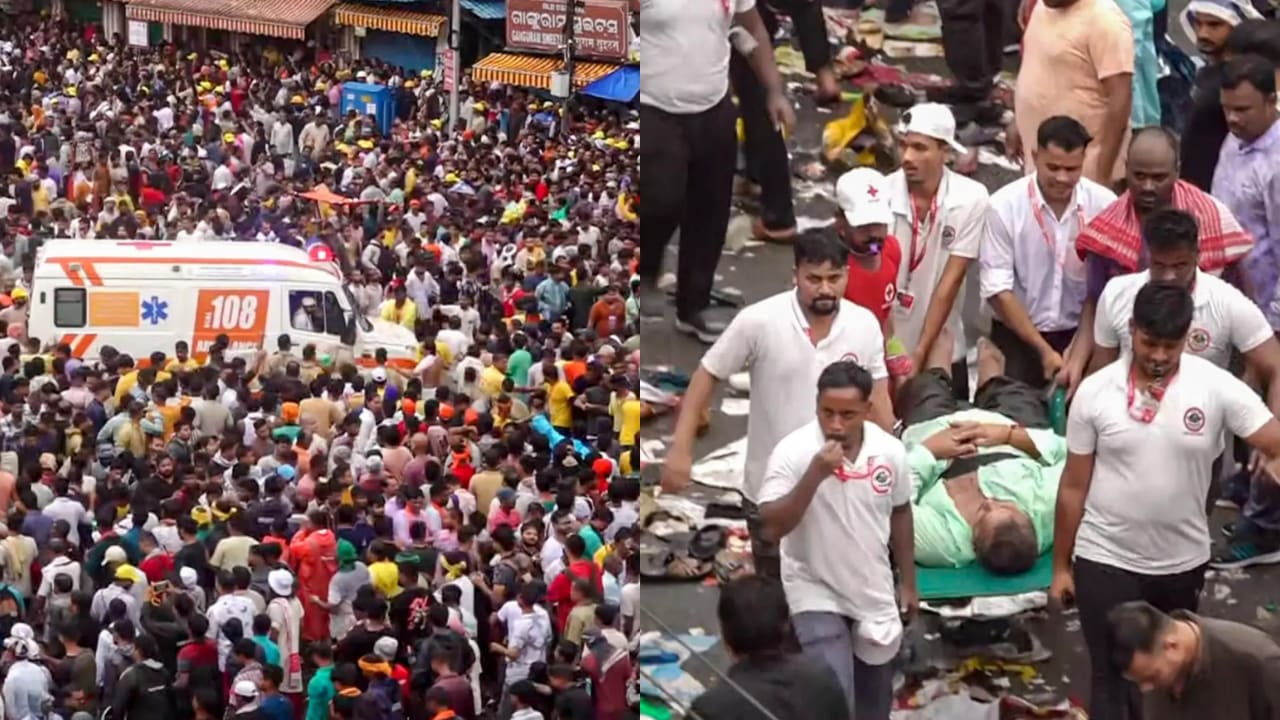
A crowd surge during the Pahandi ritual of the Puri Rath Yatra resulted in one death and over 100 cases of suffocation on Grand Road, prompting urgent calls for improved crowd management.
Tragedy Amidst Devotion: Analyzing the Crowd Surge at Puri Rath Yatra
The Puri Rath Yatra is one of the most significant religious congregations in the world, drawing millions of devotees to witness the journey of Lord Jagannath, Balabhadra, and Subhadra. However, the spiritual fervor of the event was marred by a critical safety failure during the Pahandi ritual—the ceremonial procession where the deities are carried from the temple to their respective chariots. The incident, which occurred on the Grand Road near the Singhadwara (the Lion's Gate), highlights the volatile intersection of extreme religious passion and insufficient crowd control infrastructure.
The Anatomy of the Surge
During the Pahandi procession, the density of the crowd reached a breaking point, triggering a sudden surge that led to a catastrophic crush. The report confirms that one devotee lost their life, while more than one hundred others suffered from suffocation. The chaos reached such a peak that emergency responders had to evacuate multiple individuals on stretchers through the dense throng near the Singhadwara. This specific location serves as a primary bottleneck, where the flow of devotees exiting the temple meets those gathering to see the deities, creating a high-pressure zone prone to stampedes.
Infrastructure and Crowd Dynamics
Grand Road, while wide, often becomes inadequate when faced with the sheer volume of pilgrims during the Rath Yatra. The 'crowd scare' mentioned in the reports is a symptom of a larger systemic issue: the inability to manage 'surge waves.' When a segment of the crowd pushes forward to get a glimpse of the deities during the Pahandi, a ripple effect is created, compressing those in the middle and back. In this instance, the lack of effective barriers or phased movement protocols likely contributed to the suffocation of over a hundred people, as the physical pressure prevented normal respiration.
A Pattern of Recurring Failures
Crucially, this event is not an isolated incident. The reports explicitly mention that similar occurrences took place last year, indicating a failure to implement lasting corrective measures. When tragedies repeat in the same geographical and temporal context, it suggests that the existing crowd management plans are either outdated or poorly executed. The recurrence emphasizes a dangerous gap between the growing number of attendees and the stagnant capacity of the safety protocols employed by the administration and temple authorities.
Emergency Response Challenges
The use of stretchers to evacuate victims near the Singhadwara underscores the difficulty of providing medical aid in such environments. In a high-density crush, the 'golden hour' for medical intervention is often lost because first responders cannot penetrate the crowd. The fact that over a hundred people required treatment for suffocation indicates a widespread atmospheric failure where oxygen became scarce due to the sheer proximity of bodies, necessitating an urgent rethink of how emergency corridors are maintained during the procession.
Future Trends and Necessary Reforms
Moving forward, the administration must transition from reactive policing to proactive crowd science. This could include the implementation of 'holding areas' to regulate the flow of people onto Grand Road and the use of real-time AI-driven crowd density monitoring to alert authorities before a surge reaches a critical threshold. Furthermore, the Pahandi ritual's timing and movement patterns may need to be adjusted to prevent the concentration of thousands of people in a single bottleneck area.
Conclusion
While the Puri Rath Yatra remains a beacon of faith and culture, the tragic death and mass suffocation during this year's Pahandi procession serve as a grim reminder that safety cannot be secondary to tradition. The events on Grand Road reveal a critical need for a comprehensive overhaul of crowd management strategies to ensure that the act of devotion does not lead to avoidable loss of life.