On TV, Putin unveils Rrussia’s ‘digital twin’ to help Caspian nations tackle falling water levels
Source Entity
Latest News: Todays Latest News Headlines from India & World | Hindustan Times | Hindustan Times
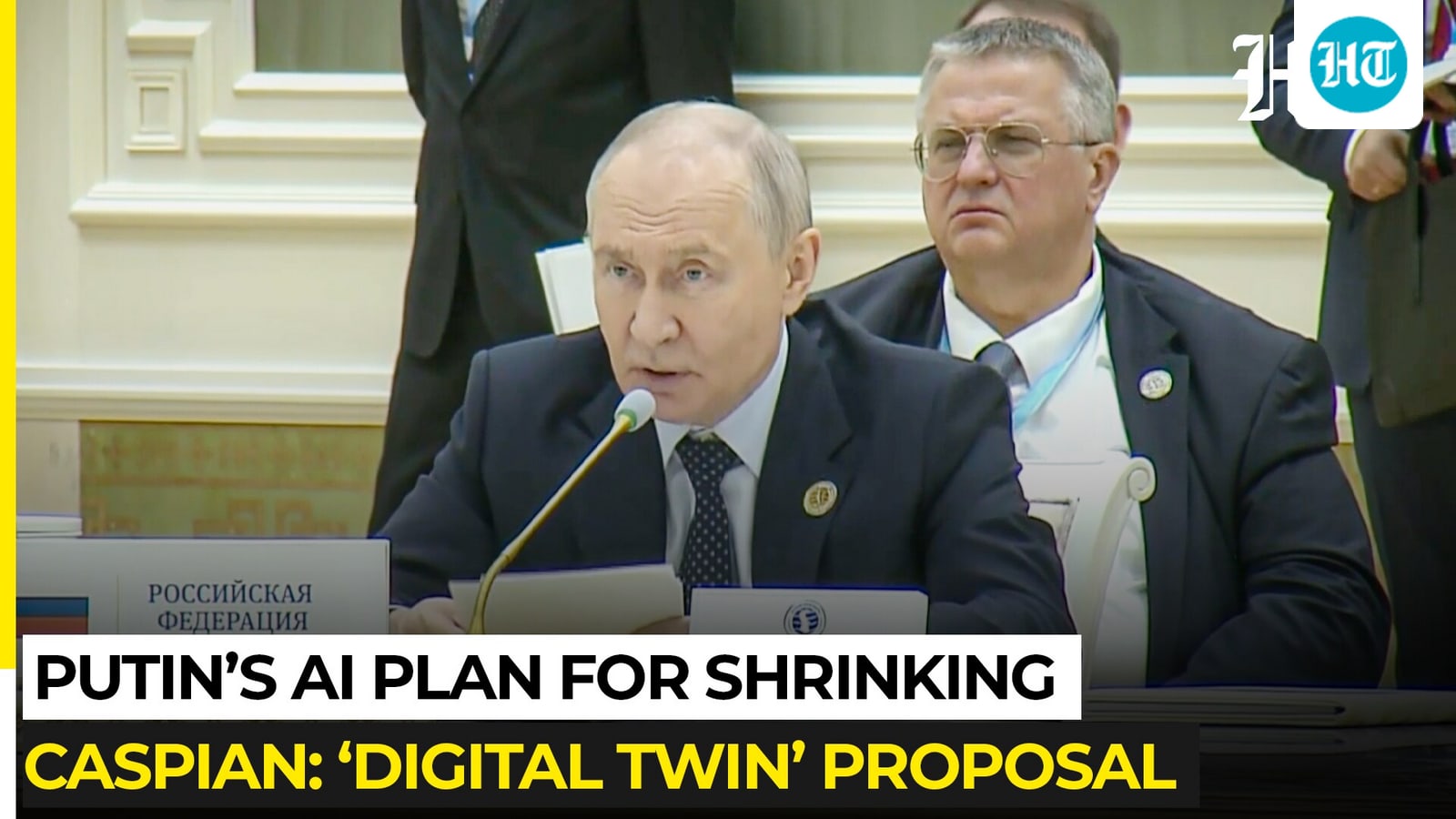
Russian President Vladimir Putin has proposed a regional AI-powered 'digital twin' initiative to combat the environmental and economic crisis caused by receding Caspian Sea levels. The project aims to model water fluctuations to protect vital shipping routes, ecosystems, and coastal industries across Caspian nations.
The Caspian Sea Crisis: A Digital Intervention
Russian President Vladimir Putin has brought urgent international attention to the environmental degradation of the Caspian Sea, specifically highlighting the alarming trend of falling water levels. By advocating for a collective response among Caspian nations, Putin underscores the reality that this landlocked sea—the world’s largest inland body of water—is facing an existential threat that transcends national borders. The situation is not merely an environmental concern but a geopolitical and economic imperative for all littoral states.
The Scale of Environmental Erosion
The figures presented by the Russian administration are stark: approximately 20,000 square kilometres of the seabed have been exposed in the Russian sector alone over the past twenty years. This rapid retreat of water is not just a geographical curiosity; it represents a fundamental shift in the regional landscape. The exposure of such vast areas has severe implications for the local biodiversity, potentially disrupting fragile aquatic ecosystems and endangering the endemic species that rely on the Caspian’s unique salinity and depth profiles.
Economic and Infrastructural Vulnerabilities
Beyond the ecological damage, the falling water levels pose a direct threat to the economic stability of coastal communities. The fishing industry, a cornerstone of the regional economy, faces disruption as traditional spawning grounds and migration routes are altered. Furthermore, shipping routes—essential for regional trade and logistics—are becoming increasingly treacherous. As water depths decrease, navigation safety is compromised, necessitating expensive dredging operations or the abandonment of established ports that can no longer accommodate standard vessel drafts.
The 'Digital Twin' Solution
To address these multifaceted challenges, Putin has proposed the development of an AI-powered 'digital twin' of the Caspian Sea. In technical terms, a digital twin is a dynamic, virtual representation of a physical system that uses real-time data to simulate various future scenarios. By integrating satellite imagery, hydrological data, and climate modeling, this tool aims to provide Caspian nations with a predictive framework to anticipate water level fluctuations. This would allow for better management of navigation safety and more proactive planning for coastal infrastructure.
Regional Cooperation and Future Implications
The success of this 'digital twin' initiative rests heavily on regional cooperation. Because the Caspian Sea is an interconnected system, unilateral actions by one nation are insufficient to mitigate the broader environmental decline. By framing this as a collaborative technological endeavor, Russia is positioning itself as a leader in regional environmental stewardship while simultaneously pushing for standardized data-sharing protocols among Caspian littoral states. Future trends will likely see an increase in such 'techno-diplomacy,' where digital modeling becomes a standard requirement for managing shared natural resources in the face of climate instability.
Conclusion
The proposal to use advanced AI to model the Caspian Sea's future represents a modern shift in how nations approach environmental crisis management. While a digital model cannot stop the physical retreat of the water, it provides the essential data required to adapt to a changing environment. As the Caspian nations move forward, the effectiveness of this digital twin will serve as a test case for how emerging technologies can bridge political divides to address shared ecological crises.
Verification Required?