Qatar Airways denied boarding to infant despite issuing pass; court awards Rs 10 lakh
Source Entity
TOI LEGAL DESK
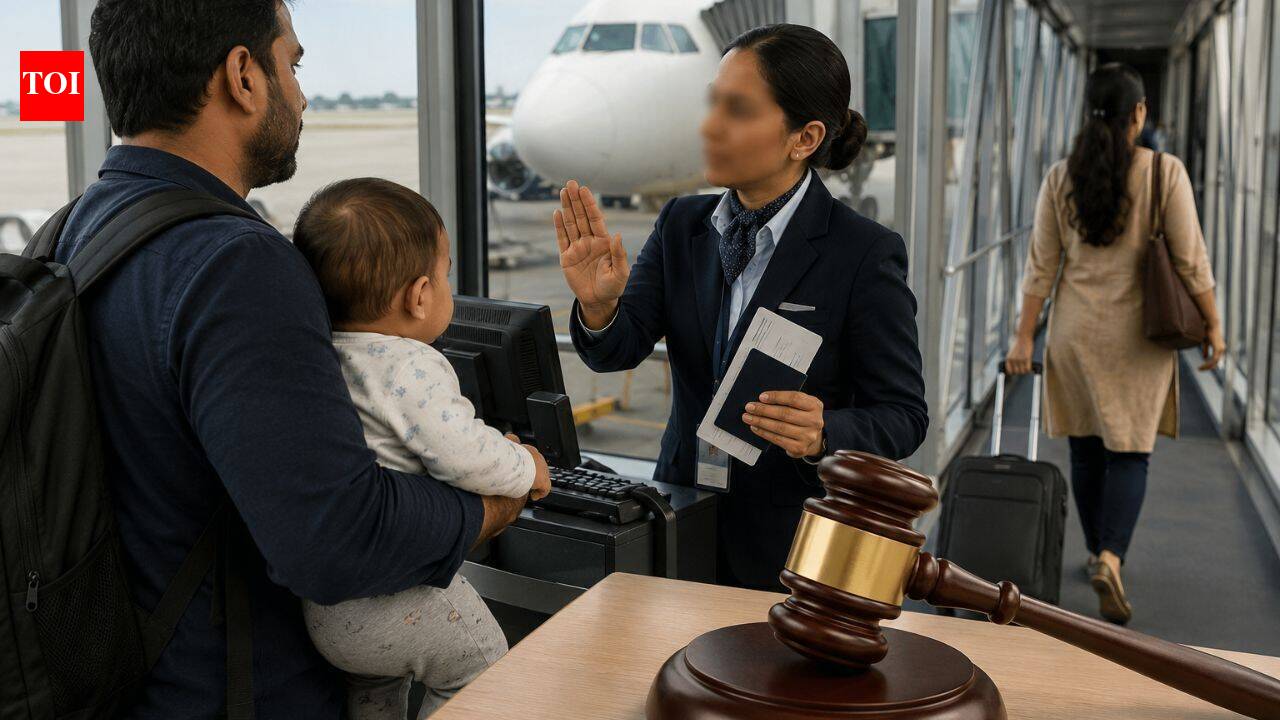
A Kerala consumer commission has ordered Qatar Airways to pay ₹10 lakh in compensation for denying boarding to two minor children, including an infant, despite valid documentation. The court ruled the airline's actions constituted a deficiency in service, causing the family significant mental distress.
Consumer Rights Victory: Qatar Airways Held Accountable
The Ernakulam District Consumer Disputes Redressal Commission has delivered a landmark verdict against Qatar Airways, ordering the carrier to pay ₹10 lakh in compensation plus litigation costs. The case centers on a family from Kannur, Kerala, who were subjected to an arbitrary and distressing experience when their two minor children, including a 10-month-old infant, were denied boarding on a return flight from Kochi to Italy via Doha.
The Nature of the Deficiency
Despite the family having been issued valid boarding passes—implying that the airline’s ground staff had initially verified and accepted their travel documentation—the airline abruptly reversed its stance at the gate. The commission, led by D.B. Binu, V. Ramachandran, and Sreevidhia T.N., identified this as a clear case of 'deficiency in service' and 'unfair trade practice.' The arbitrary nature of the denial, which occurred after the initial verification, placed the burden of re-booking and securing fresh travel documents entirely on the passengers, causing severe hardship.
Broader Implications for Airline Accountability
This ruling serves as a significant precedent for international passengers traveling through Indian airports. It reinforces the principle that airlines cannot hide behind vague operational policies to justify the denial of passage after documentation has been officially acknowledged and boarding passes issued. By imposing a substantial financial penalty, the commission has signaled that the mental agony and logistical chaos caused by such systemic failures are not merely minor inconveniences but compensable wrongs.
Historical and Operational Context
The complainants, Roshan Jose and his wife, were expatriates living in Italy. The issue stemmed from a bureaucratic discrepancy regarding a family visa where the infant’s name was still in the processing stage, despite the authorities having issued a reentry permit. The airline’s failure to recognize valid temporary travel authorizations—which they had seemingly accepted upon the family's arrival—highlights a disconnect between ground staff training and complex international visa regulations.
Future Trends in Consumer Protection
As air travel becomes increasingly digitized, the reliance on automated systems often leads to 'computer says no' scenarios where staff fail to exercise discretion or verify documents manually. This judgment encourages a shift toward more robust training for airline staff to handle nuanced travel documentation, especially regarding minors and infants. Furthermore, it empowers consumers to challenge large international carriers in local forums, ensuring that global corporations remain accountable to the laws of the regions in which they operate.
Conclusion
The order, which mandates compliance within forty-five days, stands as a triumph for consumer rights. It highlights the necessity for airlines to maintain consistent standards of service and empathy, particularly when dealing with families and infants. For the aviation industry, this serves as a stern reminder that the issuance of a boarding pass is a commitment to transport that cannot be revoked without a transparent, valid, and legally sound justification.