An experimental tour-de-force: Entanglement between glass bead and light
Source Entity
Chris Lee
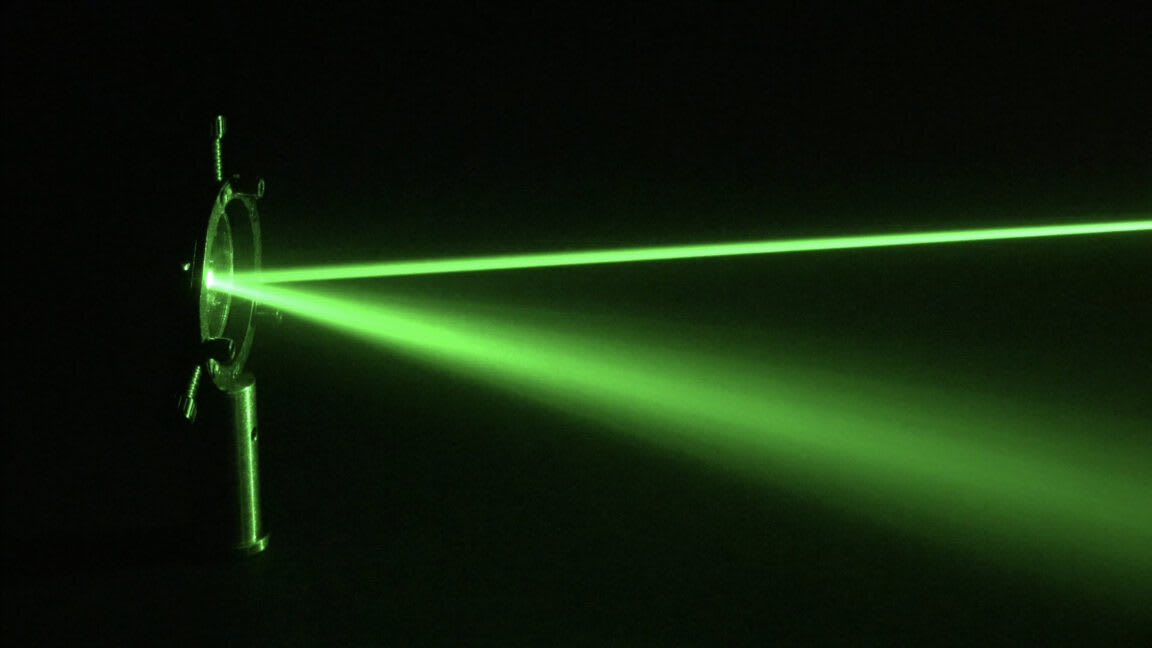
Researchers have successfully demonstrated quantum entanglement between a macroscopic glass bead and a beam of light. This breakthrough challenges traditional boundaries by applying quantum mechanical properties to larger, physical objects.
Bridging the Quantum-Classical Divide
Recent advancements in experimental physics have pushed the boundaries of quantum mechanics by achieving entanglement between a microscopic glass bead and a beam of light. This experiment represents a significant departure from traditional quantum studies, which typically focus on subatomic particles like electrons or photons. By successfully linking a tangible, physical object—the glass bead—to a light beam, researchers are effectively challenging the long-standing divide between the quantum world and our macroscopic reality.
Understanding the Mechanism of Entanglement
At its core, quantum entanglement describes a state where two objects become so deeply linked that the state of one is intrinsically correlated with the state of the other, regardless of the distance between them. While often labeled with sensationalist terms like "spooky" or "ghostly," the phenomenon is a fundamental prediction of quantum mechanics. In this specific experiment, the researchers utilized light to influence the physical state of the glass bead, creating a correlation that allows the bead to exhibit quantum behavior previously reserved for much smaller systems.
The Challenge of Macroscopic Quantum States
One of the primary hurdles in quantum physics is decoherence, where quantum effects disappear as an object interacts with its environment. Maintaining an entangled state with a glass bead, which is significantly larger and more complex than an atom, requires extreme precision to isolate the system from thermal and environmental noise. This achievement proves that it is possible to maintain these delicate correlations in larger structures, providing a new platform for testing the limits of quantum theory.
Implications for Future Quantum Technologies
This experiment is not merely a theoretical exercise; it has profound implications for the future of quantum technology. By mastering the entanglement of larger mechanical oscillators, scientists are opening doors to more robust quantum sensors and potentially more stable quantum computing components. If we can control the quantum states of mechanical objects, we may be able to build hybrid systems that combine the processing power of light with the durability of mechanical devices.
A New Era of Experimental Physics
Ultimately, this "tour-de-force" experiment serves as a benchmark for how we view the physical world. As we continue to refine our ability to manipulate macroscopic objects at the quantum level, our understanding of the universe's fundamental architecture will continue to evolve. This transition from studying isolated particles to entangled physical objects marks a shift toward a more integrated approach to quantum engineering, setting the stage for advancements that were once thought to be purely speculative.