'7.5 crore students affected in 10 years': Rahul Gandhi calls paper leaks the 'norm'
Source Entity
KARAN MANRAL
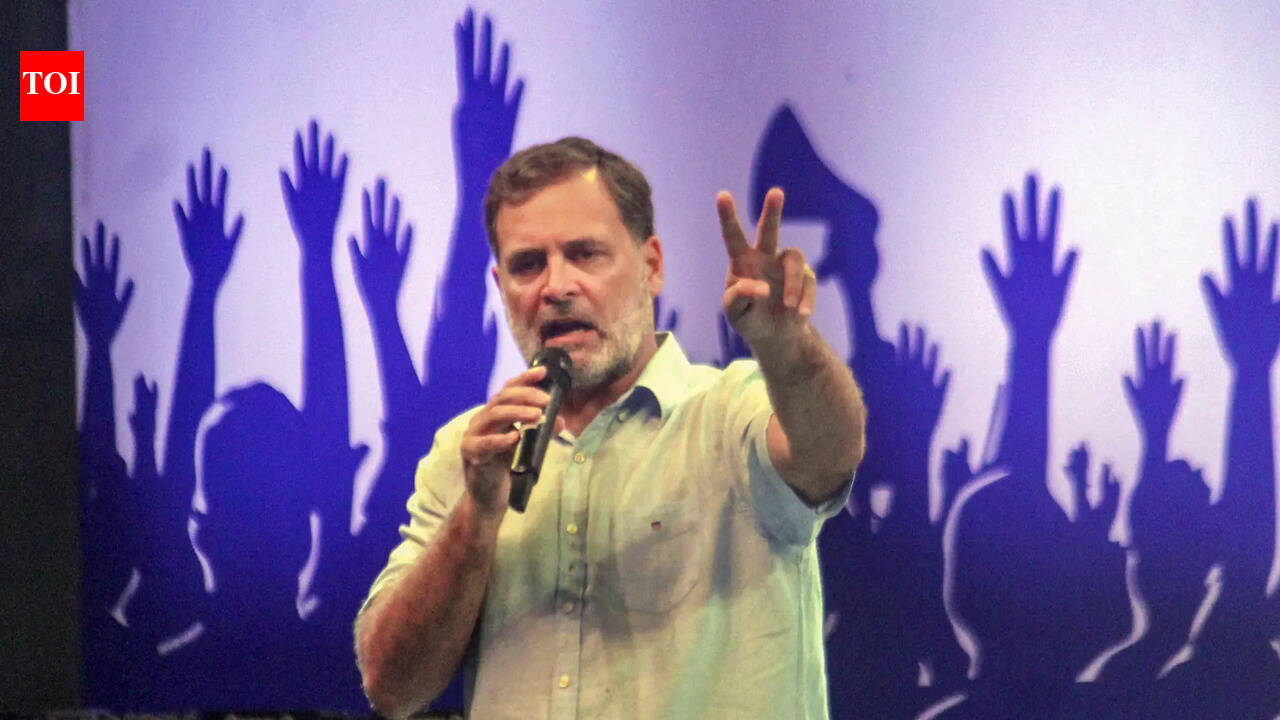
Rahul Gandhi has criticized the prevalence of paper leaks in India's education system, claiming they have affected 7.5 crore students over the last decade. Speaking at the 'Chhatron Ki Goonj' event, he urged for a unified political consensus to address these recurring systemic failures.
The Crisis of Credibility in Indian Examinations
Congress leader Rahul Gandhi recently took center stage at the 'Chhatron Ki Goonj' programme in Dehradun, Uttarakhand, to highlight what he terms a systemic collapse in India's educational assessment framework. By asserting that paper leaks have transitioned from isolated incidents to an institutionalized 'norm,' Gandhi has brought the issue of examination integrity to the forefront of national discourse. His claim that 7.5 crore students have been impacted over the last decade underscores the massive scale of the disruption, suggesting that the current mechanism for student evaluation is failing to provide the stability and fairness expected by the youth.
Moving Beyond Partisan Rhetoric
During his address, Gandhi was deliberate in framing the 'Chhatron Ki Goonj' event as a non-partisan platform focused exclusively on the struggles of the youth rather than traditional political maneuvering. By explicitly distancing the gathering from conventional political campaigning, he aims to elevate the discourse surrounding the future of India's students. This approach attempts to position the education system's integrity as a national priority that transcends party lines, emphasizing that the burden of these systemic failures falls squarely on the shoulders of the next generation.
The Scale of Systemic Failure
The figure of 7.5 crore students affected is significant, as it indicates a chronic, long-term issue rather than a series of administrative hiccups. When an examination system is compromised, the implications extend far beyond the immediate frustration of a cancelled test. It creates a domino effect involving financial loss for families, the loss of precious academic years, and a psychological toll on aspirants who spend years preparing for competitive exams. The frequency of these leaks suggests a deeper, structural rot within the examination conduct process that requires urgent technical and administrative intervention.
The Necessity of Political Consensus
Gandhi’s call for a 'political consensus' is an acknowledgment that the problem is too deep-seated for any single administration to resolve through isolated policy tweaks. Establishing trust in public examinations requires a bipartisan commitment to transparency, digital security, and stringent accountability for those involved in the paper-leaking syndicates. Without a shared political commitment to overhaul the current architecture of competitive testing, the cycle of leaks is likely to continue, further eroding public faith in the meritocratic promise of Indian education.
Future Trends and Implications
Looking ahead, the pressure on the government to secure the examination process will only intensify. As India continues to leverage its demographic dividend, the inability to conduct fair, timely, and secure assessments threatens to derail the aspirations of its workforce. If the trend of paper leaks remains unaddressed, it may lead to a mass exodus of students seeking education and career opportunities abroad, where examination systems are perceived as more reliable. The future of India’s economic growth is inextricably linked to the integrity of its education sector; therefore, the demand for reform is not merely a student grievance but a critical national security and economic imperative.