Democracy destroyed in 2014, 'fascists' running India: Rahul
Source Entity
TNN
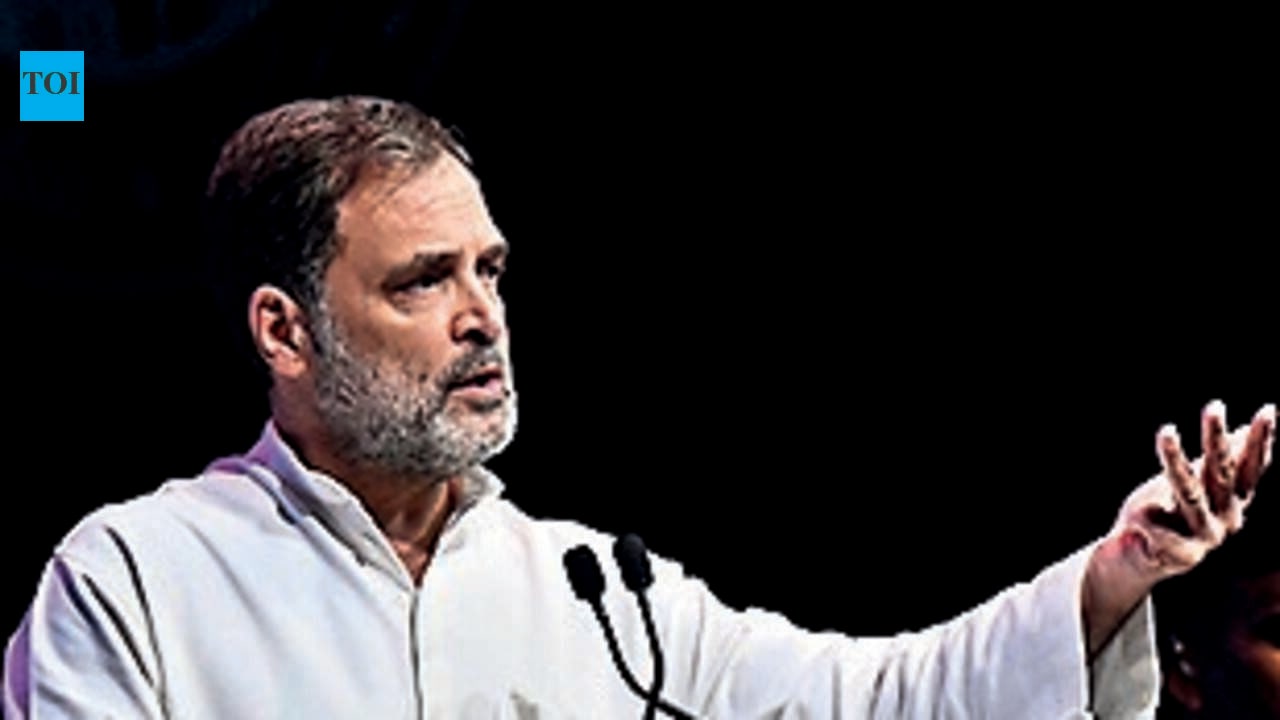
Leader of Opposition Rahul Gandhi has alleged that Indian democracy has eroded since 2014, citing irregularities in voter data and election integrity. He challenged the legitimacy of the 2024 Lok Sabha polls and criticized the influence of corporate entities on governance.
The Crisis of Democratic Integrity: Rahul Gandhi’s Critique
At the recent Bharat Summit 2026 in Hyderabad, Leader of the Opposition Rahul Gandhi delivered a scathing assessment of India’s current political landscape. Gandhi explicitly stated that India is "no longer a democracy," arguing that the democratic framework of the nation has been systematically dismantled since the Bharatiya Janata Party (BJP) assumed power in 2014. This assertion marks a significant escalation in the rhetoric between the opposition and the ruling government, framing the state of the nation as a struggle against what he termed "fascist" influence.
Concerns Over Electoral Data and Legitimacy
A primary pillar of Gandhi’s argument rests on alleged irregularities within the electoral process. Specifically, he pointed to discrepancies in Maharashtra’s voter rolls, claiming that approximately 7 million additional voters were inexplicably added between the Lok Sabha and subsequent assembly elections. Such claims regarding voter roll manipulation strike at the heart of electoral trust, suggesting that the administrative machinery responsible for overseeing polls may be subject to external influence or systemic failure.
Challenging the 2024 Mandate
Beyond localized data issues, Gandhi cast doubt on the legitimacy of the 2024 Lok Sabha elections on a national scale. He leveled a serious accusation against the Election Commission (EC), claiming that 140 million voters were incorrectly labeled as non-existent or ineligible. By questioning how such an election could be considered legitimate when a massive segment of the electorate faced administrative exclusion, Gandhi is attempting to shift the national narrative toward a fundamental review of the EC’s operational independence and transparency.
The Nexus of Corporate and Political Power
Central to Gandhi’s critique is the perceived influence of big business on Indian policy-making. He specifically highlighted the relationship between Prime Minister Narendra Modi and businessman Gautam Adani. By linking corporate interests to the erosion of democratic norms, Gandhi is framing the current administration not merely as a political entity, but as a system beholden to private wealth. This argument suggests that the "fascist" tendencies he describes are enabled and sustained by a concentration of economic power that bypasses the interests of the common citizen.
Broader Implications for Indian Governance
These allegations carry profound implications for the future of Indian governance. If the opposition successfully builds a movement around the narrative of a "destroyed democracy," it could lead to increased domestic protests, international scrutiny regarding human rights and electoral standards, and a more polarized political environment. The assertion that the political system has undergone a "fundamental transformation" suggests that the opposition views the current institutional setup as effectively captured, necessitating a complete overhaul of the democratic process.
Conclusion and Future Outlook
As the political discourse intensifies, the claims made at the Bharat Summit underscore a deepening divide in India’s democratic experiment. Whether these allegations of electoral irregularities and corporate capture will gain traction with the broader public remains to be seen. However, by positioning himself as the primary defender of democratic values against an alleged "fascist" regime, Rahul Gandhi has signaled that his political strategy for the coming years will focus heavily on challenging the institutional legitimacy of the current administration.
Multiple Citing Sources